KNBS warns of Kenya’s growing dependence on rainfall
Kenya’s water supply remains heavily dependent on rainfall, with precipitation accounting for the largest share of water entering the country’s water system, according to the Kenya National Bureau of Statistics (KNBS).
The findings, presented in the Economic Survey 2026 under the water accounts chapter, highlight the importance of rainfall patterns, surface water and groundwater in supporting the country’s economy and meeting the needs of households, agriculture, industries and other water-dependent sectors.
According to the report, total water supply increased from 304,495.2 million cubic metres in 2021 to 579,754.9 million cubic metres in 2023. The figures illustrate significant changes in the volume of water recorded over the three-year period, largely influenced by variations in precipitation.
Precipitation was the largest component of the recorded supply, rising from 256,146.1 million cubic metres in 2021 to 529,112.2 million cubic metres in 2023. In 2022, precipitation stood at 247,020.1 million cubic metres, reflecting a decline from the previous year.
The report links the lower precipitation recorded in 2022 to drought conditions, which affected water availability in different parts of the country. The subsequent increase in 2023 was associated with heavier rainfall, increased river flows and rising lake levels.
“Precipitation represents the primary inflow into Kenya’s entire water system,” the report states, emphasising the central role rainfall plays in replenishing the country’s water resources.
The figures underline the vulnerability of Kenya’s water supply to changing weather patterns. Periods of inadequate rainfall can reduce water availability, affect agricultural production and put pressure on water service providers, while heavy rainfall can increase water volumes in rivers and lakes but also create challenges associated with flooding, erosion and sedimentation.
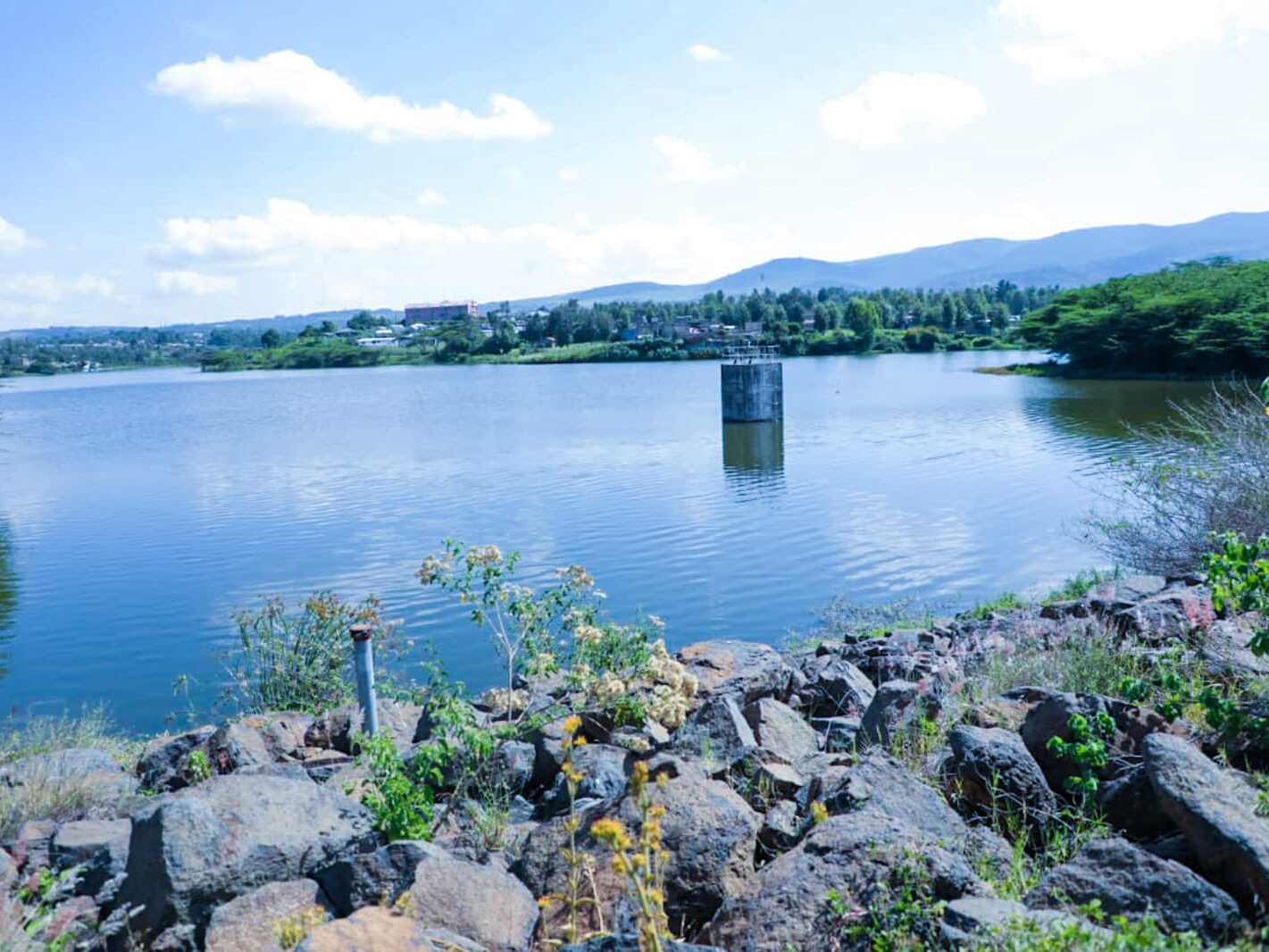
Surface water, which includes water found in rivers, lakes and reservoirs, is another important component of Kenya’s water supply. According to the report, surface water supply increased from 45,600.5 million cubic metres in 2021 to 46,743.8 million cubic metres in 2022 before reaching 47,848.9 million cubic metres in 2023.
The figures show a gradual increase in recorded surface water supply over the period, although its contribution remained considerably smaller than that of precipitation.
Rivers, lakes and reservoirs support a wide range of economic activities, including domestic water supply, irrigation, livestock production, manufacturing and hydropower generation. They are also important for maintaining aquatic ecosystems and supporting communities that depend directly on natural water bodies.
However, the availability and quality of surface water are affected by several pressures, including changing rainfall patterns, catchment degradation, pollution, sedimentation and encroachment on riparian areas.
Poor land-use practices in water catchment areas can increase soil erosion, allowing sediment to enter rivers and reservoirs. Pollution from untreated wastewater, agricultural runoff and industrial discharges can also reduce the amount of water suitable for domestic and economic use.
The findings reinforce the need to protect water catchments, improve pollution control and strengthen the management of rivers, lakes and reservoirs. Maintaining healthy catchments is essential for supporting reliable water supplies and reducing the risks associated with environmental degradation.
Groundwater also provides an important source of water, particularly in areas where rivers and other surface water sources are limited or unreliable.
KNBS data show that groundwater supply increased from 2,570.8 million cubic metres in 2021 to 2,725.3 million cubic metres in 2022, reaching 2,793.8 million cubic metres in 2023.
Although groundwater represented a smaller share of the recorded water supply than precipitation and surface water, it remains an important resource for households, institutions, farmers and businesses. Boreholes and wells are especially significant in arid and semi-arid areas, where rainfall is low and surface water sources may be seasonal.
Groundwater can provide a dependable source of water during dry periods, but its sustainability depends on how carefully it is managed. Excessive abstraction can lower groundwater levels, increase pumping costs and, in some locations, contribute to the deterioration of water quality.
The report highlights the slow nature of groundwater replenishment, noting that “Ground water recharges very slowly,” underscoring the need for responsible abstraction and protection of recharge areas.
Effective groundwater management requires reliable information on aquifer conditions, abstraction levels and recharge rates. Monitoring boreholes, enforcing water-use regulations and protecting areas where rainfall infiltrates the ground can help preserve groundwater resources for future use. This is particularly important as demand for water grows due to population growth, urbanisation, agricultural activity and industrial development.
The KNBS water accounts provide a structured way of understanding how water moves through the economy and the environment. They track water supply and use, helping to show the relationships between natural water resources and the activities that depend on them.
The report uses Physical Supply and Use Tables (PSUT) to record water flows between the environment and economic sectors. These accounts help organise information on water abstraction, distribution, consumption and returns to the environment.
They also provide a framework for examining how water is used by different sectors and how much returns to the environment after use. Some water is returned through wastewater discharges, while other quantities may be lost through evaporation and transpiration or incorporated into products.
Such information can support planning by showing where water is sourced, how it is distributed and which activities account for its use. It can also help policymakers identify pressure points in the water system and assess the implications of changes in supply and demand.
For a country where water availability varies considerably between regions and seasons, this information is important for planning infrastructure, managing competing demands and improving the allocation of available resources.
Water accounts can also strengthen the evidence base for decisions on irrigation, urban water supply, industrial development and environmental protection. By bringing water-related information into a consistent accounting framework, they make it easier to examine water alongside other economic indicators.
The findings point to the importance of planning for both changes in water availability and increasing demand. Kenya’s dependence on precipitation means that droughts and variations in rainfall can have consequences across several sectors of the economy.
Water service providers need adequate supplies to serve households and businesses, while farmers depend on reliable water for irrigation and livestock. Industries also require water for production, processing and other operations.
When rainfall declines, pressure on rivers, reservoirs and groundwater sources can increase. This makes it necessary to strengthen drought preparedness, improve storage and distribution systems, reduce water losses and encourage efficient use.
Investment in water infrastructure must therefore be supported by sustainable management of the resources that supply it. Infrastructure development alone cannot guarantee long-term water security if catchments continue to deteriorate or abstraction exceeds the capacity of water sources.
Protecting wetlands, forests and other important catchment areas can support water regulation and help maintain the natural processes that replenish rivers and groundwater. At the same time, improved monitoring and enforcement can help reduce pollution and ensure that water resources are used within sustainable limits.
The accounts can contribute to these efforts by providing a clearer picture of water flows and the relationship between supply and economic activity. Their usefulness, however, depends on the availability, consistency and accuracy of the underlying data.
The KNBS report also identifies further development of water accounting as part of the process of improving information on the country’s water resources and their economic significance.
The next phase is expected to include a Monetary Supply and Use Table and water asset accounts. These would complement the physical accounts by providing additional information on the economic value of water-related flows and the status of water assets.
Monetary accounts could help policymakers examine the economic dimensions of water supply and use, while water asset accounts could provide information on the resources available and how they change over time.
Together, these tools could strengthen the integration of water management into national economic planning. They would also help improve understanding of the links between water availability, economic production and the sustainability of natural resources.
The figures presented in the Economic Survey 2026 offer an important starting point for examining Kenya’s water supply and the role played by different sources. The report’s narrative and numerical data should, however, be interpreted carefully where year references or totals differ between sections.
The available figures show that precipitation remained the largest component of recorded water supply between 2021 and 2023, while surface water and groundwater contributed additional resources to the country’s water system.
Ultimately, Kenya’s long-term water security will depend on combining reliable data with effective resource management, infrastructure investment and environmental protection. As rainfall patterns change and demand for water increases, understanding how water enters, moves through and leaves the economy will be essential to making informed decisions.
The water accounts provide a foundation for that work by bringing together information on water supply and use. Their continued improvement could help the country plan more effectively, protect its natural water resources and support the sustainable use of water across households, agriculture, industry and the environment.