Pipeline project to boost Nairobi’s water supply
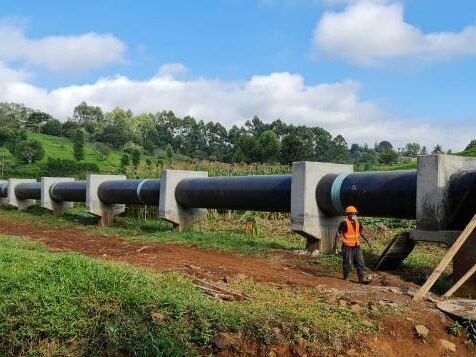
A KSh9.5 billion water transmission project linking Thika Dam in Murang’a County to the Kigoro Water Treatment Plant and Gigiri reservoirs is expected to strengthen bulk water supply to Nairobi and its surrounding areas.
The project, implemented by Athi Water Works Development Agency (AWWDA), involves the construction of raw and treated water pipelines designed to transfer water from Thika Dam to Kigoro for treatment before it is conveyed to storage facilities in Gigiri, Nairobi.
AWWDA lists the project at KSh9.5 billion on its official projects page and reports progress of 90 per cent. The agency says the wider infrastructure programme also includes strategic water storage facilities, such as elevated tanks and ground reservoirs, intended to improve the consistency of water supply in Nairobi County.
The project forms part of the wider Northern Collector Tunnel water system, which is designed to increase the volume of water available to Nairobi by transferring water from rivers in the Aberdare region to Thika Dam.
Pipeline designed to deliver 140 million litres daily
The transmission system comprises approximately 55 kilometres of raw and treated water pipelines connecting Thika Dam, the Kigoro treatment plant and the Gigiri reservoirs.
Water from the dam is conveyed to Kigoro, where it undergoes treatment before being transported to Nairobi for storage and distribution. The Kigoro Water Treatment Plant has a stated production capacity of 140 million litres per day.
The Ministry of Water has previously described the pipeline infrastructure as a major component of efforts to improve water availability in the Nairobi metropolitan region. The broader Northern Collector Tunnel Phase I system is designed to add up to 140 million litres of water daily, with the potential to improve supply for more than 1.2 million residents.
The additional bulk supply is intended to ease pressure on existing water sources and support a city whose demand continues to rise alongside population growth, housing development and commercial activity.
Financing and project costs
AWWDA currently lists the pipeline project at KSh9.5 billion. However, earlier government documents recorded different costs for the same infrastructure undertaking.
A parliamentary document put the total project cost at approximately KSh7.52 billion, comprising construction works, land compensation and value-added tax. The document also reported a contract award of about KSh7 billion, inclusive of tax.
In March 2024, the Kenya News Agency reported an estimated project cost of KSh8.049 billion and said the works were 93 per cent complete at the time.
The differing figures should be distinguished when assessing the project’s finances. The KSh9.5 billion amount is the current figure published by AWWDA, while the earlier amounts relate to historical contract and project-cost reporting. The publicly available records reviewed do not establish that KSh9.5 billion has already been spent.
Infrastructure investment and long-term water security
Beyond the transmission pipeline, dependable water delivery requires adequate treatment capacity, storage, distribution networks and regular maintenance. Strategic reservoirs help utilities manage fluctuations in demand, while well-maintained pipelines support the movement of water from treatment facilities to urban supply systems.
For Nairobi, the project is part of a broader effort to strengthen bulk water infrastructure and reduce the risk of supply shortages as the metropolitan population expands.
AWWDA’s published project page continues to list the pipeline undertaking among its projects, with progress indicated at 90 per cent. An updated completion statement and a reconciled final project cost would help clarify the remaining works, final expenditure and the extent to which the system is delivering its intended benefits.
The project’s long-term impact will ultimately depend on the reliability of the transmission system, effective management of available water resources and the capacity of distribution utilities to deliver the additional supply to consumers.