TAWWDA intensifies oversight of water and sanitation projects
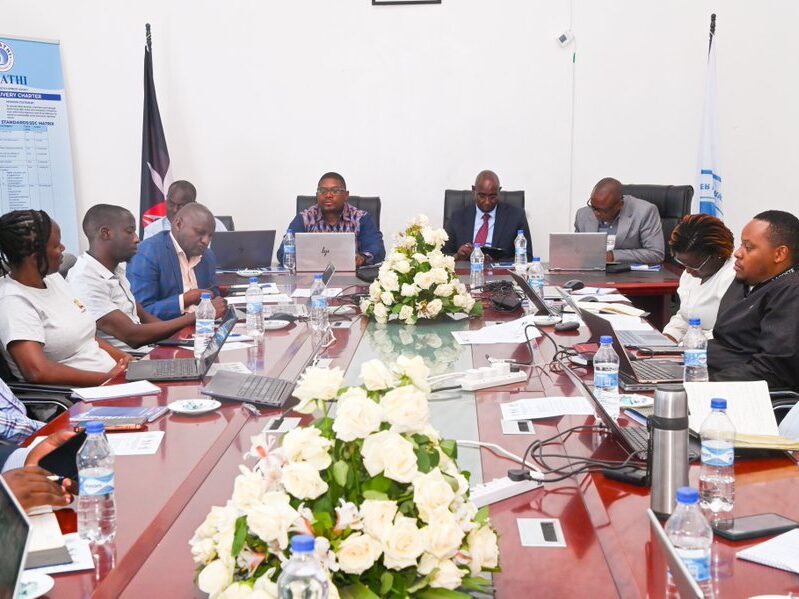
The Tanathi Water Works Development Agency (TAWWDA) has stepped up coordination with national government institutions and fellow water agencies to review implementation of the Kenya Towns Sustainable Water Supply and Sanitation Programme, as Kenya continues to pursue more reliable water supplies and improved sanitation in urban centres.
The agency hosted a supervision mission meeting at its boardroom, bringing together representatives from the Athi Water Works Development Agency, the Coast Water Works Development Agency (CWWDA), the National Treasury and other programme stakeholders.
The meeting focused on reviewing previous agreements, assessing implementation across participating agencies and identifying outstanding issues affecting project delivery. Discussions covered procurement activities, financial performance, projected disbursements and environmental and social safeguards.
The engagement is significant because delivering water infrastructure involves more than constructing treatment plants, pipelines and sewer networks. Projects also depend on timely procurement, sound financial management, coordination between institutions and compliance with environmental and community protection requirements.
According to TAWWDA’s published project briefs, the programme includes major water supply and sanitation investments in parts of the agency’s service area, illustrating the scale of infrastructure required to respond to growing demand.
In Mwala and neighbouring centres, the Mwala Cluster Water Supply Project was designed to serve Mwala, Makutano, Masii, Kabaa and Mbiuni, with an estimated target population of about 270,000 people. Its planned infrastructure includes a weir on the Ndarugu River, raw-water pipelines, a treatment plant with a capacity of 6,600 cubic metres per day, storage facilities and approximately 80 kilometres of transmission and distribution pipelines. The agency’s November 2024 brief placed the project’s cost at KSh1.7 billion.
Another major investment outlined by TAWWDA is the Machakos Water Supply Project, which was designed to serve approximately 250,000 residents in Machakos Town and its surrounding areas. The planned works include water storage, treatment infrastructure, raw-water mains and rehabilitation of existing facilities. The agency’s published brief listed its cost at KSh1.266 billion.
Sanitation infrastructure is also central to the programme. TAWWDA’s project brief describes the Machakos Sewerage Project as targeting about 10,000 households through approximately 65 kilometres of trunk and lateral sewer lines, a wastewater treatment plant, rehabilitation of existing sewer networks and construction of public sanitation blocks. The listed project cost was KSh840 million.
At the national level, the National Treasury’s development-partner project register identifies the Kenya Towns Water and Sanitation Programme as supporting water supply infrastructure in 19 towns and sanitation infrastructure in 17 towns. Its stated objectives include improving service reliability, supporting economic activity and strengthening the capacity of water service providers. The programme’s intended outcomes include reliable water services for more than 2.1 million people and sewerage services for over 1.3 million people.
Against this backdrop, supervision meetings provide an opportunity to assess whether implementation activities, financial resources and procurement schedules remain aligned with project objectives. They also help participating agencies identify bottlenecks and agree on corrective actions before outstanding issues cause further delays.
Environmental and social safeguards remain another important consideration, particularly where projects require land, affect surrounding communities or involve water sources and wastewater management. Proper attention to these issues helps protect communities and supports responsible infrastructure development.
TAWWDA reaffirmed its commitment to working with sector partners to strengthen implementation, improve water supply and sanitation services and promote sustainable access for communities.
The agency’s latest update did not disclose new funding commitments, revised completion dates or specific decisions arising from the supervision meeting. Nevertheless, continued coordination among implementing agencies and government institutions will be important in translating planned investments into dependable water services, better sanitation and improved living conditions for residents of the participating towns.