Tanathi expands water access across four counties
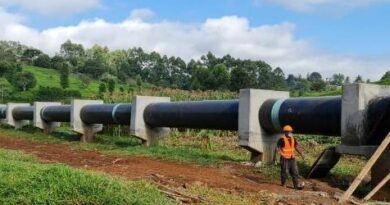
Tanathi Water Works Development Agency is stepping up investments in water supply and sanitation infrastructure across Kajiado, Makueni, Machakos and Kitui counties, targeting improved services for millions of residents.
The agency aims to increase water coverage from 52 per cent to 70 per cent by 2027, while raising sewerage coverage from 18 per cent to 40 per cent and sanitation coverage from 80 per cent to 89 per cent under its 2023–2027 strategic plan.
Serving a combined population of approximately 5.3 million people, Tanathi is implementing and planning projects intended to address water shortages, improve wastewater management and support growing urban centres across the four counties.
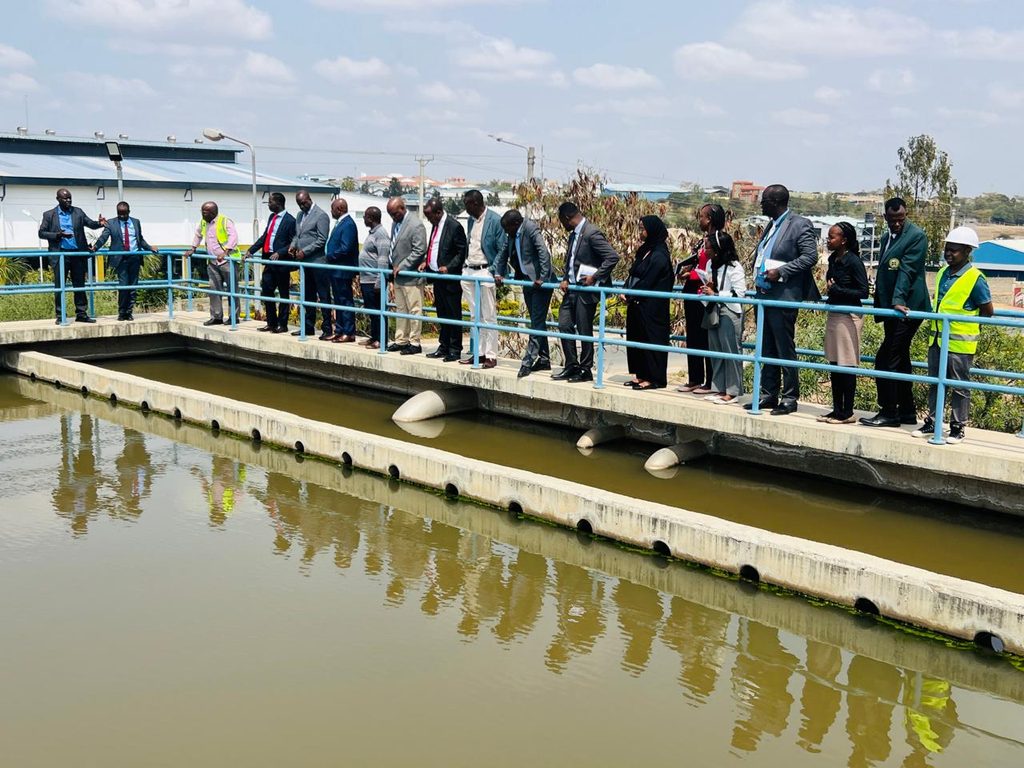
Among the completed investments is the Mavoko Drinking Water Supply Project, which serves approximately 500,000 residents. The project includes a treatment plant capable of producing 10,000 cubic metres of water daily, alongside rehabilitated infrastructure and additional storage facilities.
Other completed initiatives include water supply projects in Emali and the Kaewa-Kangonde-Kanyonyo area, each benefiting approximately 5,000 people. Pipeline extensions in Mavoko have improved services for about 15,000 residents, while the Mavoko Sewerage Project provides wastewater services to approximately 6,700 people.
Further improvements are expected from the Machakos Water Supply Project, which was reported at 89 per cent completion in the agency’s project update. The development includes a treatment plant with a daily capacity of 10,000 cubic metres, 57 kilometres of distribution pipelines and 10 boreholes. Once completed, it is expected to supply water to approximately 260,000 residents.
The associated Machakos Sewerage Project was reported at 91 per cent completion. It comprises a wastewater treatment plant designed to handle 12,500 cubic metres daily and 60 kilometres of sewer lines, with the capacity to serve 50,000 people.
Meanwhile, the Mwala Cluster Water Supply and Sanitation Project was reported at 95 per cent completion in the agency’s update, with an expected reach of 55,000 residents.
Tanathi is also planning additional investments, including the Namanga Water and Sewerage Project, which is designed to benefit approximately 150,000 people, and the Kindaruma-Kiomo-Mwingi Water Supply Project in Kitui County. The latter is intended to serve 164,000 residents while supporting domestic consumption, livestock and irrigation.
Beyond infrastructure expansion, the agency is prioritising sustainable water-resource management and climate resilience. Its interventions include installing solar-powered pumps at boreholes, protecting catchment areas through climate-resilient vegetation and working with the Water Resources Authority and Water Resource Users Associations to improve water management.
The agency also aims to regulate water abstraction according to seasonal availability and maintain minimum river flows to protect ecosystems and communities that depend on these resources.
Sanitation improvements form another component of the programme. Tanathi is pursuing conventional wastewater treatment in urban areas while promoting appropriate on-site sanitation systems in rural communities. Through the Kenya Water, Sanitation and Hygiene programme, it has supported sanitation facilities in rural schools, while the Kitui town wastewater stabilisation ponds treat approximately 2,400 cubic metres of wastewater daily.
As Kenya advances towards its 2030 water and sanitation goals, Tanathi plans to expand supply networks, improve sewerage services and promote renewable energy in water operations. The agency’s challenge will be to complete planned projects, maintain existing infrastructure and ensure that the expanding systems deliver reliable services to communities across the four counties.