Kenya courts portuguese investment to boost water and irrigation
Kenya and Portugal are exploring investment and technical cooperation opportunities in water supply, sanitation and irrigation, as the government seeks to expand infrastructure, improve agricultural productivity and strengthen food security.
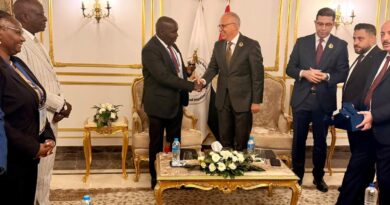
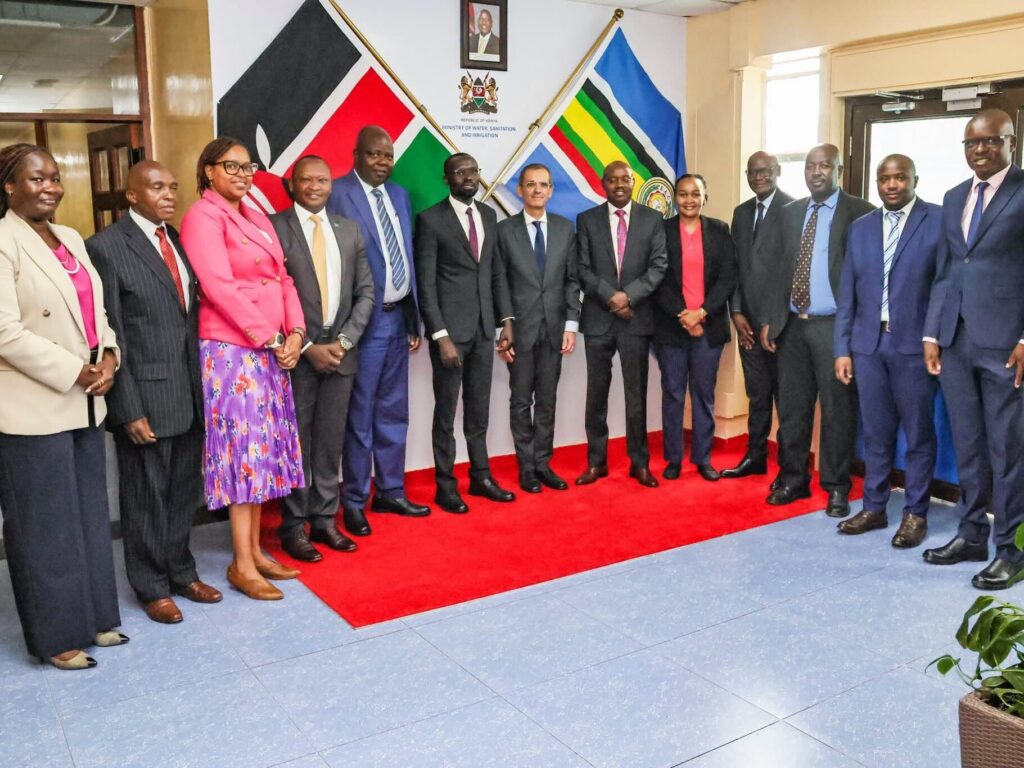
The discussions took place when Cabinet Secretary for Water, Sanitation and Irrigation Eng. Eric Mugaa received Portugal’s Ambassador to Kenya, Paulo Neves Pocinho, during a courtesy call at Maji House in Nairobi.
The meeting focused on strengthening bilateral relations and attracting Portuguese investment into Kenya’s water and irrigation sectors, particularly through dam development and public-private partnerships (PPPs).
Mugaa reaffirmed Kenya’s commitment to deepening cooperation with Portugal, highlighting the role of international partnerships in improving access to clean water, dignified sanitation and reliable irrigation services.
The engagement builds on earlier discussions between Kenyan irrigation officials and the Portuguese ambassador, which explored technical cooperation, infrastructure development and opportunities for knowledge exchange to support Kenya’s irrigation expansion.
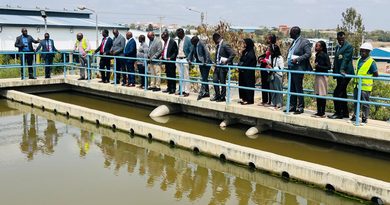
Potential areas of collaboration include dam construction, water abstraction systems, canal lining and improvements to water conveyance infrastructure. Such investments could help increase water storage, improve irrigation efficiency and reduce losses during water distribution.
The discussions also align with Kenya’s National Irrigation Sector Investment Plan (NISIP), which provides a framework for expanding irrigated agriculture, improving existing schemes and mobilising public and private investment. The plan targets the development of approximately 1.5 million acres under irrigation by 2030.
Expanding irrigation is a key government priority as farmers face increasingly unpredictable rainfall and climate-related pressures. Reliable irrigation infrastructure can support more consistent crop production, improve agricultural incomes and reduce dependence on rain-fed farming.
Earlier Kenya–Portugal engagements also identified Portugal’s Small Projects Fund as a potential financing avenue for community irrigation initiatives, creating opportunities to support smallholder farmers and rural development.
Public-private partnerships could provide an additional financing mechanism for major water projects by combining government oversight with private-sector capital, technical expertise and implementation capacity. However, individual projects will require feasibility assessments, financing agreements and appropriate approvals before implementation.
Beyond irrigation, cooperation could support wider efforts to improve water supply infrastructure and sanitation services as Kenya seeks additional resources to meet growing demand.
Mugaa was accompanied by Water Secretary Eng. S.A.O. Alima, Irrigation Secretary for Land Reclamation, Climate Resilience and Irrigation Water Management Joel Tanui, Head of Partnerships and Resource Mobilisation Florence Ndai, and other ministry officials.
Kenya and Portugal established diplomatic relations in 1977 and have continued to explore opportunities to strengthen economic and development cooperation.
The latest meeting reaffirmed the two countries’ interest in translating their bilateral relationship into practical initiatives. Further discussions will be needed to establish specific projects, investment commitments and implementation timelines.
For Kenya, attracting Portuguese investment and technical expertise could help accelerate water infrastructure development, expand irrigation coverage and strengthen long-term food security while opening new opportunities for international business partnerships.