Kisumu water projects advance as Kenya-Dutch partnership prepares phase III
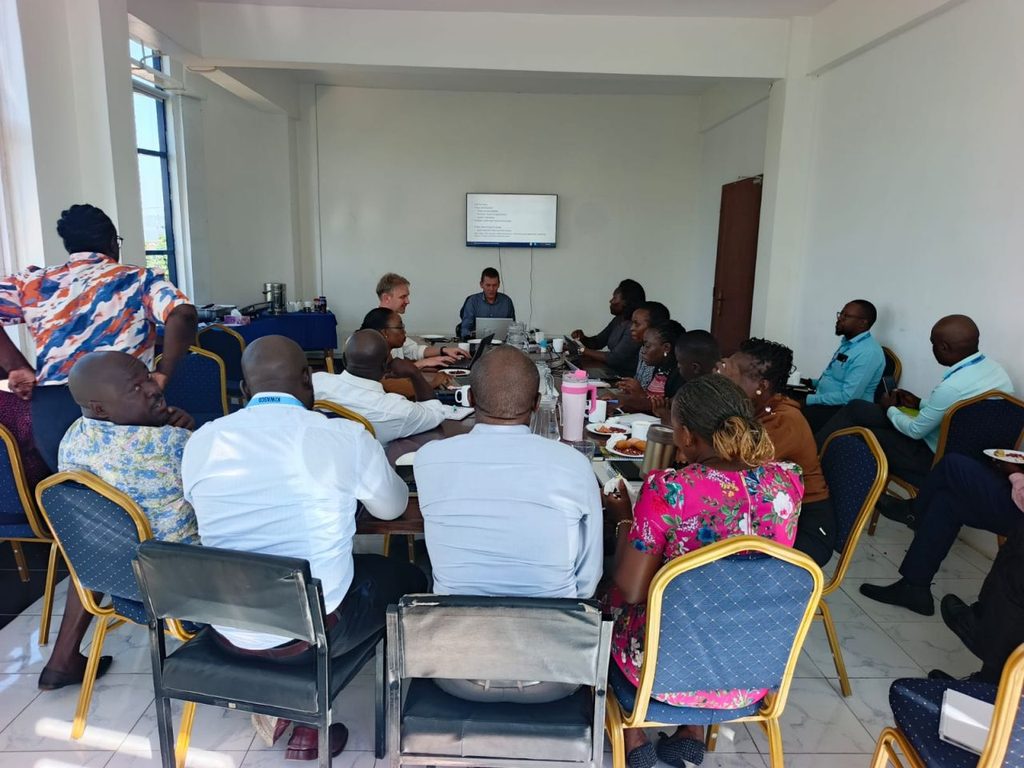
Thousands of households in Kisumu could benefit from improved water supply and sanitation services as the city prepares for the third phase of its partnership with Dutch water operator VEI Water Works.
The proposed interventions are expected to address challenges affecting residents, including unreliable water distribution, limited household connections, wastewater disposal and inadequate sanitation infrastructure in expanding neighbourhoods.
The renewed cooperation follows a three-day engagement between the partners, during which they assessed existing project gaps and identified additional areas requiring investment and technical support.
Six priority areas were agreed upon for further development under Phase III of the VEI Water Works Project. They include reducing non-revenue water (NRW), expanding last-mile water connections, developing wastewater infrastructure, introducing smart metering solutions, deploying containerised bulk water treatment systems and supporting water resource development.
For Kisumu residents, reducing non-revenue water could help improve the efficiency of existing supply networks by addressing leakages, inaccurate metering and other distribution losses.
Water utilities lose significant resources when treated water fails to reach paying consumers. Improving network efficiency could therefore help increase the volume available for distribution while strengthening revenue collection for maintaining infrastructure.
The proposed last-mile connections could also extend services to households that currently depend on alternative water sources, including water vendors and private boreholes. This could reduce the distance residents travel to obtain water and improve the reliability of household supplies.
Smart metering is another proposed intervention that could improve how water consumption is monitored, potentially reducing billing disputes and helping the utility identify unusual consumption patterns.
Beyond water supply, wastewater management is emerging as an equally important priority for the city.
As Kisumu expands, increasing volumes of wastewater require adequate collection, treatment and disposal facilities. Poorly managed sewage poses risks to public health and the quality of water resources, particularly Lake Victoria, which supports fishing, livelihoods and economic activities across the region.
The proposed wastewater investments could strengthen the city’s capacity to manage sewage while improving environmental protection.
These plans complement existing investments under the Lake Victoria Water and Sanitation Programme, supported by the Government of Kenya, the French Development Agency, the European Investment Bank and the European Union.
In March 2026, the Lake Victoria South Water Works Development Agency announced a €70 million investment targeting Kisumu City and Maseno.
The programme aims to connect an additional 25,000 households, benefiting approximately 150,000 people. It includes 156 kilometres of pipelines in Kisumu and another 25 kilometres in Maseno, alongside additional water storage facilities.
Wastewater infrastructure is also receiving attention through the proposed Otonglo Wastewater Treatment Plant.
In October 2026, LVSWWDA presented the facility’s feasibility study to local leaders in Kisumu West. The proposed development is intended to strengthen wastewater collection and treatment, with technical proposals incorporating enhanced trickling filters and wetlands.
The project is expected to contribute to efforts to reduce pollution entering Lake Victoria, although further environmental and social assessments will guide its implementation.
Kisumu is also exploring alternative sanitation solutions for households outside conventional sewer networks.
In April 2025, Kisumu Water and Sanitation Company (KIWASCO) secured a €800,000 grant from the African Development Bank to support a faecal sludge treatment facility in partnership with Sanivation.
The proposed facility will adopt a waste-to-energy approach to improve the management of waste collected from septic tanks and other onsite sanitation systems.
This is important for residents in areas where extending conventional sewer networks may be difficult or costly.
The broader infrastructure programme also includes efforts to reduce water losses. A July 2025 report highlighted a KSh10.6 billion water and sewerage upgrade that included equipment to support KIWASCO’s non-revenue water management activities.
The third phase of cooperation with VEI Water Works is expected to build on these investments by strengthening technical capacity and identifying practical solutions in water treatment, distribution and sanitation.
For Kisumu residents, the impact will ultimately be measured by whether more households receive reliable water, fewer neighbourhoods struggle with inadequate sanitation and less untreated wastewater finds its way into the Lake Victoria ecosystem.
Turning the six identified priorities into funded and completed projects will therefore be critical to improving living conditions and supporting the city’s continued growth.