Ndalat dam rehabilitation to boost irrigation in Nandi

The Government is set to rehabilitate Ndalat dam in Mosop Constituency, Nandi County, to expand irrigation, improve food production and help farmers reduce their dependence on rainfall.
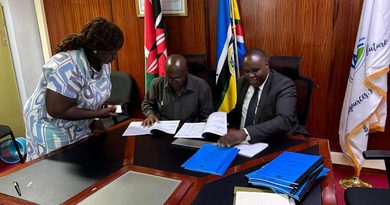
Principal Secretary for Irrigation Ephantus Kimotho inspected the facility on Friday, October 16, 2026, accompanied by officials from the State Department for Irrigation and the National Irrigation Authority (NIA). The rehabilitation forms part of a wider government programme targeting three small dams in Mosop to improve water availability for farming and other community needs.
The delegation included Irrigation Secretary Tanui and NIA Chief Executive Officer Eng. Mutinda, alongside Nandi Deputy Governor Dr Yulitah Mitei Cheruiyot and Mosop Member of Parliament Abraham Kirwa.
During the inspection, Kimotho said the rehabilitation programme would respond to the community’s longstanding demand for reliable water supplies and help unlock the area’s agricultural potential. He noted that dependable water sources were essential for increasing farm productivity, improving household incomes and strengthening food security.
“The President has heard your cry for water,” Kimotho told residents, emphasising the importance of reliable water for improving livelihoods.
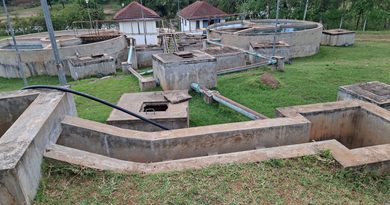
Ndalat Dam was constructed during the colonial period to supply water for livestock, domestic use and farming. However, years of inadequate maintenance have left the facility in poor condition, limiting its capacity to serve surrounding communities.
The reservoir, which covers approximately 1.5 acres and has an estimated storage capacity of 25,000 cubic metres, has accumulated substantial silt and become heavily covered with papyrus and reeds. Sections of its embankment have also eroded, while the absence of a spillway has raised concerns about the safe management of excess water during heavy rainfall.
The planned rehabilitation will involve removing accumulated silt, papyrus and reeds to restore the reservoir’s capacity. Engineers will also stabilise eroded sections of the embankment and construct a properly sized spillway fitted with downstream erosion protection to improve dam safety and reduce the risk of flooding to nearby homes and farms.
Once completed, the project is expected to bring 17 acres under irrigation and benefit 68 households. Farmers in the surrounding area currently grow tea, coffee, cereals and horticultural crops, and improved water availability is expected to support more reliable production, particularly during dry periods.
Access to irrigation water will also give farmers greater flexibility to diversify into high-value crops and plan production around market demand rather than relying entirely on seasonal rainfall. More consistent output could improve household earnings, reduce crop losses and strengthen the supply of agricultural produce to local markets.
Beyond farming, the rehabilitation is expected to create employment during construction and generate additional economic activity once the irrigation scheme becomes operational. Improved water availability could also support livestock keeping and benefit businesses linked to agricultural production and trade.
The planned rehabilitation of the three dams in Mosop reflects the Government’s broader push to expand smallholder irrigation and strengthen rural communities’ resilience to changing weather patterns. By investing in water storage and irrigation infrastructure, the programme seeks to improve the reliability of agricultural production and support food and nutrition security.
The success of the initiative will depend on proper construction, regular maintenance and effective community participation in managing the facilities to ensure that the water resources remain available for sustainable agricultural and domestic use.