AfDB commits financing to unlock Thwake’s potential
The African Development Bank (AfDB) has committed to supporting downstream investments for the Thwake Multipurpose Water Development Programme, as construction of the main dam in Makueni County reaches 94.23 per cent completion, paving the way for expanded water supply, irrigation and hydropower development across Lower Eastern Kenya.
The commitment is expected to help accelerate the infrastructure required to translate the project into tangible benefits for approximately 1.3 million people in Makueni, Kitui and parts of Machakos counties, including Konza Technopolis.
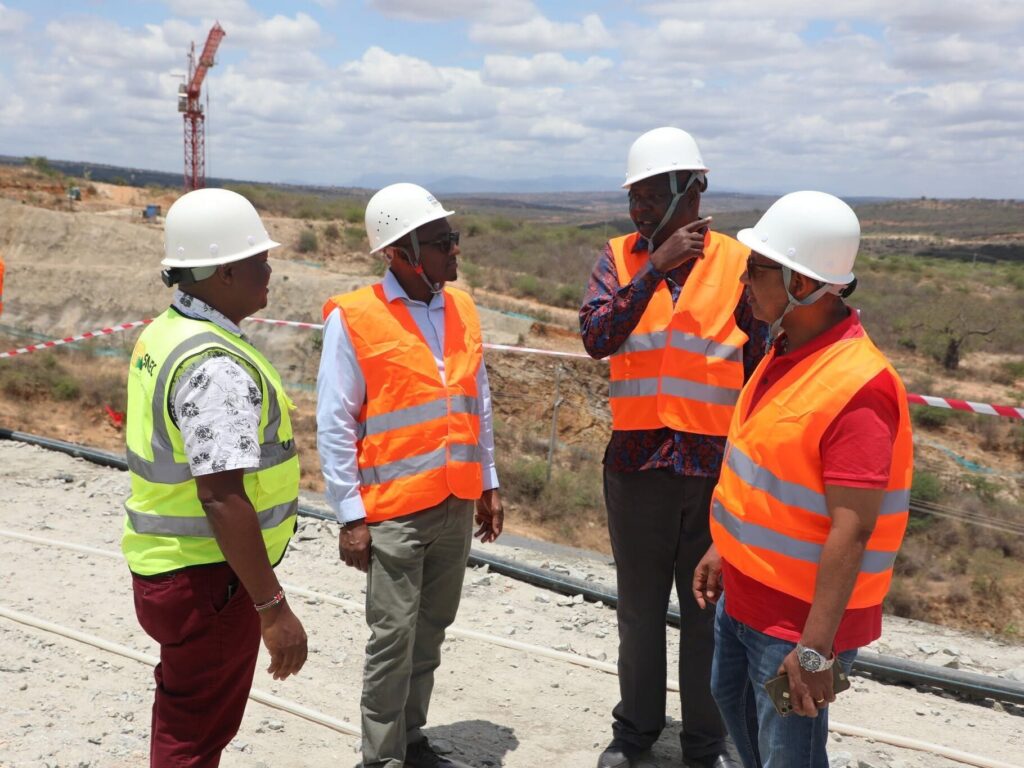
During a site visit in Wote on Thursday, October 15, 2026, the bank confirmed that discussions were underway on financing the subsequent phases of the programme. These investments will extend the project beyond water storage to include treated water supply, sanitation infrastructure, electricity generation and irrigation.
The dam is a flagship project under Kenya Vision 2030 and is intended to address persistent water shortages in the semi-arid Lower Eastern region, where unreliable rainfall has affected households, livestock production and farming activities.
According to the Ministry of Water, Sanitation and Irrigation, the dam is being constructed at the confluence of the Athi and Thwake rivers along the Makueni–Kitui border. The 80.5-metre-high concrete-faced rockfill structure is designed to store approximately 688 million cubic metres of water.
The reservoir will provide a strategic source of water for domestic consumption, agriculture and other economic activities while helping regulate downstream flows along the Athi River to mitigate flooding and drought.
The latest commitment follows financial challenges that slowed construction for nearly two years. Work resumed after the government secured an additional KSh10.6 billion in financing from AfDB to complete critical outstanding components.
The bank had earlier announced approval of €68.39 million in additional financing for Phase One, comprising a €64.20 million loan from the African Development Bank and €4.2 million from the African Development Fund. The Kenyan government also committed €15 million in counterpart funding to support completion and long-term sustainability.
The additional financing is intended to secure the dam’s completion to its required design specifications and address essential engineering and safety requirements.
During the October site inspection, the project team reported that construction activities had resumed, with work focused on the concrete face slab and a bridge across the embankment connecting the two sides of the project.
The Ministry is targeting water impoundment by the end of January 2027, followed by commissioning in April 2027, according to the latest project update. The timelines will depend on the completion of the outstanding works and readiness for reservoir filling.
The downstream water supply component is designed to deliver approximately 150,000 cubic metres of treated water daily to about 1.3 million people in rural and urban areas of Makueni and Kitui, as well as Konza Technopolis in Machakos County.
The investment is expected to improve the reliability of water services in towns and settlements, reduce pressure on existing sources and support the growth of businesses, institutions and industries.
The project also includes sanitation and wastewater infrastructure, which will be important in ensuring that expanding water services are supported by adequate systems for managing wastewater and protecting public health.
However, completion of the dam alone will not guarantee that households receive water. Treatment facilities, transmission pipelines, distribution networks and local connections must also be developed and operated effectively. Financing and implementing these downstream facilities therefore remain essential to delivering the project’s intended benefits.
Beyond household water supply, the programme is designed to support irrigation development covering approximately 40,000 hectares, equivalent to 100,000 acres, and generate 20 megawatts of hydropower.
The irrigation component is expected to improve agricultural productivity by enabling farmers to supplement rainfall-dependent production with more dependable water supplies. This could support food security, strengthen rural livelihoods and create opportunities across agricultural value chains.
The hydropower component will add renewable electricity generation capacity, while the availability of water and sanitation services could encourage further economic development in the region.
The African Development Bank has identified water security, food production and clean energy among the central benefits expected from the investment. The project also aligns with the bank’s broader development priorities of improving livelihoods, supporting agriculture and expanding access to sustainable energy.
As Thwake moves closer to completion, attention is shifting towards ensuring that the supporting infrastructure is financed and delivered in time to make effective use of the stored water.
The dam represents a major investment in the region’s long-term water security, but its success will ultimately depend on the ability to distribute treated water reliably, establish the planned irrigation systems and bring the hydropower facilities into operation.
For communities in Lower Eastern Kenya, the next phase will be critical in determining whether the project translates into more reliable household supplies, stronger agricultural production, improved sanitation and wider economic opportunities.