Siyoi-Muruny dam targets December completion after funding delays
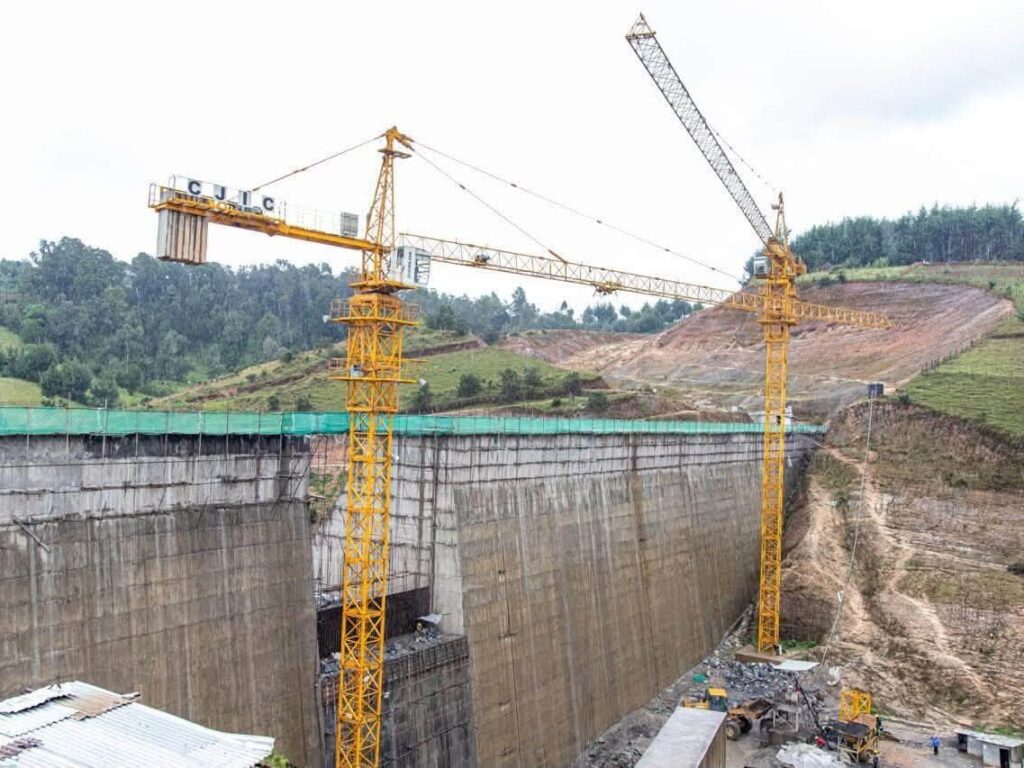
The Siyoi-Muruny Water Supply Project in West Pokot County is advancing towards completion after years of construction delays and funding challenges, with the first lot targeting a storage capacity of 8.9 million cubic metres to strengthen water security for communities in the North Rift.
Principal Secretary for Water and Sanitation Julius Korir confirmed the storage target on Friday, October 16, 2026, during an inspection of ongoing construction at Kapsait, near Kapsait Primary School and Murkokoi village.
The National Water Harvesting and Storage Authority (NWHSA) is overseeing the development of the main reservoir infrastructure. At the site, contractors were undertaking structural reinforcement and concrete placement on the dam wall, while government technical teams assessed progress and compliance with engineering specifications.
The project is intended to improve water availability in Kapenguria, Makutano, Chepareria, Kacheliba and neighbouring communities. It is expected to benefit more than 350,000 people by improving supplies for households, public institutions, livestock keeping and other economic activities.
However, the latest construction progress follows years of delays that have repeatedly pushed back completion plans, with inadequate and inconsistent funding identified as a major obstacle.
The project, which began in 2015, has experienced delays linked to irregular government disbursements and cash-flow difficulties affecting the contractor.
In December 2024, government information presented to Parliament placed completion of the dam component at 72 per cent, while the water supply component had reached 97 per cent. The government said additional funding was needed to finish the outstanding works.
In January 2025, Water Cabinet Secretary Eric Mugaa reported that the dam was 78 per cent complete and attributed the slow progress to funding constraints. He said the government was pursuing supplementary financing and indicated that approximately Sh1.5 billion was required to complete the remaining works.
At the time, Sh900 million had been allocated for the 2024/2025 financial year, with the ministry calling for faster implementation to prevent further delays.
The different completion figures reported over the period reflect progress at separate points in time and the different status of the dam and water supply components. The figures also show that the pipelines and associated supply infrastructure advanced more quickly than the main storage structure.
The government has since announced additional allocations to support completion of the project.
In January 2026, Principal Secretary Korir said Sh600 million had been paid to the contractor during the preceding financial year, while the ministry was seeking another Sh600 million through supplementary funding.
In August 2026, Mugaa announced that Sh1.16 billion had been allocated to the project in the 2026/2027 financial year. He also cited a Sh1 billion allocation in the preceding financial year as part of the government’s efforts to complete the long-delayed scheme.
Separately, the published 2026/2027 development budget lists an allocation of approximately Sh1.266 billion for the Siyoi-Muruny Water Project. These figures come from different government updates and budget reporting and should be understood in their respective contexts rather than added together as if they were separate, fully disbursed payments.
The project has an estimated total cost of approximately Sh9.7 billion, according to government reporting in January 2026. Continued and timely financing remains essential to completing construction and moving the infrastructure into operation.
The project is being implemented in two main components. Lot 1 covers the dam and raw-water conveyance infrastructure, while Lot 2 includes the treatment and water supply facilities.
The wider scheme includes an approximately 11-kilometre pipeline conveying raw water from the dam towards Kaibibich, as well as a treatment plant designed to process up to 39,000 cubic metres of water daily. The associated supply infrastructure is intended to serve Kapenguria and surrounding settlements.
The planned storage capacity of 8.9 million cubic metres is equivalent to 8.9 billion litres. The reservoir is expected to help regulate water availability beyond periods of rainfall, although the volume available to consumers will depend on inflows, reservoir levels, treatment capacity and the distribution system.
The investment is particularly important in West Pokot, where seasonal water shortages and limited infrastructure affect households and livestock keepers. Improved storage and distribution can reduce dependence on unreliable sources and help communities cope with dry periods.
Earlier in 2026, government reports placed overall progress at approximately 85 to 86 per cent. In September, officials directed the contractor to increase the workforce and consider additional shifts to meet a December 30, 2026 completion deadline.
Although significant progress had been reported on pipelines, the intake tower, bridges and other associated structures, the main dam remained a key component requiring completion.
The October inspection therefore comes at a critical stage, as the government seeks to turn years of construction and financial commitments into a functioning water supply system.
After construction, testing and commissioning will be necessary to establish that the dam, treatment facilities and distribution infrastructure operate safely and efficiently. Long-term maintenance and sound water management will also determine whether the project can provide reliable services over time.
For residents of West Pokot and surrounding areas, completion would represent a major investment in water security after more than a decade of implementation. The project’s success will depend on finishing the outstanding works, maintaining adequate funding and ensuring that stored water reaches the communities it was designed to serve.