Nairobi satellite towns set for improved water supply
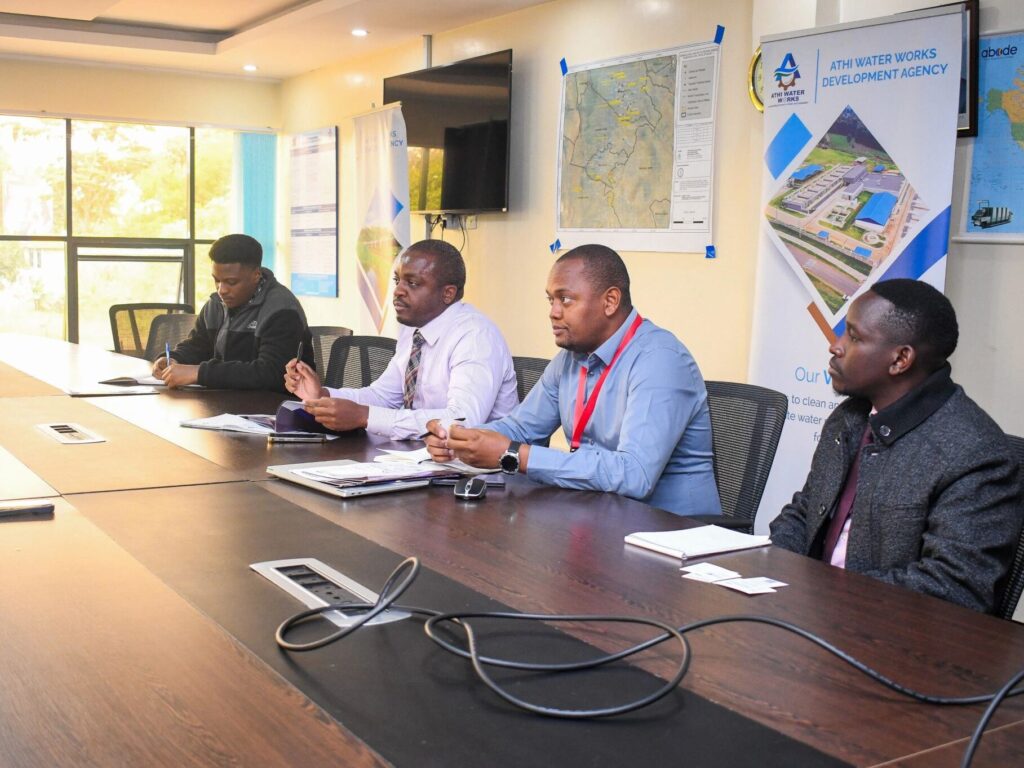
Residents of Nairobi’s rapidly expanding satellite towns are expected to benefit from improved water supply infrastructure under a multi-billion-shilling programme aimed at strengthening distribution networks and addressing persistent shortages in residential and commercial areas.
The Nairobi Satellite Town Water Supply Project, implemented by Athi Water Works Development Agency (AWWDA), has an estimated budget of KSh 4.2 billion and targets communities across Nairobi, Kiambu and Kajiado counties. The investment seeks to improve the delivery of safe water to households, businesses and institutions in areas experiencing rising demand due to population growth and urban development.
Reliable water supply remains a major challenge in many settlements surrounding Nairobi, where rapid construction of residential apartments and commercial premises has placed pressure on existing water infrastructure. In some areas, inadequate distribution networks and limited storage capacity have affected the consistency of supply, forcing households to seek alternative sources to meet their daily needs.
The project aims to address these challenges through the development and expansion of water supply infrastructure and distribution networks. By strengthening the systems that convey water from available sources to consumers, the initiative is expected to improve service reliability and support the growing demand for water in satellite towns.
The investment builds on earlier interventions under the Nairobi Satellite Towns Water and Sanitation Development Programme, which prioritised projects in the Ruiru–Juja and Kiserian–Ongata Rongai corridors. These areas were selected because of significant water supply deficits, frequent rationing, high prices charged by water vendors and inadequate sanitation services.
Under the earlier programme, the government worked to improve access to potable water and sanitation in urban and peri-urban settlements, including communities in Greater Githurai. The interventions were designed to make better use of existing water sources by extending infrastructure to areas that previously lacked adequate connections.
Water infrastructure development is particularly important in the Nairobi metropolitan region, where demand continues to grow alongside residential expansion and economic activity. Without corresponding investments in supply and distribution systems, population growth can widen the gap between available water and the quantities required by households and businesses.
Beyond improving household access, stronger water networks can support schools, health facilities, small enterprises and other institutions that depend on reliable supplies to operate effectively. Improved service delivery can also reduce the time and money households spend obtaining water from alternative sources.
The project forms part of broader efforts by the government to strengthen water security across Nairobi and neighbouring counties. AWWDA’s wider investment programme includes initiatives aimed at developing new water sources, increasing treatment capacity and expanding transmission and distribution infrastructure to meet future demand.
However, sustainable service delivery will depend not only on constructing infrastructure but also on maintaining pipelines, managing water losses, ensuring adequate financing and strengthening the capacity of water service providers. Protecting existing water sources and managing demand will also remain important as urban populations continue to increase.
As implementation progresses, the focus will be on translating infrastructure investment into dependable water services for communities across the targeted areas. Improved distribution, efficient management and sustained maintenance will be essential to ensuring that the project delivers lasting benefits to households and businesses.
The initiative represents an important step towards closing water supply gaps in Nairobi’s satellite towns while supporting healthier communities, urban development and long-term water security.