Kenya seeks new investment to bridge water funding gap
Kenya is seeking new sources of investment to bridge a Sh652 billion financing gap in the water and sanitation sector, as the government works towards expanding access to safe drinking water and improved sanitation by 2030.
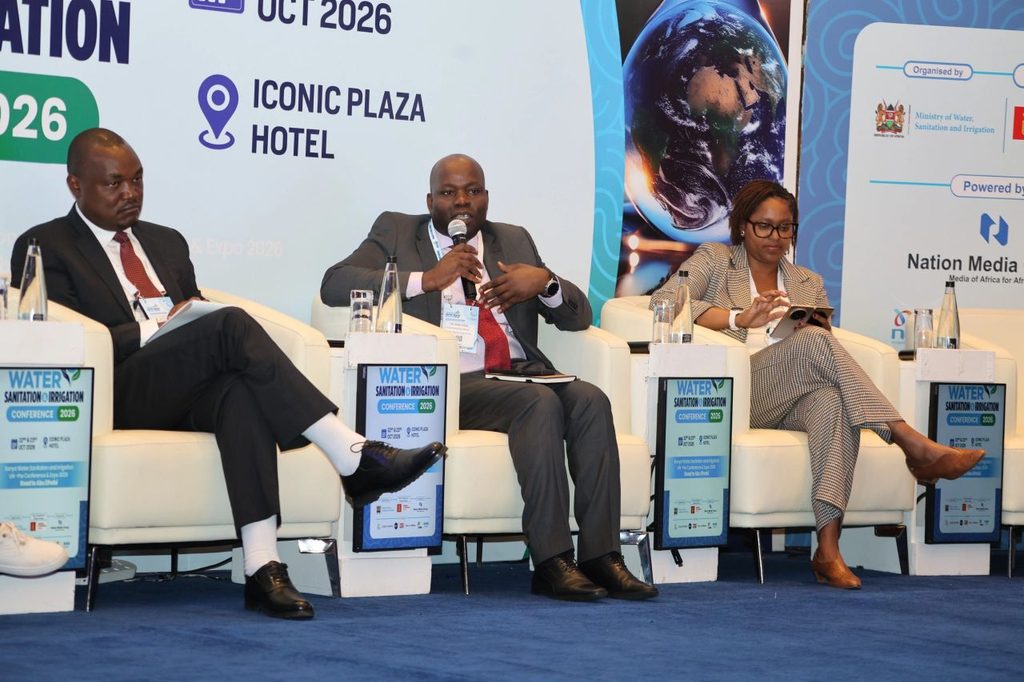
Water Sector Trust Fund (WaterFund) Chief Executive Officer Willis Ombai raised the concern during a high-level panel on water financing requirements under the National Water and Sanitation Investment and Financing Plan (NAWASIP) at the United Nations Water, Sanitation and Irrigation Pre-Conference in Nairobi.
Ombai said Kenya requires approximately Sh995 billion between 2023 and 2030 to achieve its national water and sanitation targets. However, the financing available under existing arrangements remains insufficient, making it necessary to diversify funding sources and attract additional investment.
He emphasised the need for sustainable financing models that combine public resources, private capital, commercial lending and support from development partners to accelerate infrastructure development.
The funding challenge comes as Kenya seeks to expand water supply networks, improve sanitation facilities and strengthen the capacity of water service providers to meet growing demand. Investments are required to construct and upgrade treatment plants, extend distribution pipelines, develop storage facilities and expand sewerage systems in urban and rural areas.
According to the Water Services Regulatory Board’s sector performance report for 2023/24, NAWASIP estimates that the sector requires Sh995 billion to meet its 2030 ambitions, with an additional Sh652 billion needed beyond existing investment projections. The regulator has identified stronger domestic resource mobilisation, improved utility performance and private-sector participation as important measures for addressing the shortfall.
Ombai also highlighted the importance of improving the operational and financial efficiency of water utilities. Better revenue collection, reduced water losses, stronger accountability and effective management of infrastructure can improve the financial position of service providers and increase their ability to attract investment.
Financially sustainable utilities are better placed to maintain existing facilities, expand connections and deliver reliable services to consumers. Developing credible business models and preparing viable projects will also be important in attracting commercial lenders and private investors.
Public-private partnerships and blended financing arrangements offer potential avenues for mobilising additional resources. Under these models, public institutions can work with private investors and development partners to share project costs and risks while supporting the development of essential infrastructure.
Kenya has already identified private investment as an important component of its water-sector financing strategy. The government has explored opportunities to involve private investors in major infrastructure projects as part of efforts to accelerate implementation of the national investment plan.
However, Ombai stressed that development partners remain important in mobilising resources and supporting progress towards the 2030 targets. Their contribution will need to complement domestic funding and other investment sources as Kenya seeks to reduce its dependence on external assistance.
WaterFund also plays a role in financing water and sanitation projects, particularly in underserved communities where access to reliable services remains limited. Through its financing programmes, the institution supports initiatives intended to improve water supply, sanitation and service delivery.
Bridging the financing gap will require coordinated action by national and county governments, water utilities, financial institutions, private investors and development partners.
With the 2030 deadline approaching, mobilising adequate and predictable funding will be critical to expanding infrastructure, improving service reliability and ensuring more Kenyans can obtain safe water and adequate sanitation.