Athi water, AFD review key water projects
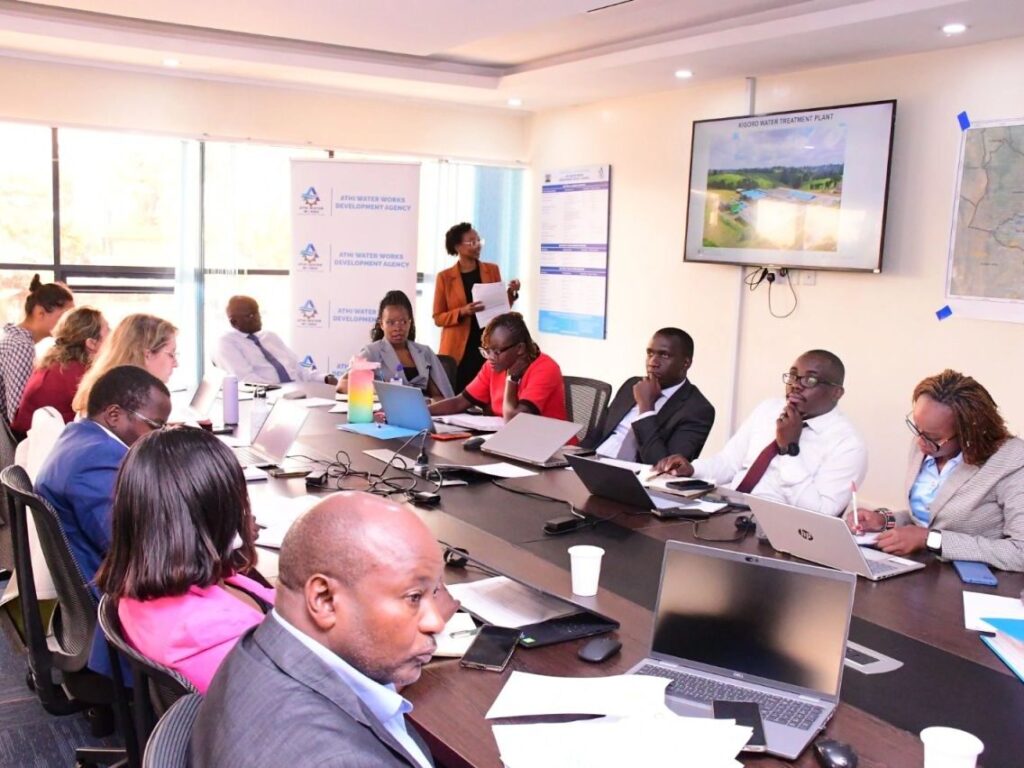
Athi Water Works Development Agency (AWWDA) and the French Development Agency (AFD) have reviewed the progress of two major water and sanitation projects targeting improved water supply and wastewater services in Nairobi and surrounding areas.
The two agencies held a supervision meeting on October 28, 2026, to assess implementation progress, address outstanding challenges and agree on measures to improve delivery of the Northern Collector Project and the Nairobi Water and Sanitation Project.
The discussions focused on construction progress, contractor payments, financing requirements, environmental safeguards and the need to resolve compensation and resettlement issues affecting communities along project routes.
Under the Northern Collector Project, identified as CKE 1074, the teams reviewed the status of tunnel and pipeline infrastructure, operations at the Kigoro Water Treatment Plant and outstanding contractual obligations. The meeting also examined environmental, health and safety requirements, alongside unresolved cases involving people affected by construction activities.
The Northern Collector infrastructure is an important component of plans to strengthen bulk water supplies to Nairobi and neighbouring areas. The system was designed to transfer water from the Gikigie, Irati and Maragua rivers towards Thika Dam through an underground tunnel measuring approximately 11.8 kilometres.
Athi Water’s project information indicates that the Northern Collector Tunnel Phase I was completed in 2022, while the Kigoro Water Treatment Plant was completed in 2020. The treatment plant has a production capacity of approximately 140 million litres per day, and the wider Northern Collector system was designed to increase Nairobi’s water supply by about 140 million litres daily.
The infrastructure is intended to help meet growing demand for water in the capital, where population growth and urban expansion continue to place pressure on existing supplies.
The meeting also considered outstanding payments to contractors and compensation for people affected by project implementation. Delays in settling invoices and providing government counterpart funding can disrupt construction schedules, affect contractors’ ability to mobilise resources and complicate the completion of outstanding works.
The second project, CKE 1135, focuses on expanding water and sanitation infrastructure across Nairobi, including underserved informal settlements. The review covered water transmission facilities, rehabilitation of existing networks, contractor mobilisation, household connections and construction timelines.
The Nairobi Water and Sanitation Project includes interventions in informal settlements such as Kibera, Kawangware, Kiambiu, Huruma, Matopeni and Mariguini. Works are intended to improve water distribution and sanitation services in neighbourhoods where households may face difficulties obtaining reliable supplies and accessing adequate sanitation facilities.
AFD has previously identified improved water services for approximately 180,000 residents in informal neighbourhoods as an expected outcome of its wider Nairobi water infrastructure programme. The broader programme is also intended to improve drinking-water conditions for Nairobi’s population and support public institutions, businesses and other water users.
Environmental and social safeguards featured prominently in the latest discussions. The agencies emphasised continued engagement with affected communities, accessible grievance-handling mechanisms and close monitoring of health, safety and environmental risks throughout project implementation.
The partners also reviewed budget gaps, outstanding invoices and the need for effective contract management to keep construction activities moving. Resolving these issues will be important in maintaining implementation schedules and ensuring that project investments translate into improved services.
AWWDA reaffirmed its commitment to working with AFD and other stakeholders to address outstanding challenges and strengthen project delivery. The projects form part of broader efforts to improve water security, expand sanitation infrastructure and respond to Nairobi’s growing demand for reliable water services.