CWWDA targets 196 million-litre water deficit along Kenya’s coast
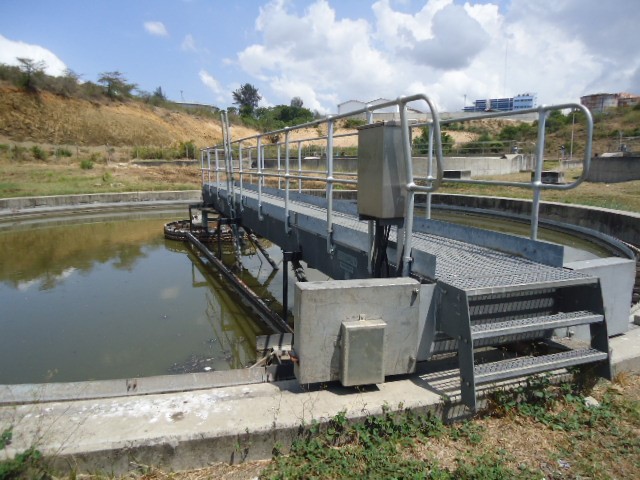
The Coast Water Works Development Agency (CWWDA) is stepping up investments in water infrastructure across six coastal counties as it seeks to address a daily water deficit estimated at 196 million litres.
The agency is expanding bulk water production, transmission pipelines, storage facilities and community water projects to improve supply to households, institutions and businesses in Mombasa, Kilifi, Kwale, Taita-Taveta, Tana River and Lamu counties.
According to CWWDA, the coastal region has an estimated population of 4.4 million people, with daily water demand standing at approximately 446 million litres against production capacity of 250 million litres.
The shortfall has been attributed to growing population, urban expansion and increased economic activities, including tourism, manufacturing, port operations, trade and housing development.
To address the challenge, the agency is implementing large-scale infrastructure projects while extending smaller water supply schemes to underserved communities.
One of its major investments is the Second Baricho-Kakuyuni Water Supply Project, which has been completed to strengthen bulk water transmission towards Malindi, Kilifi and surrounding areas.
The project involved construction of approximately 29 kilometres of an 800-millimetre steel pipeline, a five-million-litre storage tank, three pumping sets and associated electromechanical facilities.
CWWDA has also completed the Malindi-Kilifi pipeline measuring 56 kilometres and the 37-kilometre Malindi-Gongoni pipeline, alongside additional storage infrastructure.
Another intervention involves protecting the Baricho Wellfield, one of the region’s most important water sources, which has an installed production capacity of approximately 110 million litres daily.
The agency has also introduced solar power at Baricho Water Works to reduce the cost of pumping water. The installation of 6,717 solar panels with a combined generation capacity of approximately 4.37 megawatts has reduced monthly electricity expenditure from about KSh60 million to KSh40 million.
The savings translate to approximately KSh240 million annually, which could help lower operational costs and improve the financial sustainability of bulk water production.
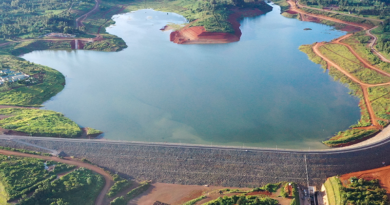
CWWDA is also relying on the Mwache Dam project to significantly increase water availability in Mombasa and Kwale counties.
The dam, which is being implemented by the Ministry of Water, Sanitation and Irrigation, was reported to be more than 90 per cent complete, with reservoir impoundment targeted before the end of 2026.
The agency is responsible for complementary infrastructure, including the Mwache South Mainland Transmission Pipeline and a proposed water treatment plant with a capacity of approximately 186 million litres daily.
Construction of the treatment plant is expected to commence in December 2026. Once the entire system is operational, the project is expected to benefit approximately one million people while supporting the development of the Dongo Kundu Special Economic Zone.
Beyond major infrastructure, CWWDA has allocated approximately KSh2.8 billion towards community-level water projects across the six coastal counties.
The investments cover boreholes, water pans, earth dams, pipelines, storage tanks and institutional water supply schemes targeting areas facing persistent shortages.
Among the projects is the KSh1.28 billion Makamini Dam in Kwale County, which includes a 787-metre earth-fill dam, water treatment infrastructure and storage facilities.
Other interventions include the rehabilitation of Pemba Dam, development of the Mangai Water Pan in Tana River County and construction of additional water storage facilities in Kilifi and Taita-Taveta counties.
The agency is also extending water infrastructure to schools and hospitals, including Kizurini Special School in Kilifi and Ngao Sub-County Hospital and Hola Hospital in Tana River County.
CWWDA’s investments highlight the importance of combining large bulk-water projects with decentralised community schemes to address the region’s water challenges.
However, completing major infrastructure, particularly the Mwache water supply system, will require additional financing to develop the remaining treatment, transmission, storage and distribution facilities.
The agency is seeking partnerships and additional investment to close the financing gap and accelerate the delivery of water infrastructure across the Coast region.
The overall objective is to increase water production, improve supply reliability and provide the infrastructure needed to support the coastal region’s growing population and economy.