Carbon credits emerge as new financing option for Africa’s water sector
Carbon credits are emerging as a potential source of funding for water and sanitation services in Africa, with stakeholders exploring how climate finance can help address the sector’s persistent infrastructure and maintenance funding challenges.
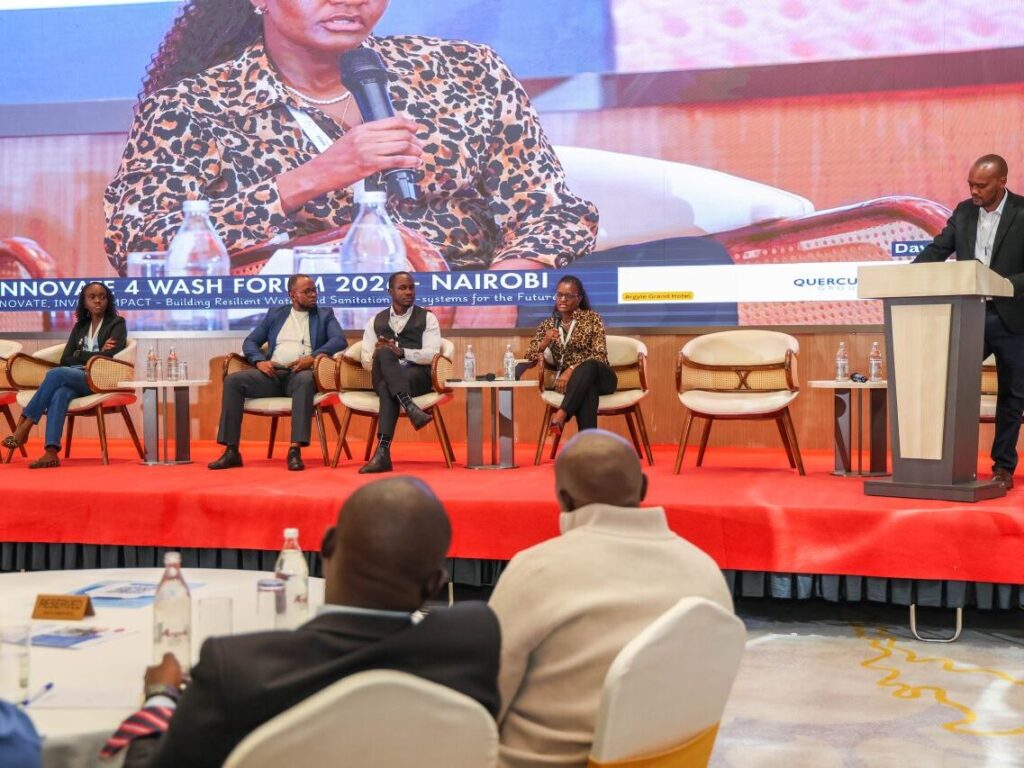
The opportunity was discussed at the I4WASH 2026 Forum in Nairobi, where the Millennium Water Alliance (MWA) examined how revenue from carbon markets could support the long-term delivery of water, sanitation and hygiene services.
During a plenary presentation titled Understanding Carbon Credits in Water: From Climate Impact to Credible Finance, MWA’s Emmanuel Olela shared lessons from the Drought Resilience Impact Platform-Fixing Uptime Now and Decision Improvement (DRIP-FUNDI) programme in Northern Kenya.
The presentation was followed by a panel discussion involving Lilian Kagume of Climate Impact Partners, Julie Aguko of Gold Standard, Ngatia Kihuria of Aqua Clara Kenya and Olela. David Kamau of MWA moderated the session.
The discussion examined how water utilities and project developers can identify suitable carbon credit methodologies, access carbon markets, understand pricing differences and meet the requirements of independent auditors responsible for validating and verifying projects.
Carbon credits are generated when an eligible project demonstrates measurable reductions or removals of greenhouse gas emissions. In safe drinking water projects, this can happen when communities gain access to treated water and no longer need to boil unsafe water using firewood or fossil fuels. Each verified credit generally represents one tonne of carbon dioxide equivalent emissions avoided or removed.
Northern Kenya’s DRIP-FUNDI programme offers a practical example of how the model can support water services. Implemented by MWA and its partners in Marsabit, Garissa, Isiolo, Turkana and Wajir, the initiative targets improved reliability at 200 boreholes, with an ambition to maintain an average operational uptime of 90 per cent.
According to MWA, the programme was registered under the Gold Standard for Global Goals Impact Registry in 2025, with the first carbon credit issuance expected in late 2026 or early 2027. Revenue from the credits is intended to support long-term repairs and maintenance of water points serving communities across the region.
The initiative addresses a major challenge in rural water supply, where infrastructure can become unreliable when funding for repairs, spare parts and routine maintenance runs out after construction.
However, carbon financing is not automatic. Projects must demonstrate credible emissions reductions against an established baseline, maintain reliable monitoring systems and undergo independent validation and verification. Gold Standard’s certification process requires approved third-party bodies to assess project design, monitoring arrangements and reported impacts.
The approach also faces challenges, including the cost of certification, fluctuating carbon credit prices and the need to ensure that revenue reaches the services and communities generating the climate benefits.
A 2025 case study published by Sanitation and Water for All noted that carbon market financing for water and sanitation remained relatively small and concentrated in a limited number of East African countries and project types. It nevertheless identified scope for growth, particularly in targeted interventions.
The I4WASH discussion highlighted the possibility of using carbon finance alongside government allocations, development partner support and private investment. For water utilities and rural service providers, the opportunity will depend on credible emissions accounting, transparent revenue management and sustained investment in operations and maintenance.
Carbon credits may not close Africa’s water and sanitation financing gap on their own, but projects such as DRIP-FUNDI demonstrate how climate-related revenue could complement conventional funding and help keep essential water infrastructure operational.