Rising lakes force emergency drainage works in Baringo

The government has stepped up emergency drainage interventions in Baringo County as rising water levels in Lakes Baringo and Bogoria threaten surrounding communities, agricultural land and sensitive ecosystems.
Principal Secretary for Irrigation CPA Ephantus Kimotho inspected ongoing works aimed at addressing changing drainage patterns and managing excess water around the two lakes ahead of the predicted El Niño rains.
The rising lake levels have submerged farmland, displaced residents and damaged infrastructure, placing pressure on communities whose livelihoods depend on agriculture and livestock keeping.
One of the major concerns is the shrinking distance between the two lakes. Technical assessments presented during the inspection indicate that the distance separating Lake Baringo and Lake Bogoria has declined from approximately 22 kilometres a decade ago to about seven kilometres.
Officials fear that further changes could lead to an ecological connection between Lake Baringo’s freshwater ecosystem and Lake Bogoria’s alkaline waters, potentially disrupting the ecological balance of both lakes.
Data presented during the technical briefing showed that before 2010, Lake Baringo’s surface area fluctuated between approximately 108 and 130 square kilometres depending on seasonal conditions.
By 2026, the lake’s water volume was estimated to have increased by between 1.4 billion and 1.9 billion cubic metres, while its level had risen by approximately 12 to 14 metres, from 972 metres to about 984 metres above mean sea level.
The expansion has altered the surrounding landscape, inundated previously productive land and increased the vulnerability of neighbouring settlements.
To address the immediate threat, the government has developed a phased intervention programme informed by technical assessments and public participation.
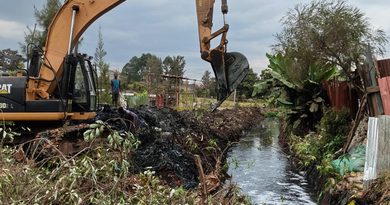
The first phase focuses on restoring Rivers Loboi and Waseges to their original drainage courses through river training, desilting, sediment removal and rehabilitation of river channels.
Technical assessments suggest that changes in drainage patterns and increased water inflows have contributed to rising water levels around Lake Bogoria. Restoring the rivers’ natural drainage pathways is expected to improve water movement and reduce further pressure on the surrounding ecosystems.
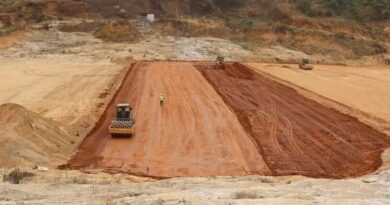
The Principal Secretary also inspected drainage channel works intended to improve the conveyance of excess water and facilitate its controlled movement from Lake Baringo.
Beyond the emergency response, the government plans to explore ways of turning the water challenge into an opportunity for agricultural development through investments in water storage, irrigation canals and check dams.
Preliminary assessments have identified irrigation potential covering approximately 250,000 acres, with an initial development target of 100,000 acres, subject to detailed feasibility studies.
If implemented, the proposed programme could expand agricultural production, strengthen livestock development, create jobs and improve household incomes in communities that rely heavily on small-scale farming and pastoralism.
The planned infrastructure would also support efforts to improve water storage and management, although its feasibility will depend on engineering assessments, environmental safeguards and sustainable allocation of available water resources.
Kimotho commended the technical teams for their progress, noting that the ongoing construction activities had already created employment opportunities for local residents.
More than 96 residents have been engaged in activities including river clearance, excavation, machinery operation and other construction-related work.
The multidisciplinary engineering team is being led by Irrigation Secretary for Programmes Eng. Michael Thuita.
The immediate priority remains improving drainage and reducing the risks facing communities around the lakes. However, the long-term response will require careful management of water flows, protection of the lakes’ distinct ecosystems and investment in infrastructure that supports both environmental resilience and local livelihoods.