Galana Kulalu water projects target reliable irrigation supply for 300,000 acres
The government is stepping up investment in water storage and irrigation infrastructure at the Galana Kulalu Food Security Project as it seeks to secure reliable water supplies for large-scale farming in Kilifi and Tana River counties.
The renewed focus on water resources comes as the National Irrigation Authority (NIA) works with private investors to expand agricultural production in the coastal region, where unreliable rainfall has traditionally limited farming activities.
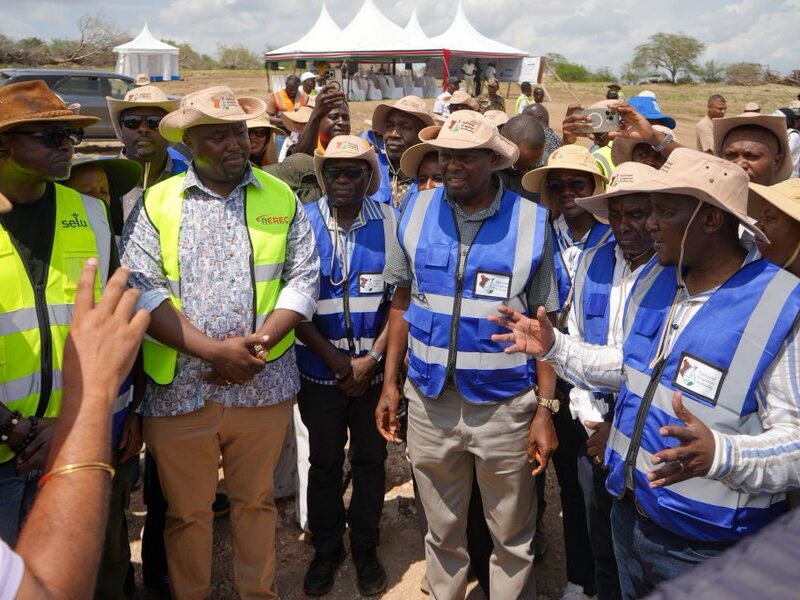
During a tour of the project on November 3, 2026, Chief of Staff and Head of Public Service Felix Koskei, accompanied by Principal Secretaries and other senior government officials, inspected progress in the development of water and supporting infrastructure.
The delegation inspected a 450,000-cubic-metre water reservoir and commissioned a one-megawatt solar power plant designed to support irrigation operations. The officials also visited a newly constructed bridge linking Kilifi and Tana River counties.
The reservoir forms part of the infrastructure being developed to improve water availability for farms and reduce dependence on unpredictable rainfall. Reliable storage and pumping facilities are essential for maintaining irrigation schedules, particularly during prolonged dry periods.
The government’s wider plan for the area centres on the proposed Athi Dam, also known as Galana Dam, which is expected to harness water from the Athi-Galana River system and channel it to the irrigation project.
According to the National Irrigation Authority, the proposed dam will have a storage capacity of approximately 305 million cubic metres and an associated water conveyance system. The infrastructure is expected to support irrigation expansion across as much as 300,000 acres, significantly increasing the project’s agricultural potential.
A construction contract for the dam and its associated conveyance system was signed on December 30, 2025, between NIA and China Communications Construction Company Limited. The project is intended to provide a more dependable water source for agricultural production while supporting the government’s transition from rain-fed to irrigation-based farming.
The proposed development is particularly significant because expanding irrigated agriculture requires more than constructing reservoirs. Water must also be abstracted, transported through conveyance infrastructure and distributed efficiently to farms to ensure that available resources reach the intended areas.
The project is currently operating on an existing irrigation infrastructure footprint of about 10,000 acres, with private investors undertaking commercial crop production. The authority’s partnership with Selu Limited is among the arrangements intended to expand farming activities and attract additional investment.
The proposed dam is expected to increase the amount of water available for irrigation, although its success will depend on effective management of the Galana River resources, completion of the conveyance network and sustainable allocation of water among different users.
The development also raises the importance of protecting the river catchment and monitoring water availability as demand increases. Large-scale abstraction must be supported by proper resource assessments, environmental safeguards and efficient irrigation technologies to ensure that agricultural expansion does not undermine the long-term sustainability of the river system.
Beyond food production, the planned water infrastructure is expected to support economic activities in the coastal region by creating opportunities in agro-processing, transport, storage and other agricultural value chains.
The Galana Kulalu project therefore places water resource development at the centre of Kenya’s food security strategy, with the proposed dam and distribution system expected to determine how far the scheme can expand its irrigated acreage and sustain production throughout the year.