Kenya expands dam projects to tackle water shortages and flooding
Kenya is stepping up investment in dams, water pans and flood-control infrastructure as the government seeks to increase water-storage capacity, improve drought preparedness and protect communities from destructive floods.
The National Water Harvesting and Storage Authority (NWHSA) is implementing several projects across the country aimed at capturing excess water during rainy seasons and making it available for domestic consumption, irrigation, livestock production and industrial use during dry periods.
The programme comes as changing rainfall patterns continue to expose communities to two major challenges: prolonged water shortages and flooding during periods of heavy rainfall.
Among the major projects being advanced by the authority are Siyoi-Muruny Dam in West Pokot County, Umaa Dam in Kitui County, Soin-Koru Dam along the Kericho-Kisumu border and Badasa Dam in Marsabit County.
Siyoi-Muruny Dam is expected to serve approximately 350,000 people, while Umaa Dam is projected to benefit about 75,000 residents in Kitui County. The projects are intended to improve water availability while supporting agricultural activities and economic development in their respective regions.
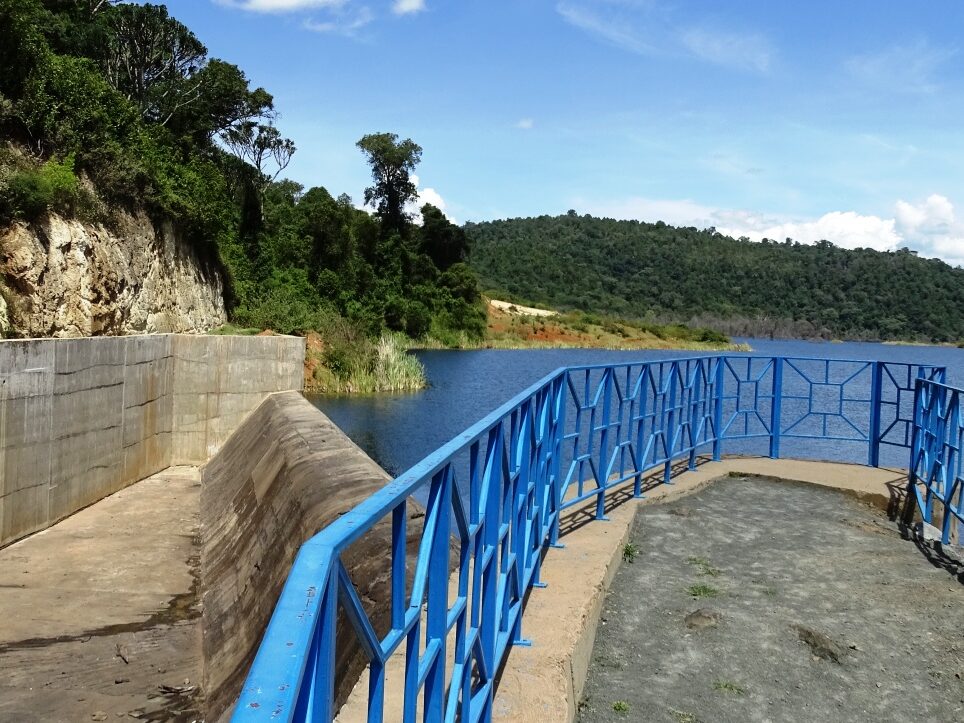
Siyoi-Muruny Dam, one of the flagship investments, had reached 86.7 per cent completion by August 2026, with the government targeting completion in December 2026. The Sh2.16 billion project is being implemented by NWHSA and is expected to improve access to reliable water supplies in West Pokot and surrounding areas.
Umaa Dam is another important investment in the government’s water-storage programme. Located in Kitui County, the project is designed to increase water availability for domestic and agricultural use in an area that experiences prolonged dry spells. The planned storage capacity is approximately 1.5 million cubic metres.
The authority is also pursuing the Soin-Koru Dam project, which is expected to strengthen water storage and flood management in the Nyando Basin. The project is particularly significant for communities along the Kericho-Kisumu border, where seasonal flooding has repeatedly affected settlements, farms and infrastructure.
In Marsabit County, Badasa Dam is among the planned investments aimed at improving water security in the dry region. The project has a proposed storage capacity of 2.5 million cubic metres.
Beyond the large dams, NWHSA is expanding smaller water-harvesting facilities, including community dams, water pans and boreholes. These interventions are intended to bring water closer to households, livestock keepers and farmers, particularly in arid and semi-arid areas where communities depend heavily on seasonal rainfall.
The authority’s 2023–2027 strategic plan targets an additional 125 million cubic metres of national water-storage capacity through major dam projects and household rainwater-harvesting initiatives.
Its previous programmes had already resulted in the construction and rehabilitation of more than 1,000 small dams and water pans across 45 counties, adding approximately 20.15 million cubic metres of storage capacity. These facilities were reported to serve about 2.8 million people and more than 3.6 million livestock.
However, increasing water storage alone will not address the country’s exposure to flooding. The authority is also implementing flood-control projects in areas that experience recurrent river overflows, including Budalang’i in Busia County and West Kano-Kanyagwal in Kisumu County.
Other flood-prone areas covered by its wider programme include sections of the Nyando, Nzoia, Kuja and Sabwani river systems. The interventions involve constructing and strengthening dykes, drainage channels, check dams and riverbank protection structures to manage water movement and reduce damage to settlements and agricultural land.
The authority’s flood-control infrastructure has helped protect some communities along the Nyando and Awach-Tende rivers from displacement during flooding. Areas protected by dykes have also recorded improved agricultural production, demonstrating the importance of combining flood management with agricultural water security.
The authority is also addressing the safety of existing water-storage infrastructure. At Maruba Dam in Machakos County, emergency dam-safety interventions have focused on repairing cracks along the dam crest to prevent further deterioration and protect the facility ahead of anticipated heavy rainfall.
The maintenance programme highlights the importance of inspecting existing dams and undertaking repairs rather than concentrating exclusively on constructing new facilities. Poorly maintained storage infrastructure can expose surrounding communities to additional risks, particularly during periods of intense rainfall.
For the 2026/2027 financial year, NWHSA has identified large and medium dams, small dams, water pans, boreholes and flood-control structures among its priority investments. The authority has also highlighted Siyoi-Muruny, Umaa Dam and the commencement of the Badasa-Songa Water Supply Project as flagship interventions.
The government’s broader objective is to make better use of rainfall by capturing and retaining water that would otherwise flow downstream, cause flooding or be lost through uncontrolled runoff.
For communities in water-stressed counties, expanded storage infrastructure could improve access to water for household consumption, livestock and farming while supporting local economic activities.
However, the long-term benefits will depend on timely completion of projects, adequate funding, proper maintenance, protection of catchment areas and effective coordination between national and county institutions.
As Kenya continues to experience alternating periods of drought and excessive rainfall, investments in water harvesting, storage and flood management are becoming increasingly important to strengthening the country’s resilience and securing water supplies for future generations.