Kenya moves to recover Sh11 billion lost annually through water wastage
The government has intensified efforts to reduce water losses in the country, with more than KSh11 billion lost annually through leakages, illegal connections, water theft and inefficient billing systems.
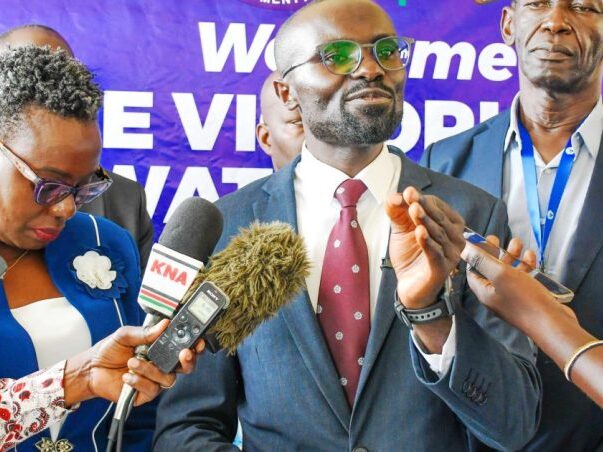
Water, Sanitation and Irrigation Cabinet Secretary Eric Mugaa has directed water agencies to strengthen measures aimed at reducing non-revenue water, warning that continued losses are undermining investments in water infrastructure and limiting the resources available for expanding access to reliable supplies.
Speaking during the Lake Victoria South Water Works Development Agency (LVSWWDA) annual stakeholders’ meeting in Kisumu, Mugaa said approximately 242 million cubic metres of water are lost annually out of the 504 million cubic metres produced nationally.
The losses account for between 44 and 48 per cent of total water production, meaning that nearly half of the water entering supply systems does not generate revenue for water service providers.
Non-revenue water refers to treated water that is lost through physical leakages, illegal connections, meter inaccuracies and other commercial inefficiencies before it is properly billed to consumers.
The Cabinet Secretary said the government had established a specialised Water Police Unit to help water agencies and service providers address water theft, illegal connections and vandalism of public infrastructure.
The officers have been deployed to water agencies’ headquarters to support enforcement and protect investments in water supply infrastructure. LVSWWDA has been allocated 10 officers under the initiative.
Mugaa also raised concerns over the destruction and theft of infrastructure installed using public funds, including valves, manhole covers and components at water treatment facilities.
He noted that vandalism increases maintenance expenditure, disrupts water distribution and forces utilities to spend additional resources replacing damaged equipment instead of expanding services.
The Cabinet Secretary challenged water service providers to adopt more ambitious targets for reducing water losses, questioning why some utilities celebrate relatively small improvements when substantial quantities of treated water continue to disappear from their distribution networks.
He cited Japan, where non-revenue water levels are reportedly below seven per cent, as an example of the potential improvements that can be achieved through better infrastructure management and operational efficiency.
The government is also pursuing technological interventions to address the problem. In May 2026, the Ministry of Water, Sanitation and Irrigation, working with the Water Services Providers Association of Kenya, initiated consultations on a National Water Loss Reduction Programme.
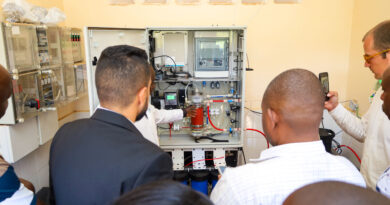
The proposed programme focuses on addressing both technical and commercial losses through improved leak detection, network mapping, verification of distribution systems, smart metering and more efficient billing arrangements.
These measures are expected to help utilities identify leakages faster, monitor water movement across their networks and improve revenue collection.
The financial implications of reducing non-revenue water are significant because resources currently lost through wastage could instead support pipeline rehabilitation, new connections, treatment facilities and sewerage infrastructure.
During the Kisumu meeting, Mugaa also highlighted reforms introduced through the 2024 amendment to the Water Act, which expanded the responsibilities of Water Works Development Agencies to include bulk water service provision and opened opportunities for private-sector participation through Public-Private Partnerships.
LVSWWDA received a bulk water service provision licence from the Water Services Regulatory Board (WASREB), allowing it to undertake additional responsibilities in supplying bulk water.
The Cabinet Secretary said the expanded mandate would require the agency to maintain consistent water quality, adequate supply, timely delivery and proper maintenance of infrastructure.
He also emphasised the importance of joint metering and timely payments between water institutions to strengthen financial sustainability.
LVSWWDA Chief Executive Officer Jacklyn Kemunto said the agency was targeting to mobilise KSh48.2 billion under its 2023–2027 strategic plan to finance water supply, sanitation, sewerage development, infrastructure maintenance and environmental conservation.
She identified inadequate financing, governance challenges among water service providers, climate variability and vandalism as major obstacles affecting service delivery.
The agency serves eight counties: Kisumu, Siaya, Kericho, Homa Bay, Kisii, Nyamira, Bomet and Migori.
Despite the challenges, the region has recorded improvements in water and sanitation connectivity. Mugaa said water connectivity within the agency’s jurisdiction had increased from 57 per cent to 62 per cent, while sewerage coverage had risen from 27 per cent to 35 per cent.
However, the Cabinet Secretary challenged the agency to accelerate expansion as millions of Kenyans continue to lack basic water and sanitation services.
Kericho Governor Erick Mutai, who represented governors from the region, pledged stronger cooperation between county governments and water agencies, noting that both levels of government have a shared responsibility to improve access to safe water.
He also acknowledged that delayed payments by county governments for water supplied to public institutions, including hospitals, had contributed to financial difficulties among some water service providers.
The government’s renewed focus on reducing water losses highlights the importance of improving the efficiency of existing infrastructure alongside investing in new dams, treatment plants and distribution networks.
Reducing non-revenue water could enable utilities to recover more income, lower operating pressures and redirect resources towards extending services to underserved communities.
The success of the initiative will depend on effective enforcement, regular infrastructure maintenance, improved metering, stronger utility management and cooperation between national and county governments.