Kiserian dam faces pressure to meet growing water demand
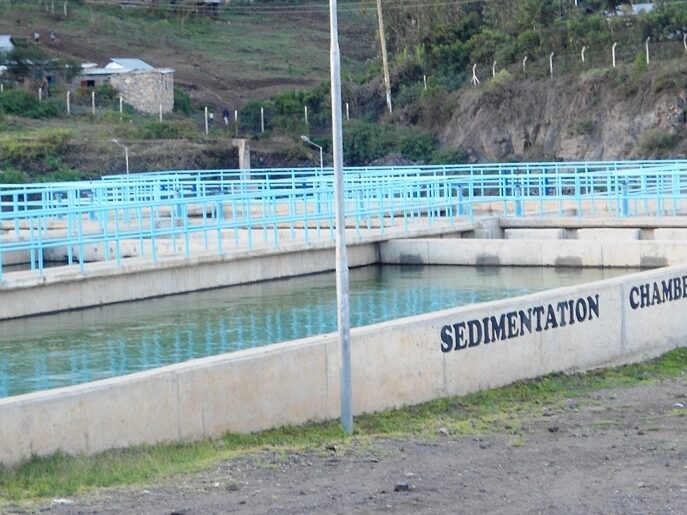
Kiserian Dam in Kajiado County remains a critical source of water for residents of Kiserian, Ongata Rongai and parts of Ngong, but its current production levels highlight the challenge of meeting rising demand in the rapidly expanding townships.
Located along River Kiserian, approximately two kilometres from Kiserian Township, the 18-metre-high dam has a storage capacity of 1.22 million cubic metres and was designed to support a treatment facility capable of producing 15,700 cubic metres of water daily.
However, information published by the National Water Harvesting and Storage Authority indicates that the facility’s current yield is approximately 3,000 cubic metres per day, significantly below its designed production capacity.
The dam and its treatment facilities are operated by Oloolaiser Water and Sewerage Company, which supplies water to several growing urban settlements in Kajiado County.
Constructed at a cost of approximately KSh1 billion and commissioned in 2013, the project was intended to improve water access for an estimated 252,744 people while supporting commercial activities, agriculture and industrial development.
Its reservoir provides an important buffer against prolonged dry spells and unreliable rainfall, which have historically affected water availability in the semi-arid region.
The dam has also contributed to changing livelihoods around Kiserian, particularly through small-scale irrigation farming. Farmers in surrounding communities have increasingly used available water to grow vegetables, maize and fruits, helping improve household incomes and food supplies.
Residents have reported reduced dependence on expensive water vendors since the facility became operational, while livestock farmers have also benefited from improved access to water.
However, the sustainability of the facility is facing environmental challenges associated with rapid urbanisation, poor waste disposal and soil erosion within the catchment.
The Ngong Municipality Integrated Strategic Urban Development Plan identifies pollution of the dam by animal waste and blood from the Kiserian slaughterhouse as an environmental concern. It also highlights sedimentation, degradation of riparian reserves and inadequate protection of the water catchment.
These challenges raise concerns about the quality of raw water entering the reservoir and the cost of treating it before distribution to consumers.
In June 2026, the Kenya News Agency reported that the Kiserian Water Users Association had raised concerns about waste disposal and soil erosion affecting the reservoir. The association called for stronger catchment protection, including reforestation and community-led waste management.
The challenges are particularly significant because contamination increases the treatment requirements and operational costs of supplying safe drinking water.
Oloolaiser has also been pursuing infrastructure improvements under the Nairobi Satellite Towns Water and Sanitation Development Programme.
The company’s annual report outlines plans involving rehabilitation of Kiserian Dam and Mbagathi treatment plants, renewal of 205 kilometres of pipelines, additional bulk water supplies, construction of storage tanks and expansion of consumer connections.
The programme was designed to increase water production progressively by 10,600 cubic metres daily through additional bulk supplies and borehole development.
The expansion is intended to improve reliability, reduce water losses and extend services to more households across Kiserian, Ongata Rongai and surrounding settlements.
Beyond increasing production, protecting the reservoir from pollution and sedimentation will be essential to maintaining its ability to serve the growing population.
With Kiserian and neighbouring townships experiencing continued urban expansion, the dam’s importance extends beyond domestic water supply to supporting agriculture, businesses and future economic development.
Ensuring that its treatment capacity is fully utilised while protecting the catchment could help secure a more dependable water supply for communities that continue to depend on the facility.