Water pollution raises public health concerns as researchers call for stronger resource protection
Growing concerns over water pollution, inadequate sanitation and microbial contamination are drawing attention to the relationship between water resource management and public health in Kenya, with researchers warning that protecting water sources is essential in preventing disease transmission.
The challenge extends beyond access to water, with the quality of rivers, lakes, groundwater and piped supplies determining whether communities are exposed to disease-causing microorganisms through drinking water and the surrounding environment.
Recent research in Kenya has demonstrated how contamination can persist even after water has passed through treatment and distribution systems, raising questions about the effectiveness of water quality monitoring, sanitation infrastructure and household water handling practices.
A study published in July 2026 in PLOS Water, involving researchers from the African Population and Health Research Center (APHRC), examined household water handling practices and microbial contamination in Kibera, Nairobi.
The research, which covered 262 households, found that 56 per cent of household water samples tested positive for total coliform bacteria, while 15 per cent contained E. coli, an indicator of faecal contamination.
It also established that 84 per cent of households had free chlorine residual levels below the recommended minimum of 0.2 milligrams per litre, indicating inadequate protection against microbial contamination.
Only 42 per cent of households reported treating their drinking water at home.
The findings demonstrate that water safety does not end at the treatment plant, as contamination can occur during transportation, storage and handling before water reaches consumers.
The study also highlighted the importance of maintaining appropriate chlorine levels and promoting effective household water treatment practices, particularly in informal settlements where unreliable supply systems and poor infrastructure increase exposure to contamination.
Similar concerns have emerged in Kisumu, where a separate study published in February 2026 in Tropical Medicine and International Health examined microbial contamination and antibiotic resistance across Lake Victoria, River Wigwa, the Dunga Water Treatment Plant, Nyalenda wastewater ponds and the city’s water distribution network.
Using advanced genetic sequencing techniques, researchers identified several potentially harmful bacterial organisms and antibiotic resistance genes across the sampled water systems.
The study detected microbial signatures associated with organisms including E. coli, Klebsiella pneumoniae, Pseudomonas aeruginosa and Acinetobacter baumannii.
The researchers raised concerns about wastewater pollution, incomplete disinfection and the possible persistence of microbial contamination within water distribution infrastructure.
They recommended integrating environmental monitoring into public health surveillance to improve the detection of emerging health risks.
The findings reinforce the need to manage water resources as part of a wider public health strategy, particularly in urban areas where untreated wastewater, industrial discharge and domestic waste can enter rivers and other water bodies.
The Water Resources Authority (WRA) is mandated to monitor water quality and pollution in Kenya’s surface and groundwater resources through field inspections, laboratory analysis and enforcement of effluent discharge requirements.
Its pollution control interventions include protecting riparian reserves, improving solid and liquid waste management, promoting vegetation cover and reducing agricultural pollutants entering water bodies.
These measures are important because contamination of freshwater resources can affect drinking water supplies, aquatic ecosystems, agriculture and the health of communities that depend on rivers and groundwater.
The Ministry of Health has also called for stronger coordination between national and county governments to address unsafe water, poor sanitation and unmanaged waste.
In February 2026, Principal Secretary for Public Health and Professional Standards Mary Muthoni Muriuki warned that inadequate hygiene, unsafe water and weak sanitation systems continued to contribute to diarrhoeal diseases, cholera and typhoid, placing additional pressure on healthcare facilities.
She called for the expansion of protected water sources, improved waste management and functional water, sanitation and hygiene facilities in schools and public institutions.
The concerns are particularly relevant as Kenya continues to experience waterborne disease outbreaks. According to the World Health Organization’s 2025 annual report for Kenya, 256 suspected cholera cases and 13 deaths had been reported by May 2025, with Nairobi, Kisumu, Migori and Kwale among the affected counties.
The relationship between environmental conditions, animal health and human disease transmission is also receiving increased attention through the One Health approach, which recognises that the health of people, animals and ecosystems is interconnected.
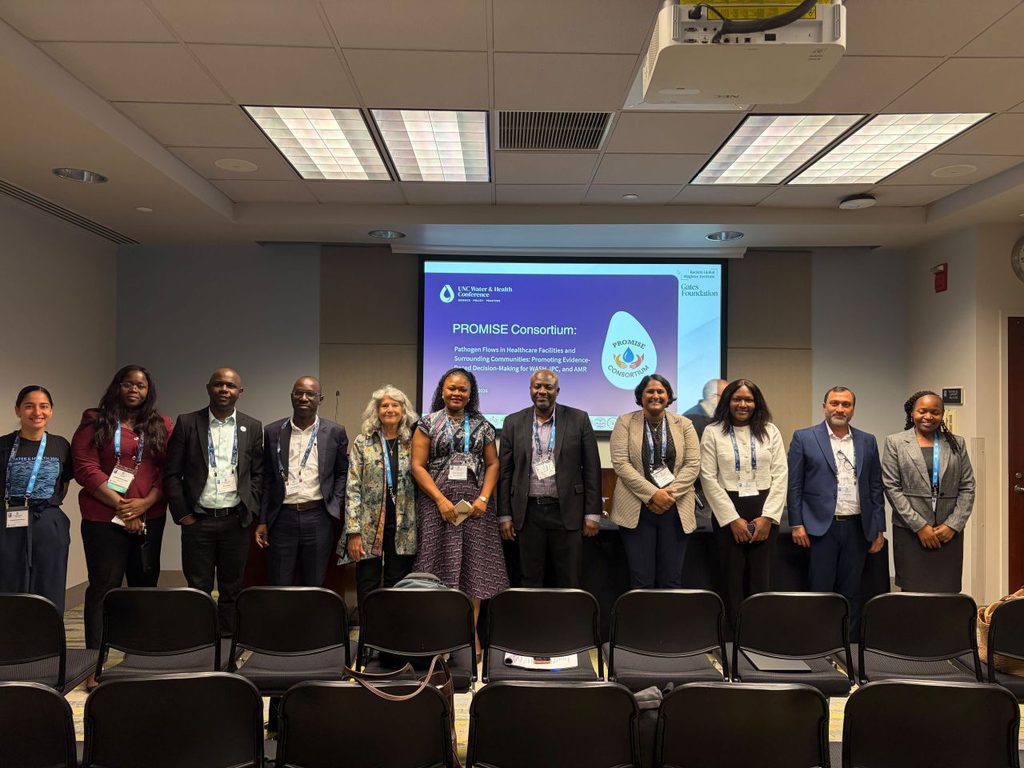
These issues featured prominently at the 2026 UNC Water and Health Conference held from October 26 to 30 in Chapel Hill, North Carolina, where researchers and water-sector practitioners discussed drinking water, sanitation, hygiene and water resources from a public health perspective.
Among the participants was APHRC Research Officer Phylis Busienei, who presented work on hand hygiene, One Health and shared sanitation, participated in discussions on pathogen flows and facilitated conversations on One Health.
The discussions highlighted the importance of connecting scientific research with practical interventions in water supply, sanitation and environmental protection.
As Kenya expands investments in water infrastructure, strengthening water quality surveillance, protecting catchments and improving wastewater treatment will be critical in ensuring that increased water access translates into better public health outcomes.
The evidence points to a broader challenge for the water sector: securing water resources must involve protecting their quality from the source to the consumer while addressing pollution pathways that expose communities to preventable diseases.