Kessup community strengthens river protection to safeguard livelihoods
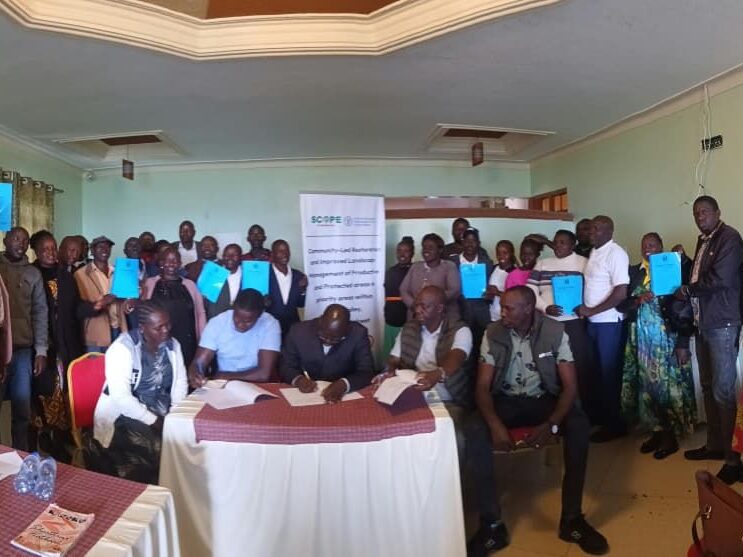
Community efforts to protect the Kessup River are gaining momentum following the approval of a Sub-Catchment Management Plan designed to improve water conservation, prevent pollution and promote sustainable use of the resource.
The plan was reviewed and approved on October 7, 2026, following substantial contributions from leaders of the Kessup Water Resource Users Association (WRUA). The initiative is supported by Scope Intervention in partnership with the Food and Agriculture Organization of the United Nations (FAO), with the aim of strengthening community participation in natural resource management.
Residents along the Kessup River depend on the resource for household needs, farming and livestock keeping. However, the absence of a formal community management structure had created challenges in coordinating water use and protecting the river from potential degradation.
The approved plan provides a framework for addressing these challenges through conservation activities, pollution control, conflict resolution and responsible water use. It is also expected to guide the association and its partners in identifying priority interventions to protect the river and its surrounding catchment.
The initiative places water resource management at the centre of efforts to strengthen household livelihoods, particularly for families whose economic activities depend directly on the availability of natural resources.
The approval of the plan follows the formal registration of the Kessup WRUA, which brought together 45 members representing communities in the upper, middle and lower sections of the river.
According to a September 2026 report by Water News Kenya, the registration was undertaken through Scope Intervention’s AFR100 work in partnership with FAO. The Water Resources Authority (WRA) also supported the process by guiding members on registration requirements, their responsibilities and compliance obligations.
The association subsequently received capacity-building support covering institutional management, financial accountability, conflict resolution, catchment restoration, water resource protection and climate adaptation.
The formation of the association provides a structured platform for residents, farmers, livestock keepers and other water users to participate in decisions affecting the river. It also creates an opportunity for community members to identify emerging challenges and coordinate conservation activities with government agencies and development partners.
The WRA recognises WRUAs as important community-level institutions for resolving disputes over water use, monitoring water availability and quality, protecting catchments and developing sub-catchment management plans. These responsibilities are intended to encourage cooperation among people who depend on the same water resource.
The Kessup initiative highlights the relationship between environmental protection and economic resilience. For households that depend on farming and livestock, declining water availability can affect agricultural production, animal health and income.
Pollution, soil erosion, degradation of riverbanks and poorly coordinated water abstraction can also undermine the quality and availability of water. Protecting the river and its catchment can therefore help communities maintain the natural resources that support their livelihoods.
The Food and Agriculture Organization identifies water as fundamental to rural livelihoods, food security and poverty reduction. It also notes that rural communities are particularly vulnerable to drought, flooding, land degradation and other environmental pressures that threaten their economic security.
By promoting responsible water use and community-led conservation, the Kessup plan supports the broader objectives of Sustainable Development Goal 1, which seeks to end poverty, and Sustainable Development Goal 6, which focuses on clean water and sanitation.
However, the benefits will depend on how consistently the plan is implemented, the resources available for conservation activities and the participation of different groups within the community.
The approval of the plan marks an important step, but sustained action will be needed to translate its objectives into measurable improvements in the river’s condition and community livelihoods.
The WRUA will need to coordinate its members, monitor water use, identify pollution risks and work with relevant authorities to address conflicts and protect sensitive areas. Catchment restoration, responsible farming practices and protection of riverbanks can also help reduce erosion and the movement of sediment into the waterway.
Kenya’s experience with other WRUAs shows that community-based management can create opportunities for local participation, conservation and dispute resolution. Research on WRUAs in the Mara Basin, however, has also identified challenges such as dependence on external funding, unequal participation and the need for continued institutional support.
The Kessup association will therefore require sustained capacity building, transparent leadership and cooperation with agencies responsible for water resource management to maintain its effectiveness.
The initiative demonstrates that protecting natural resources is also an investment in livelihoods. By strengthening local institutions and providing a framework for coordinated river management, the Kessup community is working towards a more reliable water resource and greater resilience to economic and environmental pressures.