Kenya seeks sustainable expand financing to water storage

Kenya is stepping up discussions on sustainable financing for water infrastructure as the country seeks to strengthen water security, expand storage capacity and improve resilience to climate change.
The National Water Harvesting and Storage Authority (NWHSA) is participating in high-level engagements focused on identifying innovative funding models to support investments in water harvesting, storage, sanitation and irrigation infrastructure.
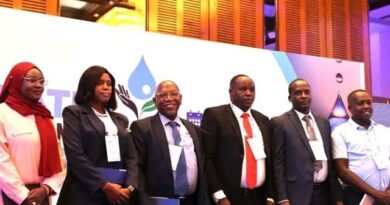
The discussions, held on the second day of a water financing conference, brought together development partners, Parliament and the Ministry of Water, Sanitation and Irrigation to explore ways of mobilising resources for critical water projects and strengthening existing financing frameworks.
NWHSA Chief Executive Officer Eng. Julius Mugun and Nancy Rotich represented the authority’s management during the engagements, which highlighted the importance of reliable financing in delivering infrastructure needed to secure water supplies for communities and support economic development.
Sustainable financing remains essential for Kenya to develop water storage facilities capable of capturing and retaining water during periods of heavy rainfall for use during dry seasons. Such infrastructure can help reduce the effects of prolonged droughts, improve water availability and support agricultural production in areas that depend heavily on rainfall.
The discussions also focused on accelerating access to climate financing, an important area as Kenya faces increasingly unpredictable rainfall patterns and pressure on existing water resources. Mobilising funding from government allocations, development partners and innovative financing arrangements could help bridge infrastructure investment gaps and support the implementation of long-term water security programmes.
For NWHSA, securing adequate resources is particularly important for advancing strategic dam development and other water harvesting initiatives. Dams, reservoirs and related storage facilities can improve the country’s ability to manage seasonal water flows, strengthen supplies for domestic use and provide water for irrigation and other productive activities.
Improved storage capacity can also contribute to climate resilience by reducing dependence on rainfall at the point of use. Communities, farmers and businesses could benefit from more reliable supplies, particularly in areas that experience recurring water shortages.
Agriculture stands to gain from investments in water storage and irrigation, as dependable water supplies can support crop production beyond the rainy seasons. Increased agricultural reliability can, in turn, contribute to food security, rural livelihoods and broader economic growth.
However, developing major water infrastructure requires substantial capital, effective planning and sustained investment throughout the construction and operation stages. Strengthening coordination between government institutions, Parliament and development partners is therefore important in identifying funding priorities, improving resource mobilisation and ensuring that available financing supports projects with lasting public benefits.
The conference engagements provide an opportunity to examine financing approaches that can complement conventional public funding while supporting the delivery of essential infrastructure. Stronger financing frameworks can also help improve coordination between institutions responsible for water supply, sanitation, irrigation and water storage.
As the discussions continue, the focus remains on translating financing commitments and policy proposals into practical investments that increase water storage capacity and improve the reliability of supplies.
For Kenya, sustained investment in water harvesting and storage is a critical component of long-term water security. By strengthening financing mechanisms and accelerating strategic infrastructure development, the country can improve its preparedness for climate-related challenges while supporting communities, agriculture and economic growth.