Nakuru water team draws lessons a cross borders
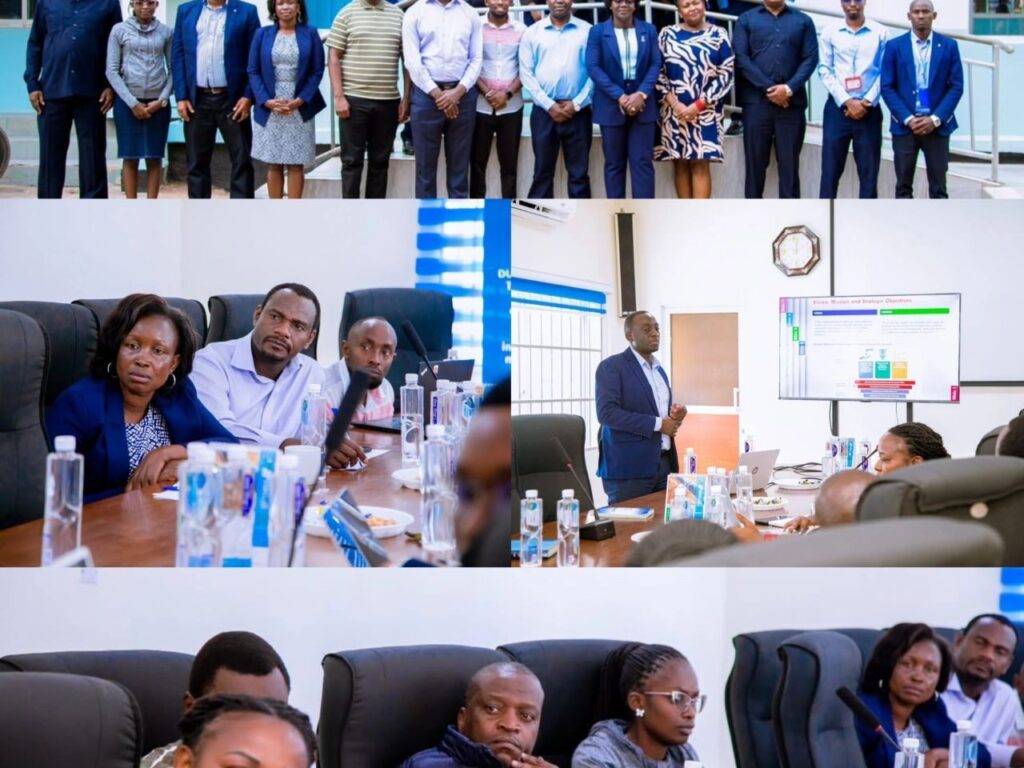
A knowledge-sharing visit to Tanzania has given a Nakuru water services team fresh insights into strategies that could strengthen efficiency, revenue collection and service delivery in the county.
The team recently concluded a learning visit to the Dodoma Urban Water Supply and Sanitation Authority (DUWASA) under the Urban Water Catalyst Initiative (UWCI), implemented in partnership with VEI. The engagement provided an opportunity for the team to share progress made under the initiative while examining practices that have helped DUWASA improve the performance of its water and sanitation operations.
A key area of learning was the management of non-revenue water (NRW), which remains an important concern for water utilities seeking to improve efficiency and financial sustainability. DUWASA has established a dedicated NRW team supported by a cross-departmental steering committee to coordinate efforts aimed at reducing water losses.
The utility has also adopted a four-pillar approach to NRW management, demonstrating the importance of treating water losses as part of the day-to-day operations of a water service provider rather than as a stand-alone programme.
The Nakuru team also examined DUWASA’s approach to managing large customers through improved metering. The utility conducts meter testing to identify inaccuracies and potential revenue losses, a practice that can help water providers strengthen billing accuracy and recover income that might otherwise be lost.
Another area highlighted during the exchange was the use of Supervisory Control and Data Acquisition (SCADA) technology to monitor water production. DUWASA uses the system to provide real-time information on production from its well fields, giving operators greater visibility of water supply operations and supporting timely decision-making.
The visit further exposed the team to an integrated government Enterprise Resource Planning (ERP) platform that connects critical functions including billing, customer relationship management, human resources and payments. Such integration can improve access to operational information while reducing fragmentation across utility departments.
Water-source protection was another significant area of interest. DUWASA has reserved more than 4,500 hectares of well-field areas exclusively for water production, helping safeguard groundwater sources and protect the long-term reliability of supply.
The exchange also highlighted the value of regional peer learning, with DUWASA applying lessons from Kenya, including the NRW revolving fund model. The experience demonstrated that knowledge transfer between water utilities can work in both directions, allowing institutions to adapt successful approaches to their own operating environments.
The Nakuru team is expected to use lessons from the visit to strengthen ongoing efforts to improve water services for residents. The engagement under UWCI provides an opportunity to translate shared experiences into practical measures focused on efficiency, sustainability, revenue protection and reliable service delivery.