Water projects worth billions face delivery test across three counties
Kenya’s investment in water and sanitation infrastructure is facing a critical delivery test as projects in Nyeri, Meru and Marsabit seek to improve water supply, expand sewerage services and address public health risks.
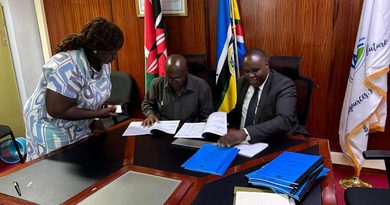
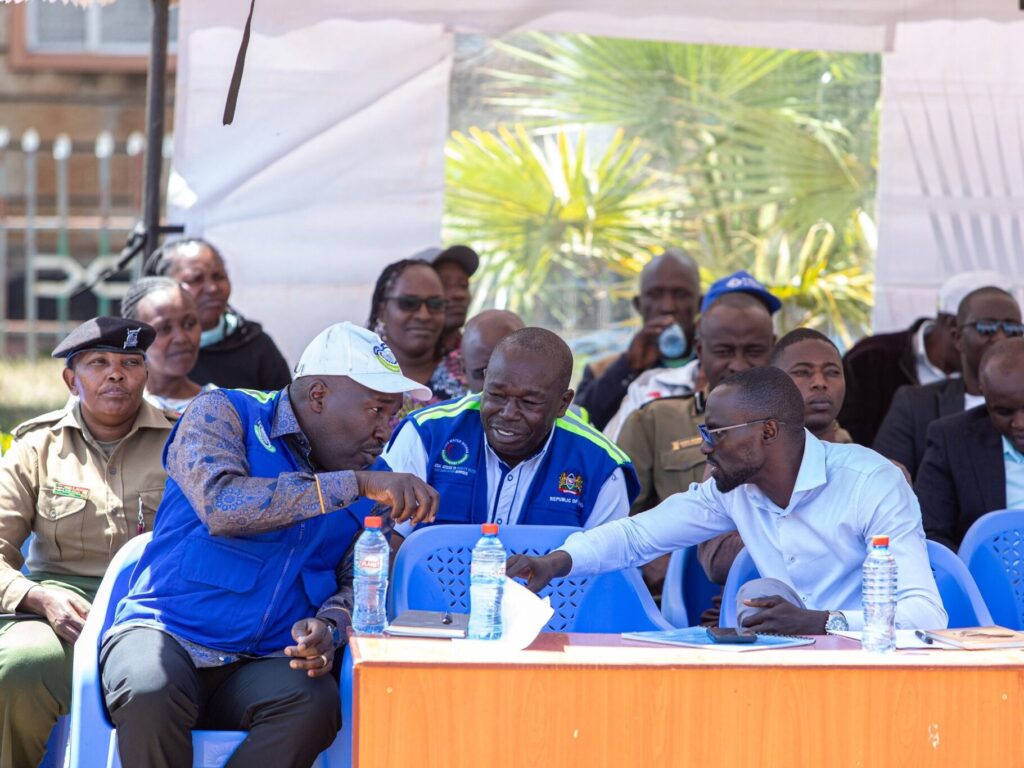
During inspections conducted from September 17 to 20, 2025, Water, Sanitation and Irrigation Cabinet Secretary Eng. Eric Mugaa, accompanied by Principal Secretaries Julius Korir and Ephantus Kimotho, assessed construction progress and called for action to resolve delays affecting projects in the three counties.
The visits focused on the use of public investment to improve water supply, expand sanitation coverage and strengthen infrastructure in areas experiencing persistent service gaps. The projects also highlight the importance of completing construction on schedule and ensuring that facilities remain functional after commissioning.
Kenya allocated approximately KSh24.9 billion to the Water and Sewerage Infrastructure Development programme in the 2025 budget, including about KSh21.26 billion for development expenditure. The allocation covered several national water and sanitation investments and was not exclusively reserved for the three counties.
Nyeri: KSh648 million targets safer water supply
In Nyeri County, the delegation inspected the Aguthi Water Project, which aims to address water shortages in Tetu East and Tetu West sub-counties.
The Government announced a KSh648 million investment to replace ageing asbestos-cement pipes with modern high-density polyethylene (HDPE) pipes. The upgrade is expected to improve the durability of the distribution network, reduce leakages and support more reliable water delivery while removing asbestos-containing materials from the ageing pipeline.
The project also includes construction of a new water intake on River Magura in Aberdare National Park and a conventional treatment plant at Gathunguya, within Kiandogoro Forest. The treatment facility is designed to produce 1,000 cubic metres of treated water daily, increasing supply capacity and supporting additional connections.
The improvements are expected to benefit households, institutions and businesses that depend on reliable water supplies for domestic use, sanitation and commercial activities.
Beyond the immediate infrastructure upgrade, the investment highlights the importance of replacing ageing systems that can undermine service reliability and increase maintenance costs. A dependable supply can also reduce the disruption households face when water distribution systems fail.
Meru: Nearly KSh875 million sewerage contract faces scrutiny
In Meru County, the delegation inspected the Meru Sewerage Project, which was reported to be 77 per cent complete during the September 2025 visit. The scheme was designed to serve approximately 193,000 residents and improve wastewater management in the growing town.
An African Development Bank contract award record valued the Meru Sewerage Infrastructure works at approximately KSh874.5 million. The project includes sewer networks and treatment infrastructure designed to handle up to 8,000 cubic metres of wastewater daily.
However, Mugaa expressed concern over the slow pace of construction and the uncertainty surrounding completion. During a follow-up inspection, Principal Secretary Julius Korir urged the contractor to increase manpower and deploy additional resources to accelerate the remaining works.
The delays are significant because inadequate sewerage infrastructure can expose residents to wastewater pollution and sanitation-related health risks. The project is also expected to benefit from additional last-mile sewer connections under the National Urban Water Supply and Sanitation Programme, supported by the African Development Bank and the Government of Kenya.
The delegation also engaged residents and community project managers in Imenti Central during discussions on the proposed Baraka Water Project. Community representatives identified the need for pipes, meters, connection fittings, improved billing systems and technical training to strengthen local water schemes.
Officials also visited Mukongoro and Kaari water projects. Mukongoro is expected to serve 650 households across Kiria, Mwanganthia and Gitiye, while Kaari is planned to benefit approximately 5,000 residents. The schemes are intended to expand water supply and support livelihoods in the surrounding communities.
Marsabit: Major investment targets water scarcity and sanitation
In Marsabit County, the delegation assessed the Marsabit Water Supply Project and the Marsabit Sewerage Project, which were reported to be 98 per cent and 90 per cent complete, respectively, during the inspections.
A previously reported KSh1.7 billion investment, funded jointly by the African Development Bank and the national government, covers major water and sanitation improvements in Marsabit. The investment aims to improve supply reliability and strengthen wastewater management in a region where water scarcity remains a persistent challenge.
The Marsabit Water Supply Infrastructure Project includes Bakuli 4 Dam, with a storage capacity of 300,000 cubic metres, treatment facilities, storage tanks and approximately 20 kilometres of transmission and distribution pipelines. The Northern Water Works Development Agency reported that the scheme was designed to increase water production from about 260 cubic metres daily during dry seasons to 1,200 cubic metres daily, serving a population of approximately 40,000.
The separate Marsabit Sewerage Infrastructure Project includes a 37-kilometre sewer network and two treatment plants with a combined capacity of 5,694 cubic metres daily. The system is designed to improve wastewater disposal for approximately 40,000 residents in Marsabit town and surrounding areas.
During the inspections, officials focused on outstanding works, coordination between national and county governments, and preparations for the operation and maintenance of the facilities. They also emphasised collaboration with the Kenya Urban Roads Authority to ensure protruding sewer manholes were level with road surfaces and properly sealed.
Funding must translate into functioning services
The three counties illustrate different priorities in water-sector spending: replacing ageing pipelines in Nyeri, addressing construction delays in Meru, and strengthening water security and sanitation in Marsabit.
The budget figures represent different types of funding information, including a government-announced project allocation, a contract award and a previously reported combined investment. They should not be added together as though they represent a single budget, and the available information does not establish final expenditure across all the projects.
Ultimately, the value of these investments will depend on timely completion, proper financial oversight and the ability of local water service providers to operate and maintain the facilities. Funding construction is only one part of the process; communities must also receive reliable water supplies and effective sanitation services once projects become operational.
For residents of Nyeri, Meru and Marsabit, the measure of success will be whether the investments deliver safer water, improved wastewater management and lasting improvements in daily life.