Tanathi delivers water to Singiraini
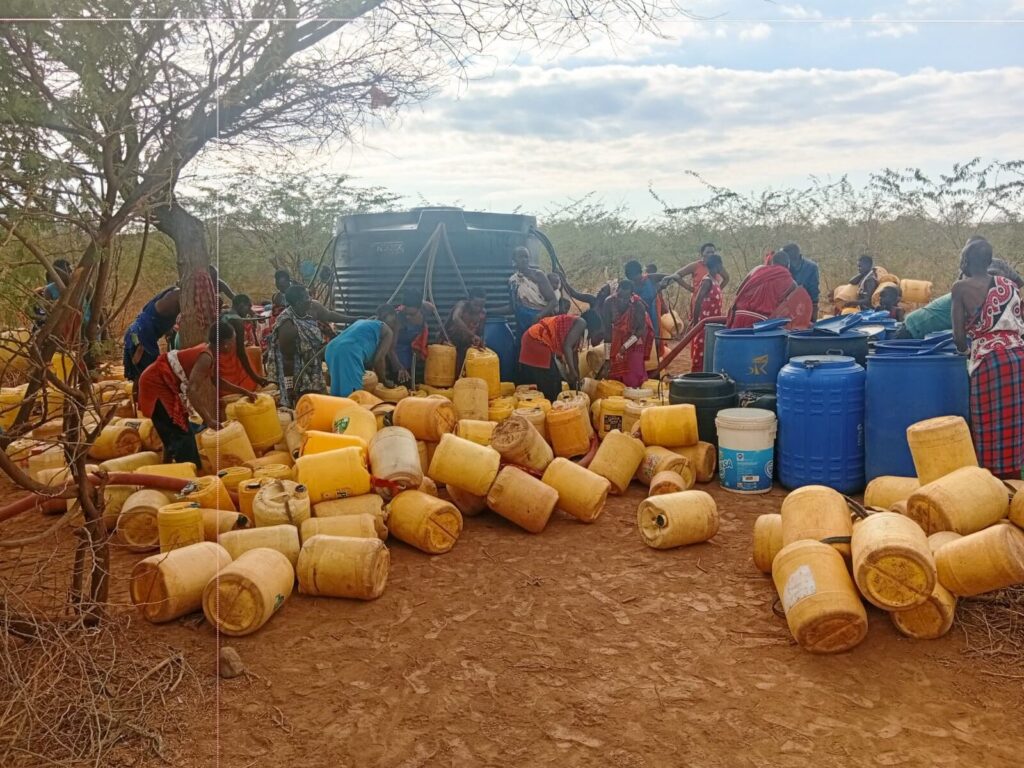
Tanathi Water Works Development Agency has conducted a water distribution exercise in Singiraini, Kajiado West, Kajiado County, to support residents facing challenges in accessing reliable water supplies.
The exercise aimed to help meet the community’s immediate water needs, highlighting the importance of sustained interventions to improve water availability in arid and semi-arid areas. Reliable water supplies are essential for household consumption, sanitation, livestock keeping and other livelihood activities that sustain communities in the region.
Kajiado County experiences recurring water shortages due to unreliable rainfall, prolonged dry periods and pressure on existing water sources. Residents depend on boreholes, shallow wells, springs, seasonal rivers, dams and water pans to meet their daily needs. However, these sources can become depleted or unreliable during extended dry spells, increasing the need for alternative and sustainable water supply solutions.
Groundwater is particularly important in such environments because it can provide a more dependable source of water when rivers, dams and water pans dry up. Stored beneath the earth’s surface in geological formations known as aquifers, groundwater can sustain communities during periods when rainfall is limited and surface water availability declines.
Boreholes are therefore an important part of water supply infrastructure in many arid and semi-arid areas. They can provide water for domestic use and livestock, while also supporting small-scale farming and other economic activities where sufficient groundwater is available. Reliable groundwater supplies can reduce the distance households travel to collect water and ease pressure on seasonal sources.
Groundwater also plays a significant role in strengthening drought resilience. In areas where communities depend on livestock keeping and subsistence agriculture, a reliable source of water helps sustain livelihoods during periods of limited rainfall. It can also support schools, health facilities and growing settlements where conventional water supply systems are inadequate.
However, groundwater is not unlimited. Excessive abstraction, poor borehole management and inadequate protection of groundwater recharge areas can threaten its long-term availability. Responsible groundwater development requires proper borehole siting, regular monitoring, sustainable extraction and protection against contamination.
Protecting groundwater recharge areas is equally important. Rainwater that infiltrates the ground replenishes aquifers, helping maintain supplies over time. Measures such as catchment conservation, soil protection and appropriate rainwater harvesting can support groundwater recharge and reduce pressure on existing sources.
Groundwater development must also be accompanied by proper maintenance. Boreholes can become non-functional when pumps fail, equipment deteriorates or repairs are delayed. Strengthening operation and maintenance systems can help ensure that water infrastructure continues to serve communities reliably.
Tanathi Water Works Development Agency is mandated to develop, maintain and manage public water infrastructure within its area of jurisdiction, which includes Kajiado, Kitui, Machakos and Makueni counties.
While the distribution exercise in Singiraini provides immediate support, long-term water security will depend on combining such interventions with investment in sustainable water infrastructure, groundwater management and protection of available resources.
For communities in Kajiado West, integrating immediate water supply measures with responsible groundwater development can help strengthen resilience to drought and improve the reliability of water supplies for households and livestock.