Kenya, AfDB fast-track water projects
Kenya and the African Development Bank Group (AfDB) are seeking to accelerate the implementation of water and sanitation projects, unlock financing for planned investments and address delays affecting ongoing programmes, with the completion of Thwake Multipurpose Dam remaining a key priority.
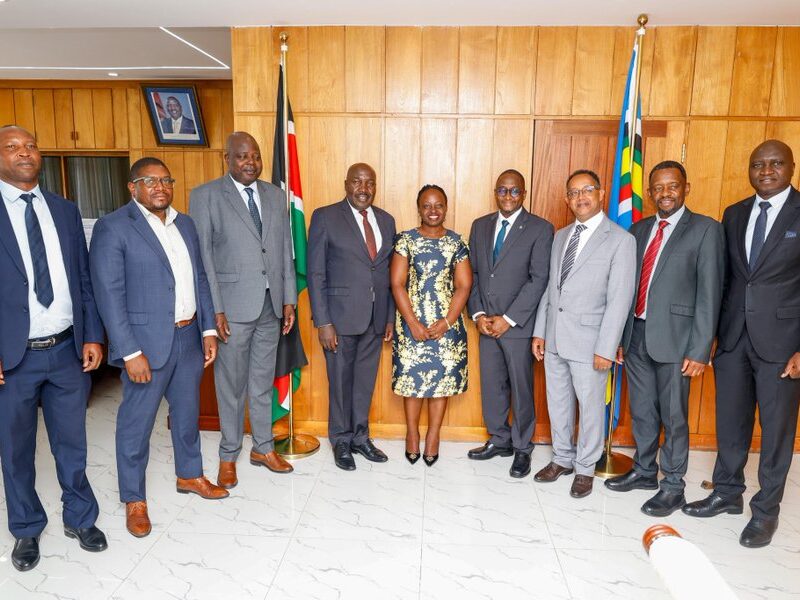
The discussions took place during a meeting between a Kenyan government representative and an AfDB delegation led by the Bank’s Director for Water and Sanitation, Mr Mtchera Chirwa, who paid a courtesy call to review the Bank’s portfolio in the country’s water and sanitation sector.
The meeting focused on identifying measures to fast-track ongoing programmes while advancing projects in the pipeline towards financing and implementation. The engagement also examined ways to strengthen cooperation between the government and the development bank to ensure that investments deliver the intended benefits to communities.
Thwake Multipurpose Dam featured prominently in the discussions because of its expected contribution to water security, agricultural production, energy generation and economic development in Kenya’s lower eastern region.
Located at the confluence of the Athi and Thwake rivers along the Kitui–Makueni border, the dam is designed to store approximately 688 million cubic metres of water. Once fully developed, the project is expected to supply up to 150,000 cubic metres of water daily to about 1.3 million people, support irrigation across 40,000 hectares and generate 20 megawatts of hydropower.
The infrastructure is expected to help address persistent water shortages affecting communities in Kitui and Makueni counties while supporting economic activities, including farming and industrial development. Its storage capacity will also strengthen the region’s ability to manage fluctuating rainfall and periods of drought.
In June 2026, AfDB announced additional financing of €68.39 million for the dam project, comprising a €64.20 million loan from the African Development Bank and €4.2 million from the African Development Fund. The Kenyan government committed a further €15 million in counterpart funding to support the project’s completion and long-term sustainability.
A separate update published by the Kenya News Agency on October 9, 2026, reported that the government had secured an additional KSh10.6 billion for Thwake’s first phase following financing challenges. The report also indicated that the government planned to close the dam gates by the end of January 2027 to begin impounding water.
Beyond Thwake, the meeting comes as Kenya continues to work with AfDB on a wider portfolio of water and sanitation investments. Projects highlighted by the Ministry of Water in February 2026 included the Nakuru Urban Water Supply Project, Lake Victoria Water and Sanitation Project II, the Nairobi Inclusive Sanitation Improvement Project study and the Small Towns and Rural Water and Sanitation Project.
The ministry also identified proposed investments covering urban water supply, rural water and sanitation services, sewerage improvements in the Nairobi River basin and downstream infrastructure associated with Thwake Dam.
These projects form part of broader efforts to expand water infrastructure, improve sanitation and respond to rising demand from households, institutions, farmers and businesses. Their implementation will depend on adequate financing, effective coordination and timely resolution of technical and administrative challenges.
The review of AfDB’s portfolio provides an opportunity for the government and its development partner to assess progress, identify bottlenecks and agree on measures to move priority projects forward.
Continued collaboration will be important in ensuring that ongoing investments are completed and planned projects progress to implementation, helping improve the reliability of water supplies, expand sanitation services and strengthen resilience to climate-related pressures.