Kenya seeks funding to complete Mwache dam water supply network
The government is stepping up efforts to mobilise funding for critical water infrastructure linked to the Mwache Multipurpose Dam in Kwale County, as Kenya seeks to improve water security for more than 1.6 million residents in the coastal region.
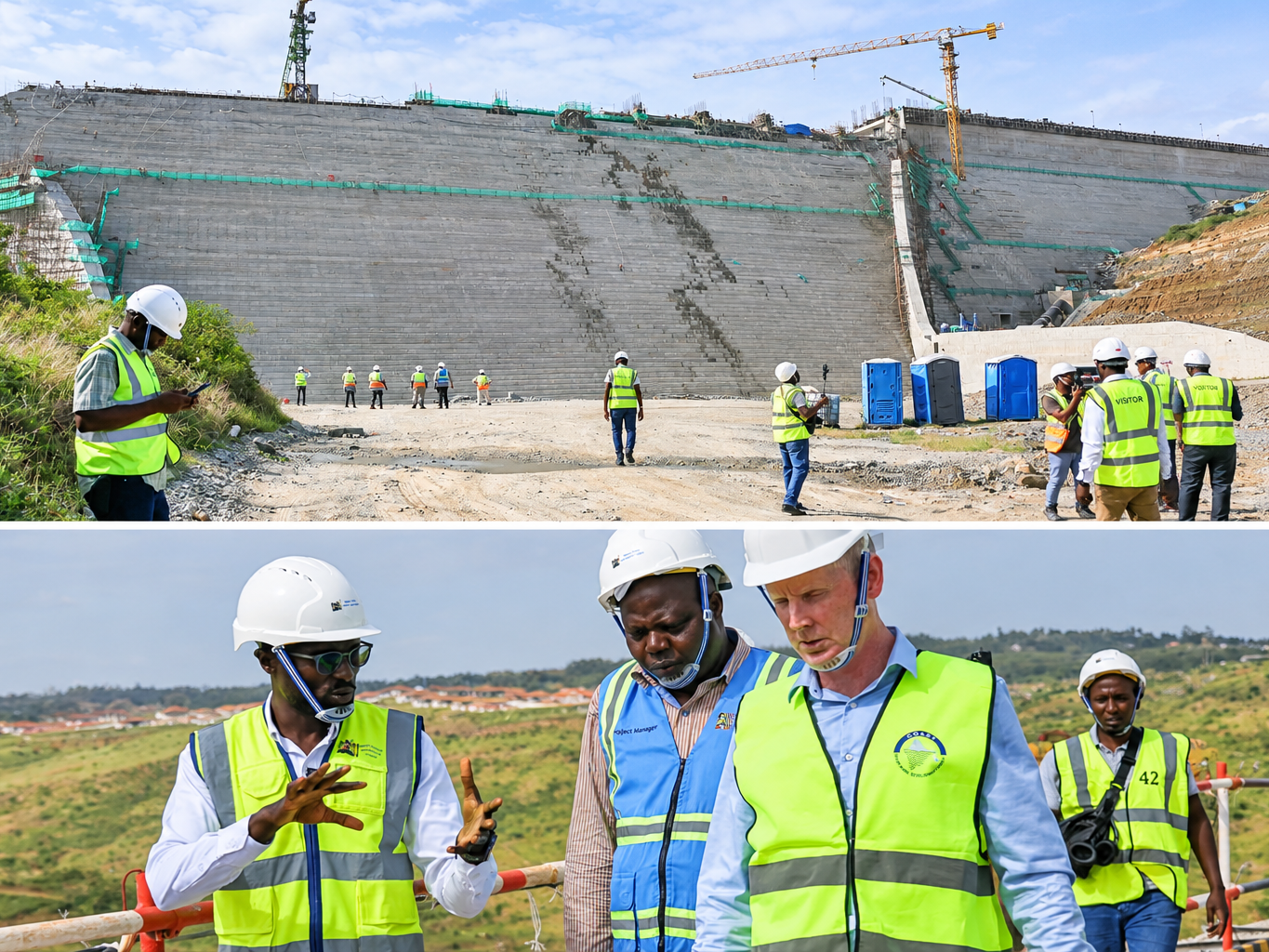
The financing discussions took centre stage during a joint inspection of the dam and associated works involving Cabinet secretary for Water,Sanitation and Irrigation Eng. Eric Mugaa,Water Secretary Eng. S.A.O. Alima, European Investment Bank Director General Andrew McDowell, African Development Bank Kenya Director Anne-Gaël Chapuis and Coast Water Works Development Agency Chief Executive Officer Hamoud Mguza.
The delegation, accompanied by project teams, local administrators and residents, assessed construction progress and discussed strategies for securing resources for the downstream infrastructure required to deliver water from the dam to consumers.
A major component of the proposed investment is a water treatment plant with a capacity of 186 million litres per day, alongside transmission mains designed to supply Likoni on Mombasa’s South Mainland, Changamwe on the West Mainland and Nguu Tatu on the North Mainland.
The infrastructure is essential to translating the dam’s storage capacity into a reliable supply for households, businesses and public institutions. Without adequate treatment facilities and transmission pipelines, the water stored in the reservoir cannot be distributed to the intended consumers at the planned scale.
The Mwache Dam is one of the major investments under the Coast Region Water Security and Climate Resilience Project, which aims to strengthen bulk water supply and improve access to water and sanitation services in Mombasa and Kwale counties.
The 84-metre-high roller-compacted concrete dam is designed to store approximately 136 million cubic metres of water and provide about 186,000 cubic metres of treated water daily once the required infrastructure is operational. The project is intended to address longstanding water shortages while improving the region’s ability to cope with changing rainfall patterns and prolonged dry periods.
For coastal communities, the expected benefits extend beyond household consumption. A more dependable water supply could support hotels, industries, health facilities, schools and other businesses that require consistent access to water to operate effectively.
The development could also help reduce pressure on existing water sources and distribution systems serving the region, where demand has continued to exceed available supply. In October 2026, reporting on the project cited an estimated daily demand of 512,000 cubic metres against an available supply of 185,000 cubic metres, leaving a deficit of approximately 327,000 cubic metres.
During the inspection, the government reaffirmed its commitment to strengthening cooperation with the European Investment Bank and the African Development Bank in financing water and sanitation infrastructure. The engagement reflects the importance of development-finance institutions in supporting large projects that require substantial capital for construction, treatment and distribution systems.
The European Investment Bank’s published project information identifies the Mwache Water Project as a multipurpose development covering the dam, check dams, a water treatment plant, raw-water pumping infrastructure and three transmission mains with terminal reservoirs. Its project summary lists proposed EIB financing of approximately €110 million within an estimated total project cost of €490 million.
However, the latest discussions on downstream works focused on resource mobilisation, and the meeting announcement did not specify a new financing agreement, the amount of additional funding secured or a completion date for the treatment plant and transmission mains.
The distinction is important because completing the dam structure alone will not resolve water shortages unless the associated facilities are also funded, constructed and commissioned.
The Coast Water Works Development Agency and other implementing teams will therefore need to coordinate the remaining infrastructure requirements with financing partners and relevant government institutions to ensure the project can deliver its intended benefits.
The government has described the dam as a strategic investment in climate resilience and regional development. Its eventual impact will depend on the timely completion of the connected water supply system, effective operation of the facilities and equitable distribution of treated water to the communities targeted by the project.
As discussions with international lenders continue, securing financing for the downstream works remains a key step towards turning the Mwache Dam into a dependable source of water for Mombasa, Kwale and the wider coastal economy.