Kenya’s clean drinking water gap exposed by data
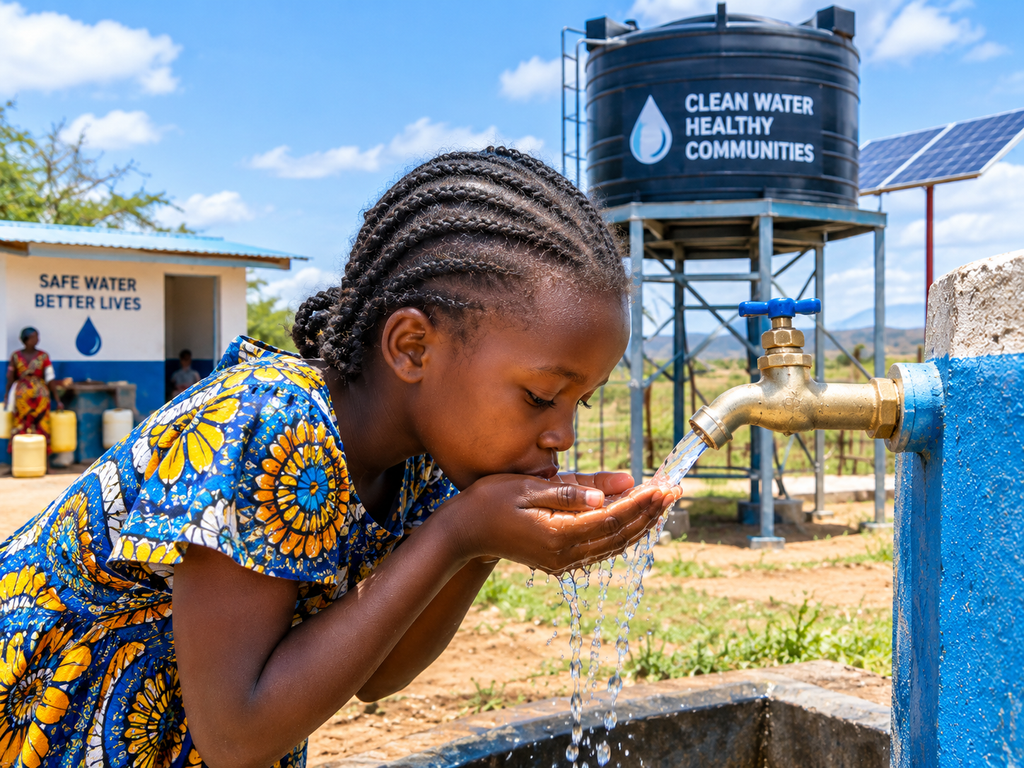
Kenya has made progress in expanding drinking-water services, but millions of people still face challenges accessing reliable supplies, with rural households continuing to lag behind urban populations and water quality remaining a critical public health concern.
Data from the Kenya Demographic and Health Survey (KDHS) 2022 showed that 68 per cent of Kenyans had access to at least basic drinking-water services, compared with 91 per cent of the urban population and 56 per cent of rural residents.
More recent national reporting placed access to at least basic drinking-water services at 74.7 per cent in 2024, up from 67.9 per cent in 2022 and 52.4 per cent in 2016. Urban coverage reached 92.4 per cent, while rural coverage stood at 64.4 per cent, demonstrating the persistent gap between towns and the countryside.
The figures highlight the progress made in expanding water infrastructure while showing that geographical inequalities continue to affect households’ ability to obtain drinking water conveniently and reliably.
However, access to a water source does not automatically mean that the water is safe to drink. Water may become contaminated during collection, transportation, storage or distribution, while sources can also be affected by sewage, agricultural runoff, industrial pollution and naturally occurring substances.
The distinction is important because basic drinking-water services and safely managed drinking water are different measures. Basic services generally require an improved source with a collection time of no more than 30 minutes for a round trip. Safely managed services must also be accessible on the premises, available when needed and free from faecal and priority chemical contamination.
This means that improving Kenya’s drinking-water situation requires more than constructing boreholes, treatment plants and pipelines. The country must also strengthen water-quality testing, protect water sources and ensure that supplies remain available throughout the year.
The Kenya National Bureau of Statistics’ 2022 household survey also found that 65 per cent of the population had sufficient quantities of drinking water when needed. More than half of Kenyans did not have drinking water on their premises and had to travel to collect it.
Among people responsible for collecting water, women aged 15 and above accounted for 69 per cent, according to the survey. The findings illustrate how inadequate household connections can create additional demands on families, particularly in communities where water sources are distant.
The challenge is especially pronounced in arid and semi-arid areas, where prolonged droughts can reduce the availability of surface water and increase dependence on groundwater and water deliveries.
In Wajir County, for example, a climate-resilient water system established through cooperation between the county government, the Ministry of Water and United Nations agencies is helping improve supplies in Griftu.
The project serves more than 9,200 people and nearly 5,000 livestock. It includes a 454-metre borehole, a solar-powered pumping system capable of drawing 6,000 litres per hour and two storage tanks with a combined capacity of 120,000 litres.
The system demonstrates how groundwater mapping, renewable energy and storage infrastructure can be combined to improve water availability in drought-prone communities.
The United Nations reported in May 2026 that 955,811 people across Kenya gained access to clean water through UN-supported interventions in 2025. The interventions covered 19 counties, illustrating the contribution of partnerships to expanding water services.
Nevertheless, the long-term impact of such investments depends on whether facilities remain operational, water is affordable and communities have access to appropriate maintenance and management arrangements.
Water quality is another important measure of progress.
The Water Services Regulatory Board’s Impact Report for the 2024/2025 financial year recorded an improvement in average drinking-water quality compliance among regulated water service providers, rising to 96 per cent from 89 per cent in the previous reporting period.
The report covered 94 regulated providers operating across the country. The improvement suggests stronger compliance with water-quality requirements among the utilities assessed, although it should not be interpreted as proof that 96 per cent of all drinking water consumed nationally is safe.
The distinction matters because regulated utilities do not represent every water source used by Kenyan households. Some communities depend on privately operated boreholes, community-managed systems, water vendors, wells and surface water sources that may not receive the same level of routine monitoring.
Strengthening water-quality surveillance across these different sources is therefore essential to understanding the safety of drinking water nationwide.
The government and water-sector institutions face the additional challenge of extending infrastructure to underserved areas while keeping services affordable. Rural settlements can be expensive to serve because households are widely dispersed and may be located far from existing water networks.
In urban areas, informal settlements can also face difficulties where network connections are limited, infrastructure is inadequate or residents depend on shared water points and vendors.
Climate change adds another layer of pressure. Extended droughts can reduce water availability, while heavy rainfall and flooding can introduce contaminants into water sources, damage distribution infrastructure and interrupt treatment operations.
Protecting rivers, groundwater reserves and catchment areas is consequently an important part of ensuring safe drinking water. Treatment facilities must be supported by measures that prevent pollution at the source, alongside routine testing and effective responses when contamination is detected.
Household handling and storage also influence safety. Water collected from an improved source can become contaminated if transported in unclean containers or stored in poorly covered vessels. Public education on safe handling can therefore complement investments in treatment and distribution.
Kenya’s progress towards universal access will depend on closing the remaining coverage gap while improving the reliability and safety of existing supplies.
The Kenya Water, Sanitation and Hygiene Programme is among the initiatives supporting the expansion of water and sanitation services, particularly in rural and underserved communities. Its objectives include strengthening rural water access, improving sanitation and enhancing the performance of water service providers.
However, achieving universal access requires sustained financing for infrastructure construction, operation, maintenance and water-quality monitoring. Boreholes and treatment plants must remain functional after commissioning, while utilities need adequate resources to test water, repair equipment and maintain distribution networks.
The latest figures indicate that Kenya is moving towards wider drinking-water coverage, but progress is uneven. Rural households continue to face a substantial disadvantage, while national access statistics alone cannot establish whether every household receives safe water consistently.
The next stage of progress will require authorities to measure not only the number of people connected to water systems, but also whether their supplies are safe, available when needed and affordable.
Ultimately, clean drinking water depends on a combination of infrastructure, effective treatment, source protection, regular testing and reliable service delivery. Closing the gap will require these measures to reach communities that remain underserved while ensuring that improvements in coverage translate into safer water for households across Kenya.