Solar power reshapes water security in Northern Kenya
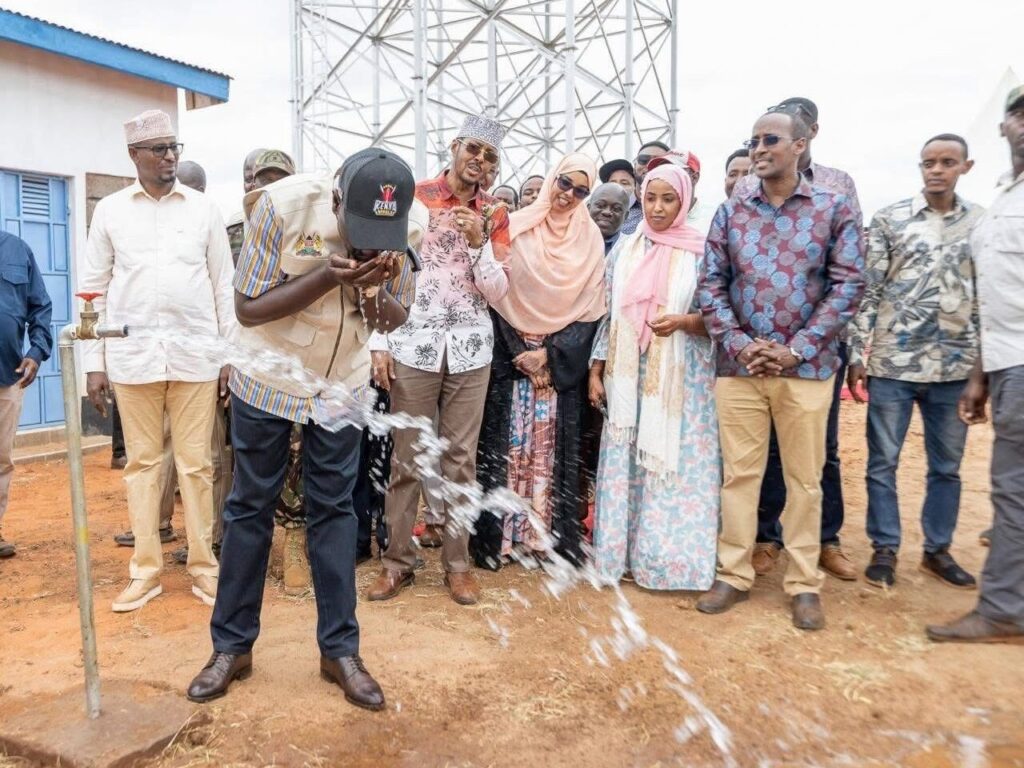
Northern Kenya is increasingly turning to solar-powered boreholes, desalination technology and large-scale water storage infrastructure to address persistent shortages, as prolonged droughts, unreliable rainfall and rising demand place pressure on communities, livestock and local economies.
The challenge is particularly evident in Wajir County, where households were travelling an average return distance of 11.6 kilometres to water sources in January 2026. The reported distance was significantly above the normal range of less than five kilometres, highlighting the difficulties residents face when nearby water points become unreliable.
The situation illustrates why investments in dependable water infrastructure are increasingly important across the arid and semi-arid lands (ASALs), where communities depend heavily on groundwater, seasonal rivers and water pans to meet domestic and livestock needs.
The Northern Water Works Development Agency (NWWDA), which develops water and sewerage infrastructure in Garissa, Wajir, Mandera, Isiolo, Samburu and Marsabit counties, is pursuing interventions intended to improve the reliability of water supplies and strengthen resilience to changing climatic conditions.
According to the agency, its service area covers approximately 244,809 square kilometres, equivalent to about 43 per cent of Kenya’s landmass, and has an estimated population of 3.5 million people. The region also supports a substantial proportion of the country’s livestock population, making water security important for both household welfare and pastoral livelihoods.
However, the region’s dependence on rainfall-sensitive water sources exposes communities to extended dry spells. When rainfall declines, water pans and seasonal rivers can dry up, groundwater sources may come under greater pressure, and households are often forced to travel longer distances or purchase water delivered by tankers.
The effects of drought extend beyond the time spent searching for water. Livestock production, household incomes, food security and the provision of essential public services can all be affected when water supplies become unreliable.
Kenya’s 2020–2023 drought was described as the country’s longest and most severe on record. The drought contributed to acute food insecurity affecting approximately 3.5 million people and the deaths of 2.6 million livestock across 23 arid and semi-arid counties. These figures illustrate the wider consequences of climate-related water shortages beyond NWWDA’s own service area.
More recent conditions in Wajir demonstrate the continuing need for reliable water sources. The county’s January 2026 drought bulletin recorded zero rainfall against a normal rainfall range of 80–120 per cent of the expected amount. It also reported a three-month vegetation condition index of 9.2, compared with a normal threshold above 35.
Such indicators help drought-management authorities assess environmental stress and the potential implications for livestock and rural livelihoods. When vegetation conditions deteriorate, pastoral communities can face additional pressure as animals travel further in search of pasture and water.
One of the approaches being adopted to improve water reliability is the use of solar-powered pumping systems. Northern Kenya receives substantial sunshine, creating opportunities to use renewable energy to pump groundwater and supply settlements located far from the national electricity grid.
Conventional pumping systems that depend on diesel generators can expose operators to fuel-price fluctuations, transportation difficulties and maintenance costs. These challenges can become more pronounced in remote areas where access to fuel and technical services is limited.
Solar-powered systems provide an alternative by using photovoltaic panels to generate electricity for pumping water. By reducing dependence on diesel, they can lower some operating expenses and help improve the sustainability of water services where grid electricity is unavailable or unreliable.
NWWDA says it has solarised all the boreholes it has implemented in its service area, making renewable energy a central element of its approach to water infrastructure development.
However, solarisation alone cannot guarantee a continuous water supply. The success of a borehole depends on the availability and quality of groundwater, the design of pumping equipment and the ability of operators to maintain the system. Solar panels, pumps, storage tanks and distribution pipelines require regular inspection and repairs if communities are to benefit consistently.
Water quality presents another challenge. In some parts of Northern Kenya, groundwater contains high concentrations of dissolved salts, making treatment necessary before it can be used for drinking.
To address this problem, the agency has adopted reverse osmosis, a desalination technology that removes dissolved salts and other impurities from water through a specialised membrane system.
NWWDA identifies the Habaswein Water Project, Wajir Stadium Water Project and Wajir State Lodge Water Project among the projects where desalination technology has been used. The approach can make additional groundwater sources available for domestic water supply in locations where salinity limits direct consumption.
Combining desalination with solar energy can reduce reliance on conventional power sources, although the technology still requires careful management. Operators must budget for membrane replacement, filtration, maintenance and the safe handling of concentrated brine produced during treatment.
The cost of treatment must also be considered when determining whether water can be supplied affordably to households. Expanding production without ensuring that systems can be operated and maintained over time risks undermining the benefits of the investment.
Water storage infrastructure provides another part of the solution. Boreholes and treatment plants can improve supply, but communities also need reservoirs, dams and water pans capable of holding water for use when rainfall declines or demand increases.
An example of this approach is the Maralal Water Supply Project in Samburu County, whose first phase was launched by President William Ruto on November 10, 2025. The project draws water from Yamo Dam and includes a treatment plant designed to process 9,000 cubic metres of water daily, equivalent to nine million litres. It also incorporates raw-water and treated-water pipelines to support the movement of water through the supply system.
The project illustrates how water storage and treatment infrastructure can complement each other. A dam provides a source of stored water, while a treatment plant prepares it for distribution. Pipelines then connect the supply to the areas intended to benefit.
Such projects can reduce dependence on scattered water sources and improve the potential for supplying larger populations through organised distribution systems. Their long-term performance, however, depends on adequate source yields, water-quality management, maintenance and the ability to meet operating costs.
Water pans, smaller reservoirs and rainwater harvesting systems can complement large projects by capturing seasonal rainfall closer to communities. Their usefulness depends on suitable locations, adequate storage capacity and measures to prevent contamination and excessive sediment accumulation.
Groundwater management is equally important. Increased dependence on boreholes during prolonged droughts can put pressure on aquifers if abstraction exceeds natural replenishment. Monitoring groundwater levels, testing water quality and regulating withdrawals are therefore necessary to ensure that new infrastructure does not create additional long-term risks.
The scale of the water challenge is also reflected in NWWDA’s published coverage statistics. Its 2024–2028 Strategic Plan reports water coverage of 22 per cent in rural areas and 34 per cent in urban areas within its service area. The document also reports rural sanitation coverage of 29.1 per cent and urban sanitation coverage of eight per cent. These figures are strategic-plan baselines and should not be interpreted as independently verified coverage rates for 2026.
The reported figures point to the need for investments that address both water supply and sanitation. Expanding water production without adequate distribution networks, household connections and sanitation services may leave communities unable to realise the full benefits of new infrastructure.
For rural households, the distance to a reliable water source can affect the time available for education, household activities and income-generating work. In pastoral communities, water shortages can also influence livestock movements and increase pressure on the limited sources shared by people and animals.
The Wajir figures provide a practical measure of these difficulties. An average return distance of 11.6 kilometres to a water source in January 2026 demonstrates why proximity, reliability and year-round availability must be considered alongside the total volume of water produced by a project.
Financing remains one of the biggest obstacles to addressing these challenges at scale.
Kenya’s Water Sector Climate Financing Plan for 2024–2030 estimates that KSh482.4 billion is required for climate-related interventions in the water sector over the seven-year period. The financing requirement is divided into three phases: KSh114.6 billion for the first phase, KSh199.5 billion for the second and KSh168.3 billion for the third.
The scale of the requirement reflects the need to strengthen water infrastructure, improve resilience to extreme weather and protect communities against the effects of climate change. Mobilising the funds will require coordinated investment from government, development partners and other financing institutions.
The economic argument for investing in resilience is also significant. Estimates cited in the water sector’s climate-financing plan indicate that floods and droughts cost Kenya between two and 2.8 per cent of gross domestic product annually. These losses reflect the wider consequences of climate-related disasters for economic activity, livelihoods and essential services.
Investment in reliable water systems can help reduce some of the costs associated with emergency water deliveries, disrupted livelihoods and damaged infrastructure. However, the financial benefits depend on selecting suitable projects, ensuring effective implementation and maintaining the facilities after construction.
Public funding remains essential for infrastructure that delivers substantial social benefits but may not generate sufficient revenue to recover its costs through water tariffs alone. Development partners can contribute grants, concessional financing and technical assistance, while private-sector participation may support projects with appropriate commercial and risk-sharing arrangements.
Financing must also cover the entire lifecycle of water infrastructure. The construction of a borehole or treatment plant is only the beginning; operators need resources for electricity systems, repairs, water-quality testing, equipment replacement and the daily management of supply.
Without reliable maintenance budgets, infrastructure intended to improve climate resilience can deteriorate before delivering its expected benefits. The same applies to storage facilities, pipelines and desalination plants, which require continued technical oversight.
Community participation is another important consideration. Residents, pastoralists and local water-management groups understand the seasonal pressures affecting their water sources and can provide valuable information during project planning.
Involving communities in the selection, management and protection of water facilities can strengthen local ownership and help identify operational problems before they become costly failures. Clear management arrangements can also help address competing demands between domestic users, livestock keepers and other consumers.
As Northern Kenya faces increasingly unpredictable rainfall and persistent water shortages, the challenge is to move beyond emergency interventions towards systems capable of providing dependable supplies throughout the year.
Solar-powered boreholes can reduce dependence on conventional energy sources, while desalination can make saline groundwater more usable. Dams, reservoirs and water pans can help retain supplies, and treatment plants and pipelines can connect stored water to communities.
The Maralal Water Supply Project demonstrates the role of large-scale storage and treatment infrastructure, while the experience in Wajir highlights the consequences of long distances to water sources during drought conditions.
At the national level, the KSh482.4 billion climate-financing requirement underlines the investment needed to strengthen the water sector’s resilience. The reported costs of droughts and floods further demonstrate why climate adaptation must be considered an economic priority as well as a water-management concern.
Ultimately, the success of these investments will depend on whether they deliver safe, affordable and reliable water to the people who need it most. Infrastructure must be supported by adequate financing, effective maintenance, responsible groundwater management and meaningful community participation.
For Northern Kenya, climate-resilient water systems are not simply a matter of installing new equipment. They require a coordinated approach that connects technology, storage, financing and local management to protect livelihoods and strengthen water security in a region where dependable supplies remain essential to everyday life.