World Bank reviews Kenya’s water projects
Kenya is seeking to strengthen its water, sanitation and irrigation infrastructure through continued collaboration with the World Bank, with discussions focusing on major projects aimed at improving water access, expanding sanitation services and supporting agricultural production.
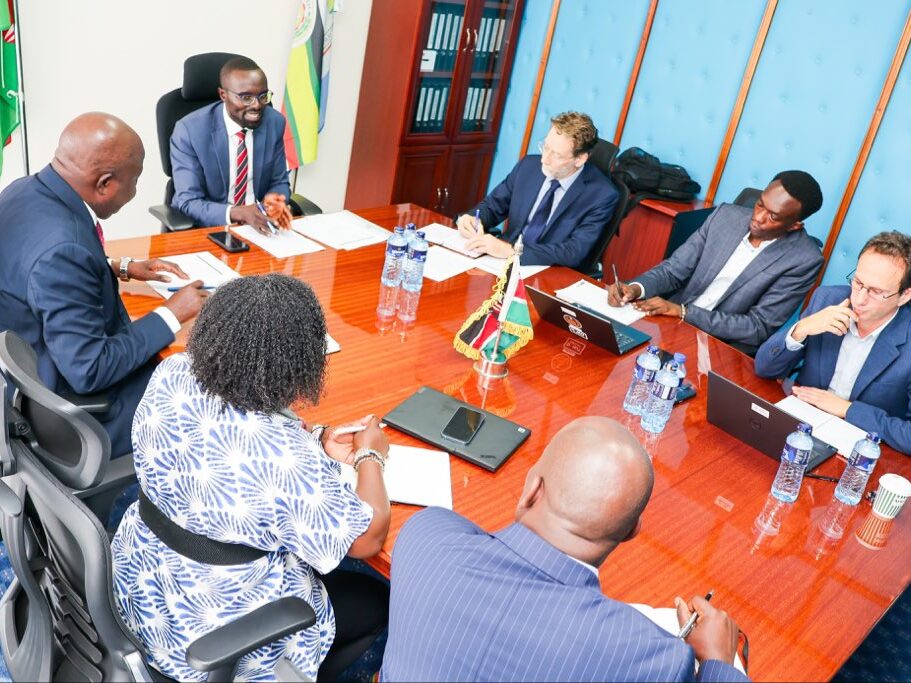
Cabinet Secretary for Water, Sanitation and Irrigation Eng. Eric Mugaa held discussions with a World Bank delegation at Maji House in Nairobi, led by Dominick de Waal, Senior Economist in the Bank’s Water Global Practice, and Victor Vazquez, Senior Water and Sanitation Specialist.
The meeting reviewed the World Bank’s development portfolio in the Ministry, including investments in bulk water infrastructure, groundwater resilience, sanitation facilities and community water supply programmes.
Among the initiatives discussed were the Horn of Africa Groundwater for Resilience Programme, the Mwache Dam project, the Kenya Water, Sanitation and Hygiene (K-WASH) Programme and the Water and Sanitation Development Project (WSDP).
The K-WASH programme is one of the major components of the partnership. It is designed to expand access to improved water and sanitation services, eliminate open defecation and strengthen the financial performance of water service providers. The programme targets 19 counties, with an expected reach of approximately four million people through improved water services and another four million through improved sanitation services.
The programme has a total financing framework of US$458 million, combining World Bank financing, government contributions and commercial financing. It is expected to run until June 2030.
Groundwater development was another important area of discussion, particularly through the Horn of Africa Groundwater for Resilience Programme. The initiative targets Turkana, Marsabit, Mandera, Wajir and Garissa, where communities face persistent water shortages and vulnerability to drought.
Supported by US$135 million in World Bank financing, the six-year programme seeks to improve groundwater information, develop water infrastructure and strengthen sustainable management of underground water resources. It is expected to benefit more than 700,000 people in rural communities through improved access to reliable water supplies.
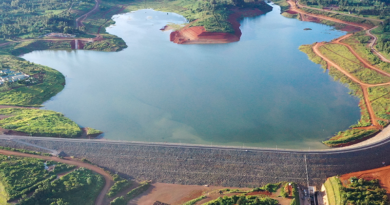
The discussions also covered the Mwache Multipurpose Dam in Kwale County, a major infrastructure investment intended to increase bulk water supply to Mombasa and Kwale counties. The project is expected to strengthen water security in the Coast region by providing additional water for domestic and other uses.
The Water and Sanitation Development Project was also among the programmes reviewed. The initiative supports the expansion of water distribution networks, construction of dams and boreholes, and improvement of water-sector policies and institutional capacity. Its inclusion in the discussions highlights the importance of maintaining investments in water infrastructure beyond major urban centres.
The scale of these investments is also reflected in the government’s 2026 development budget, which allocated approximately KSh6.13 billion to K-WASH, KSh5.82 billion to the Mwache Dam programme and KSh2.35 billion to the Horn of Africa Groundwater for Resilience Programme.
Kenya’s partnership with the World Bank remains an important source of development financing and technical support for addressing infrastructure gaps across the water sector. The investments cover different aspects of water security, from groundwater development in drought-prone areas to large-scale bulk water systems, sanitation infrastructure and irrigation.
The engagement provides an opportunity for the Ministry and the development partner to review ongoing investments and discuss the implementation of programmes supporting the country’s water and food security objectives.