Kenya targets groundwater security in arid counties through regional resilience project
Kenya is stepping up efforts to protect underground water resources and improve access to reliable water supplies in drought-prone areas through a regional groundwater programme targeting seven aquifer systems in the country’s northern and north-eastern regions.
The Horn of Africa Groundwater for Resilience Project (HoAGW4R), supported by the World Bank in collaboration with regional and national institutions, seeks to strengthen sustainable groundwater management and improve water access in communities facing recurring droughts and water shortages.
The programme will focus on aquifer systems with regional and cross-border significance, particularly in the arid and semi-arid lands (ASALs) bordering Ethiopia and Somalia. In Kenya, the targeted areas include Turkana, Marsabit, Mandera, Wajir and Garissa counties, which are among the regions most vulnerable to prolonged dry spells and unreliable surface water supplies.
The initiative brings together the Ministry of Water, Sanitation and Irrigation, the Water Resources Authority (WRA), Water Sector Trust Fund (WSTF), Regional Centre for Groundwater Resources Education, Training and Research (RCGW), the Intergovernmental Authority on Development (IGAD) and Cooperation in International Waters in Africa (CIWA).
The Water Resources Authority will implement two key components focusing on groundwater conservation, aquifer protection, resource assessment and the development of monitoring systems to guide future water-resource planning.
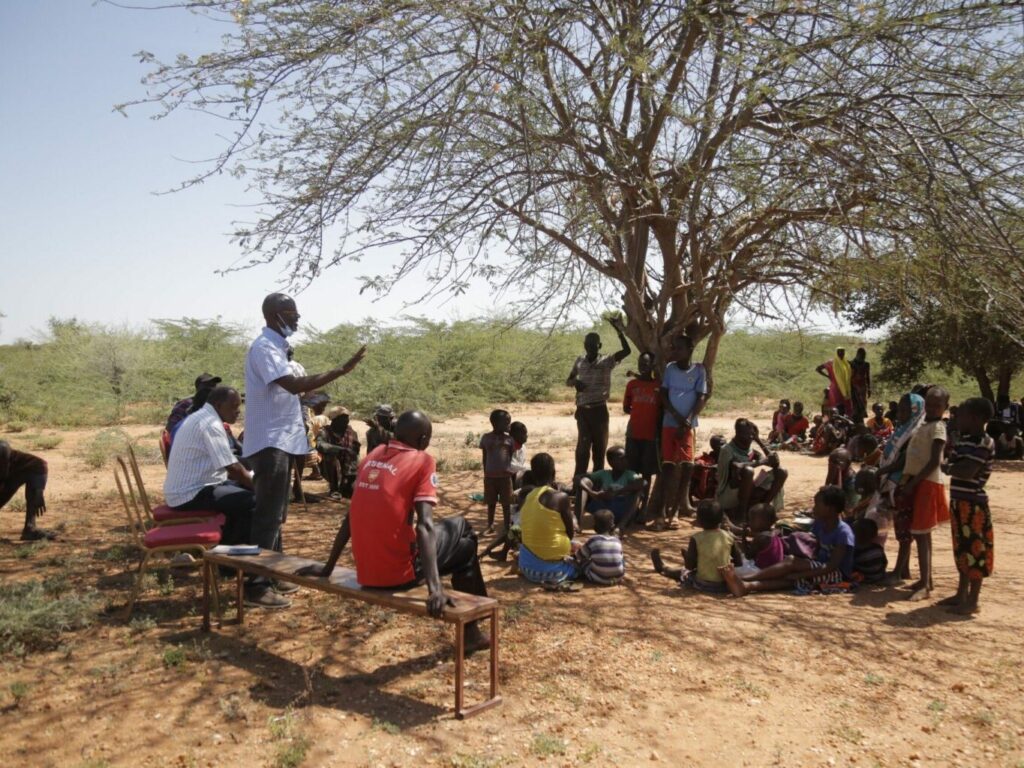
One of the interventions will involve strengthening community participation in the conservation and sustainable management of seven selected aquifers across the North and North Eastern Development Initiative (NEDI) counties.
Under this component, the authority will support the establishment and capacity building of Water Resource Users Associations (WRUAs), which will play a central role in coordinating community-led conservation activities and implementing sub-catchment management plans.
The associations will also be involved in protecting groundwater recharge zones through conservation programmes and the development of nature-based infrastructure designed to improve water retention and infiltration.
Proposed interventions include the construction and improvement of water pans, sand dams, subsurface dams, infiltration ponds, recharge galleries, trenches and other structures that can help capture rainwater and increase the amount of water entering underground aquifers.
The programme will also support the identification and formal protection of groundwater recharge areas through gazettement, helping safeguard locations that are important for replenishing underground water reserves.
Community participation will extend beyond physical conservation infrastructure to include livelihood activities that encourage sustainable management of natural resources. These will include pasture development, tree growing, beekeeping and beadwork, providing communities with alternative income-generating opportunities while supporting environmental conservation.
The approach is expected to strengthen the relationship between groundwater protection and local economic activities, particularly in pastoral communities whose livelihoods depend heavily on the availability of water and healthy rangelands.
Another major intervention will focus on improving groundwater information and drought monitoring through detailed assessments of selected aquifers in the NEDI counties, alongside management plans for the Nakuru and Nairobi aquifers.
The assessments will establish the condition, availability and development potential of groundwater resources, providing technical information to guide investment, allocation and long-term conservation.
The programme also plans to establish approximately 60 exploratory boreholes as part of the aquifer investigations. Where the boreholes yield productive groundwater supplies, they may be equipped to support water provision in communities facing shortages.
In addition, about 60 monitoring wells will be established to track groundwater levels and provide real-time information on changes in underground water reserves. The monitoring network will be connected to an upgraded Groundwater Management Information System to improve access to reliable data.
The information system is expected to incorporate a groundwater database and a mobile application that will facilitate the collection and submission of field information, strengthening the ability of water authorities to monitor aquifer conditions.
The data generated through the assessments will also support the preparation of aquifer development and management plans. Development plans will guide how groundwater resources can be utilised, while management plans will establish measures for protecting recharge areas, controlling extraction and securing supplies for future generations.
The inclusion of Nairobi and Nakuru aquifers in the assessment programme also extends the project’s groundwater management focus beyond the drought-prone northern counties, recognising the importance of protecting underground water reserves in urban and rapidly growing areas.
Groundwater is an important source of water in Kenya, particularly in regions where rivers and other surface water sources are limited or seasonal. However, sustainable utilisation requires reliable information on aquifer capacity, recharge rates, water quality and the volumes being extracted.
Through a combination of scientific assessments, monitoring infrastructure and community-led conservation, the programme aims to improve the management of groundwater resources while strengthening resilience to drought across the Horn of Africa borderlands.
The long-term success of the initiative will depend on effective coordination among national institutions, county governments, communities and regional partners, particularly in managing aquifers whose water systems extend beyond national boundaries.
As drought and climate variability continue to threaten water availability in northern Kenya, improved groundwater information, protected recharge zones and investment in water-harvesting infrastructure are expected to play an important role in strengthening water security and supporting communities that depend on these underground reserves.