Kenya’s borehole boom raises concerns over groundwater sustainability
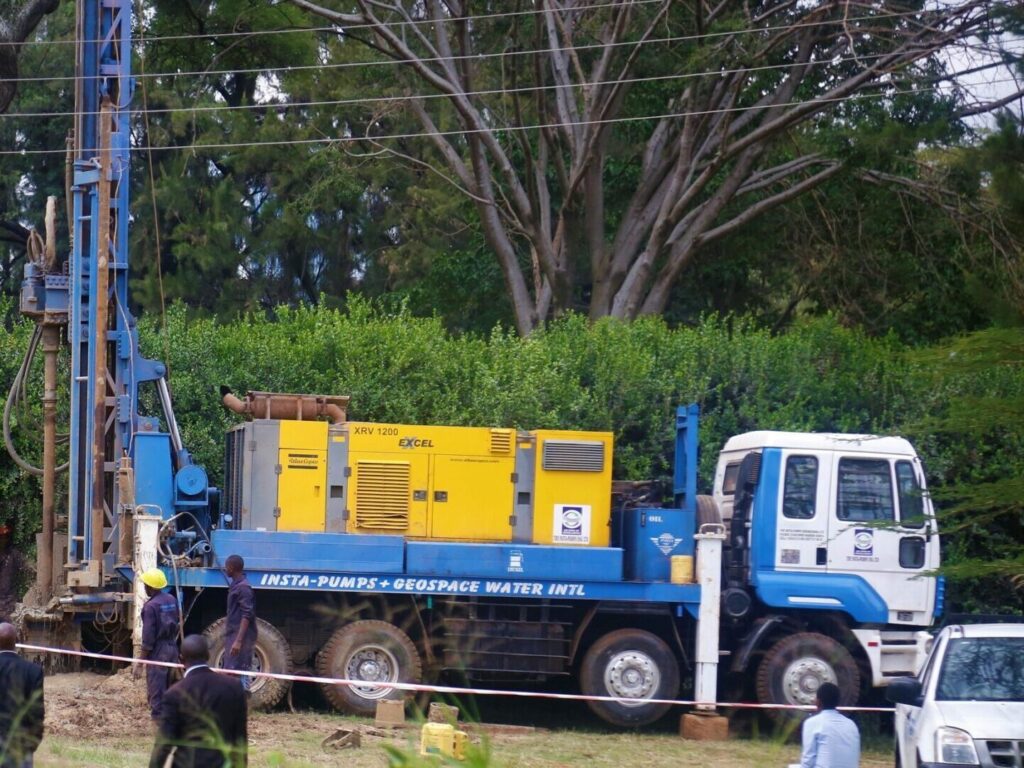
Kenya’s growing reliance on boreholes as an alternative source of water is raising concerns over the sustainability of underground water resources, as households, businesses and institutions increasingly turn to groundwater to meet their daily needs.
The rising number of boreholes reflects the importance of groundwater in addressing water shortages, particularly in areas where piped water infrastructure is inadequate or unreliable. However, increased extraction is placing greater responsibility on water authorities to monitor abstraction, protect underground reserves and ensure that the resource remains available for future generations.
Data from the 2026 Economic Survey indicate that Kenya’s cumulative number of boreholes is projected to reach 47,539 in 2025/26, compared with 39,163 in 2021/22. Private-sector boreholes account for approximately 90.7 per cent of the total, highlighting the significant role played by households, businesses and other private investors in groundwater development.
The figures point to growing dependence on privately developed water sources, making groundwater management an increasingly important part of Kenya’s broader water security agenda.
Unlike rivers and dams, groundwater is stored beneath the earth’s surface in geological formations known as aquifers. These underground reserves supply water through boreholes and springs and can support communities during prolonged dry periods when surface water sources become unreliable. However, their availability depends on rainfall, geological conditions and the ability of water to infiltrate the ground and replenish underground reserves.
Increased extraction presents particular challenges in urban areas, where population growth, construction and commercial activities have raised demand for alternative water supplies. Nairobi is among the areas facing growing pressure on underground water resources, with residential developments, hotels, industries and commercial establishments increasingly relying on boreholes to supplement supplies from public water networks.
Concerns about groundwater depletion have also emerged in parts of the capital. In May 2026, the Water Resources Authority launched a survey of boreholes in Karen and Lang’ata following complaints from residents about excessive drilling and declining groundwater levels.
The exercise followed an Environment and Land Court order directing the authority to inspect boreholes in the area and establish their locations, construction details, water abstraction levels and compliance with regulatory requirements. Residents, through the Karen and Lang’ata District Association, had raised concerns that groundwater levels had dropped by approximately 79 metres, a claim that requires technical assessment to establish the extent of the problem.
The concerns highlight the importance of understanding how much water is being extracted from underground reserves and whether the rate of abstraction is consistent with natural replenishment. Groundwater recharge occurs when rainfall and surface water infiltrate the soil and gradually replenish underground aquifers.
However, rapid urban development can interfere with this process. Roads, buildings and other paved surfaces reduce the amount of rainwater that can naturally penetrate the ground, potentially limiting the replenishment of underground reserves. Protecting groundwater recharge areas is therefore becoming an important consideration in urban planning, particularly in rapidly expanding towns and cities.
The Water Resources Authority is responsible for regulating groundwater development and ensuring that abstraction is undertaken sustainably. Under the Water Act 2016, the authority oversees water-resource allocation, including groundwater extraction, and is mandated to protect and conserve water resources.
Its groundwater management framework includes requirements relating to borehole siting, construction, supervision and pumping tests. Borehole owners are also required to obtain relevant authorisations and water-use permits, install water-measuring devices and ensure that extraction remains within approved limits.
Beyond the quantity of water available, groundwater quality presents another challenge. Although underground water can undergo natural filtration as it passes through soil and geological formations, this does not automatically make it safe for human consumption.
Groundwater can contain naturally occurring minerals, including fluoride, while poorly protected boreholes and inadequate sanitation systems can expose underground reserves to contamination. In parts of Kenya, particularly areas with volcanic geological formations, elevated fluoride concentrations present additional challenges for communities that depend on groundwater.
Regular testing is therefore necessary to determine whether water from individual boreholes meets drinking-water standards. Households, institutions and businesses investing in groundwater infrastructure also need to consider water-quality monitoring as part of the cost of developing and maintaining their supplies.
The growing reliance on private boreholes further highlights the need for accurate information on groundwater extraction. Authorities require reliable data on the number of active boreholes, volumes of water pumped, aquifer conditions and changes in groundwater levels to determine whether underground reserves are being used sustainably.
Such information would also help identify areas experiencing excessive abstraction and guide decisions on where additional borehole development should be controlled or supported.
Groundwater remains an important component of Kenya’s water security, particularly in arid and semi-arid regions where rivers, dams and conventional water infrastructure are limited. It also supports agricultural production, livestock keeping, industrial activities and household consumption.
However, the long-term contribution of groundwater will depend on how effectively extraction is regulated, recharge areas are protected and water quality is monitored. As investment in boreholes continues to increase, the challenge for water authorities will be ensuring that the growing dependence on underground water does not compromise the availability of the resource for future generations.