Kenya water utilities eye stronger financing and efficiency
Kenya’s water sector is preparing for a new phase of utility reforms, with partnerships targeting improved financial sustainability, operational efficiency and expanded water services in arid and semi-arid regions.
The proposed interventions include strengthening water service providers, developing infrastructure projects and improving access to financing, as stakeholders seek to address persistent challenges affecting water supply across the country.
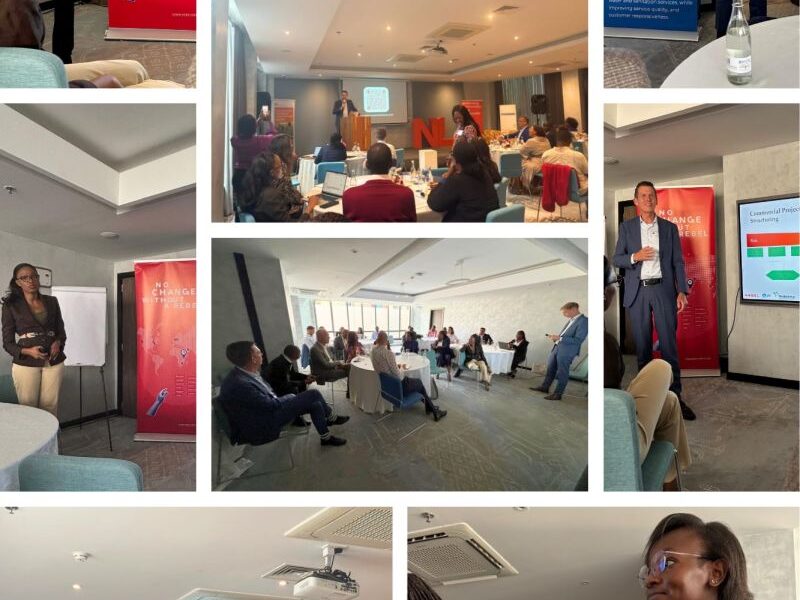
These issues featured prominently during a Water Partner Day organised by the Embassy of the Kingdom of the Netherlands in Kenya, which brought together development partners, water utilities, government representatives and private-sector organisations to discuss investment opportunities and cooperation in the water sector.
A key announcement was the planned Perform WASH programme, which will be implemented from 2027 to 2031 under the leadership of the Kenya Red Cross, working alongside FINISH Mondial Kenya and VEI.
The programme will focus on strengthening water utilities serving arid and semi-arid areas, where water providers face operational and financial challenges associated with limited infrastructure, unreliable water sources and high service-delivery costs.
The programme is expected to address some of the structural weaknesses affecting water service providers in underserved regions, where utilities often struggle to maintain infrastructure, meet operational costs and extend networks to remote communities.
The financial position of Kenya’s water utilities remains a major concern. The Water Services Regulatory Board’s 2024/2025 sector performance report shows that non-revenue water stood at 48 per cent, meaning a significant proportion of treated water is lost through leakages, illegal connections, faulty meters and billing inefficiencies before generating revenue.
These losses have consequences beyond the physical wastage of water. They reduce the income available to utilities for maintaining pipelines, expanding distribution networks and investing in sanitation infrastructure.
Public water companies lost approximately KSh14.9 billion through non-revenue water during the 2024/2025 financial year, highlighting the financial pressure facing providers and the need for better operational management.
Although the sector’s average operating and maintenance cost coverage improved to 103 per cent during the same period, the median remained at 98 per cent, indicating that more than half of water providers were still unable to fully meet their operational and maintenance expenses using internally generated revenue.
The discussions during the Water Partner Day also examined how utilities can attract investment by improving their financial performance and developing bankable infrastructure projects.
VEI, working through the WaterWorX programme, joined Rebel and Haskoning in presenting approaches to improving utility efficiency and financing. These interventions are particularly relevant as Kenyan water companies seek to mobilise additional resources for infrastructure development without relying entirely on government and donor funding.
WaterWorX has supported partnerships between Dutch water operators and Kenyan utilities, including Kisumu Water and Sanitation Company, Naivasha Water, Nakuru Water and Sanitation Services Company and Nakuru Rural Water and Sanitation Company.
Through these partnerships, utilities receive technical support in areas such as reducing water losses, improving energy efficiency, strengthening financial management and developing infrastructure investment plans.
Another key development was the presentation on pipeline development involving Kisumu Water and Sanitation Company and the Water Services Providers Association (WASPA). Developing a pipeline of viable projects could help utilities identify infrastructure priorities, prepare investment proposals and attract financing from development partners and other investors.
The engagement comes as Kenya continues to face substantial gaps in water and sanitation infrastructure, particularly in rural, underserved and arid regions. Improving the ability of water companies to operate sustainably is therefore essential to expanding access while ensuring that existing infrastructure remains functional.
The planned Perform WASH programme, running from 2027 to 2031, will add another layer to these interventions by targeting the institutional and operational capacity of utilities serving arid and semi-arid areas.
Beyond individual projects, the partnerships point to a broader shift towards strengthening water companies as sustainable service providers capable of managing infrastructure, attracting investment and responding to growing demand.
For Kenya, the challenge will be translating these partnerships and investment discussions into practical improvements, including reduced water losses, more reliable supplies, expanded sanitation networks and stronger financial performance among county water utilities.