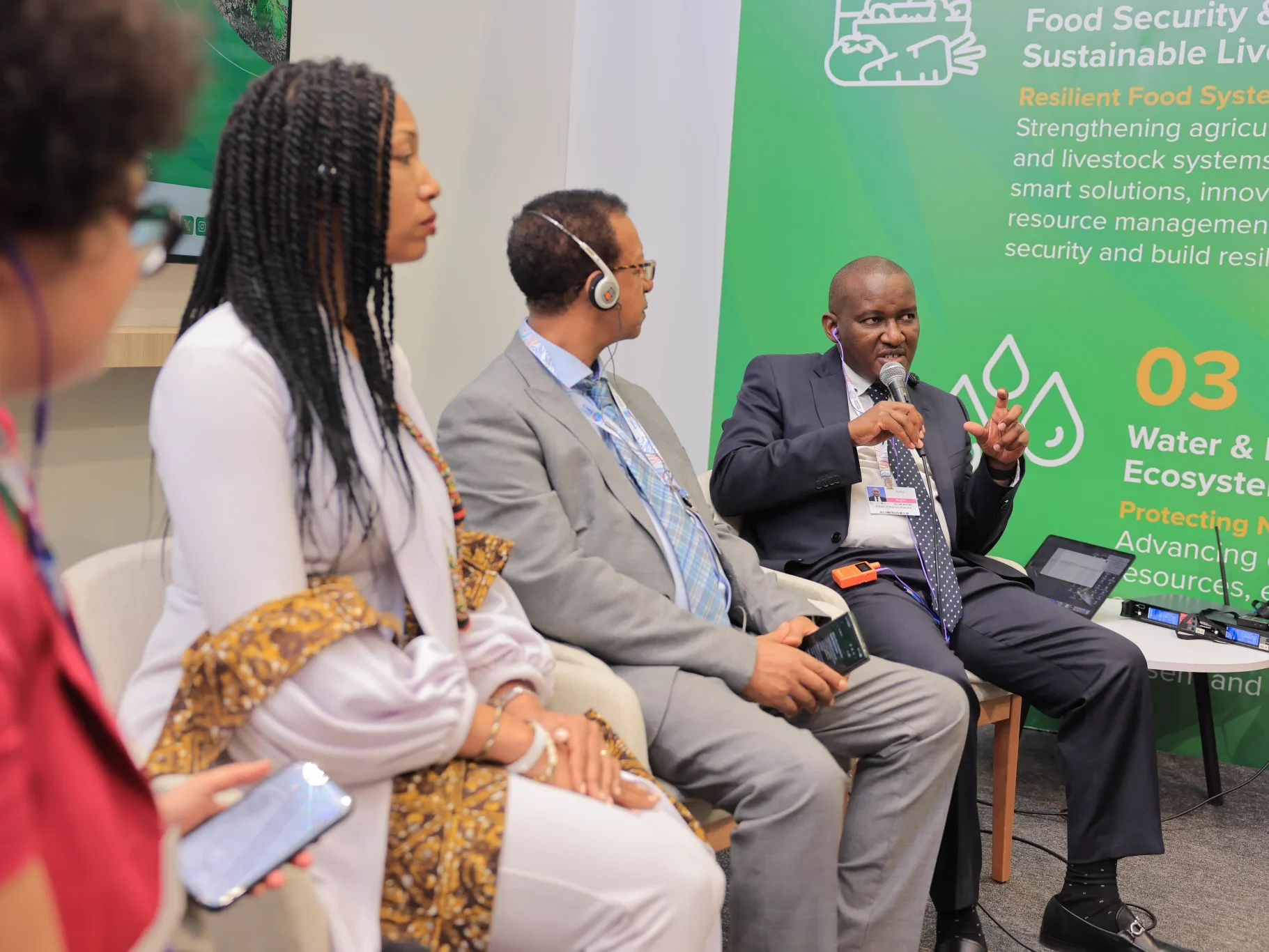





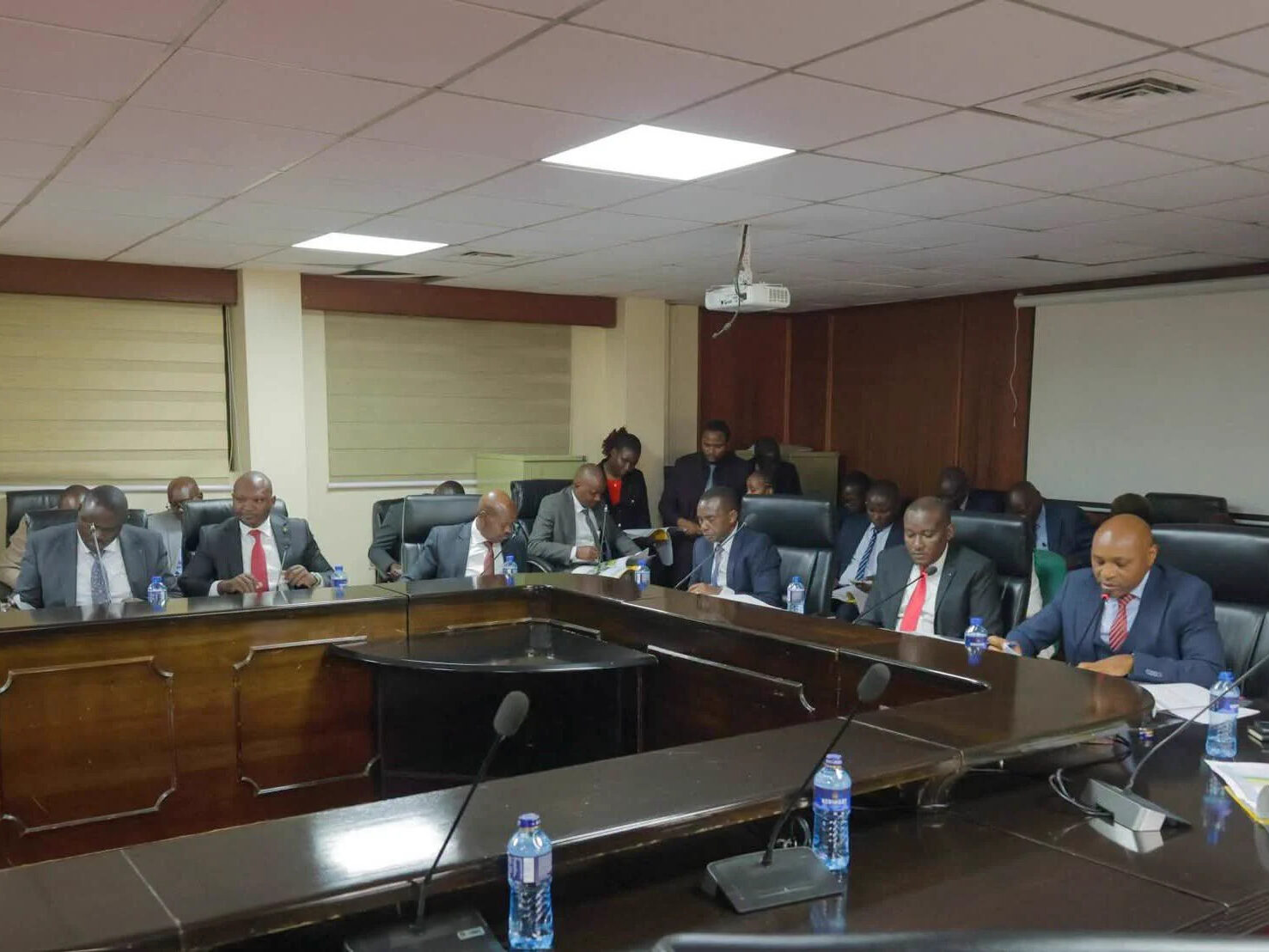
Principal Secretary for Irrigation CPA Ephantus Kimotho with National Assembly Departmental Committee on Blue Economy, Water and Irrigation, outlining the proposed investments and targets for the coming financial year.
The State Department for Irrigation is seeking KSh11.709 billion for the 2027/2028 financial year to expand irrigated agriculture, rehabilitate existing schemes and develop water storage infrastructure as the government intensifies efforts to strengthen food security and reduce reliance on rain-fed farming.
Principal Secretary for Irrigation CPA Ephantus Kimotho presented the department’s 2027 Draft Budget Policy Statement to the National Assembly Departmental Committee on Blue Economy, Water and Irrigation, outlining the proposed investments and targets for the coming financial year.
A major priority is increasing the area under irrigation through community-based projects, expansion of existing schemes and development of new irrigation infrastructure. The department is targeting 14,900 additional acres through community-based irrigation projects and another 7,060 acres under the National Expanded Irrigation Programme.
It also plans to advance ongoing projects under the Suba Cluster, Lower Kuja, Turkana, National Irrigation Authority schemes and Lower Nzoia, with a combined medium-term target of bringing 22,421 acres under irrigation.
The proposed investments are intended to improve access to reliable water for agricultural production, particularly among farming communities that depend heavily on seasonal rainfall. Expanding irrigation is also expected to support more consistent crop production, increase farmers’ incomes and strengthen food supplies during periods of drought.
One of the largest proposed investments is the Galana Athi Dam project, for which the department is seeking KSh1.5 billion. The planned dam will have a storage capacity of 306 million cubic metres and is designed to provide water for irrigation across 200,000 acres under the Galana-Kulalu agricultural development programme.
The project is expected to support the government’s ambition of achieving annual maize production of one million tonnes by 2030, while opening up additional land for large-scale agricultural production.
The dam is particularly important because reliable water storage is necessary to sustain irrigation throughout the year in areas where rainfall is unreliable. By capturing and storing water for agricultural use, the infrastructure is expected to reduce dependence on seasonal rainfall and support more predictable farming cycles.
The Galana Athi Dam is part of the wider Galana-Kulalu Food Security Project, which seeks to develop large-scale irrigation infrastructure in the coastal region. The National Irrigation Authority signed a contract for the engineering, procurement, construction and financing of the dam and its associated water conveyance system in December 2025. The authority has described the project as a major investment in expanding irrigated agricultural production.
Rice production is another major area targeted for investment, with the Rice Intensification Programme planning to rehabilitate and expand 90,758 acres across public and community irrigation schemes. The intervention is expected to increase paddy production by improving existing irrigation infrastructure and bringing additional land into production.
Rehabilitation is important because ageing canals, inefficient water distribution systems and inadequate infrastructure can limit the performance of established irrigation schemes. Improving these facilities can help farmers make better use of available water while increasing the amount of land that can be cultivated.
Beyond large-scale irrigation, the department is also prioritising water harvesting and storage, land reclamation and climate-resilient agricultural infrastructure. It is targeting the construction of six water-harvesting structures with a combined storage capacity of 4.33 million cubic metres and the reclamation of 1,780 acres of land.
The department also plans to expand its Micro-Irrigation Programme for Schools by installing irrigation infrastructure in public learning institutions. The initiative is intended to support school-based food production and contribute to school feeding programmes while exposing learners to practical agricultural activities and water conservation.
These interventions are part of a wider national irrigation expansion agenda under the National Irrigation Sector Investment Plan (NISIP) 2025–2035, which seeks to increase irrigated agricultural production through farmer-led development, stronger community schemes, revitalised public irrigation infrastructure and private-sector participation.
The 2027 Budget Policy Statement also identifies irrigation expansion as a medium-term national priority, targeting an increase in irrigated land to more than one million acres by the 2029/2030 financial year. It further projects an increase in annual paddy rice production and additional water storage capacity to support agricultural development.
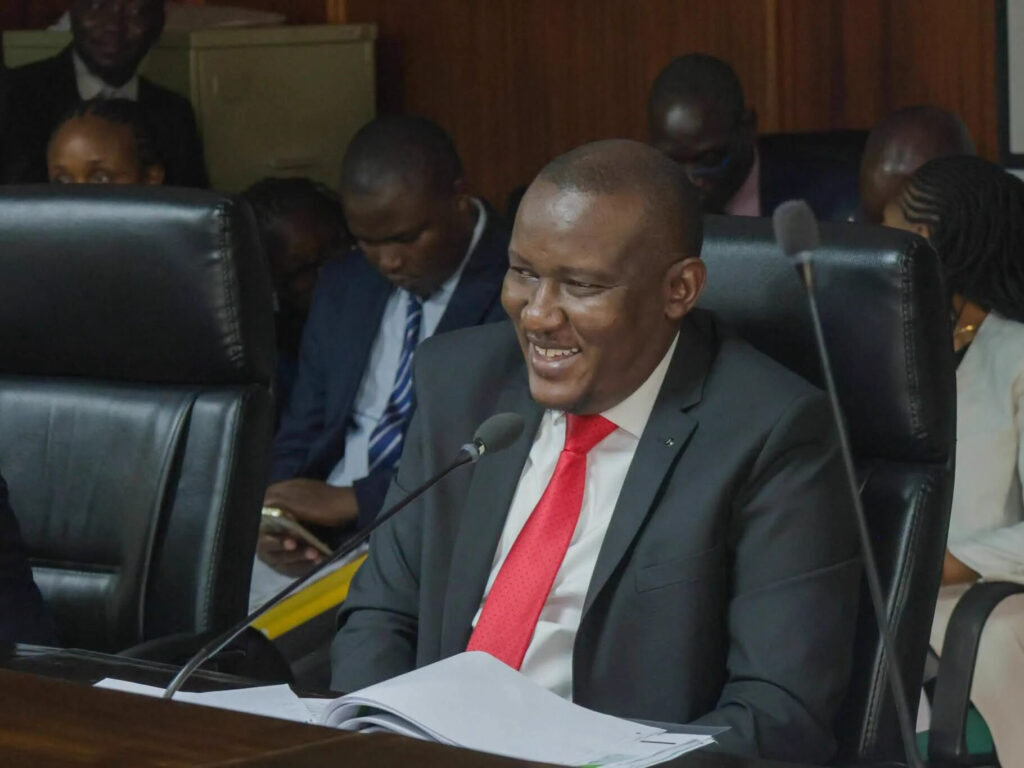
Principal Secretary for Irrigation CPA Ephantus Kimotho with National Assembly Departmental Committee on Blue Economy, Water and Irrigation, outlining the proposed investments and targets for the coming financial year.
During the committee engagement, Kimotho acknowledged the legislators’ feedback and their recognition of progress in land reclamation and school-based micro-irrigation. He also called for the committee’s support for the proposed Land Reclamation Bill when it is presented before Parliament.
The proposed allocation and interventions reflect the department’s broader strategy of linking water infrastructure development with agricultural productivity, employment creation and improved livelihoods. However, the KSh11.709 billion remains a budget proposal subject to the national budget approval process.
If implemented as planned, the investments could strengthen water availability for farming, expand productive agricultural land and improve the resilience of farming communities against increasingly unpredictable rainfall.