







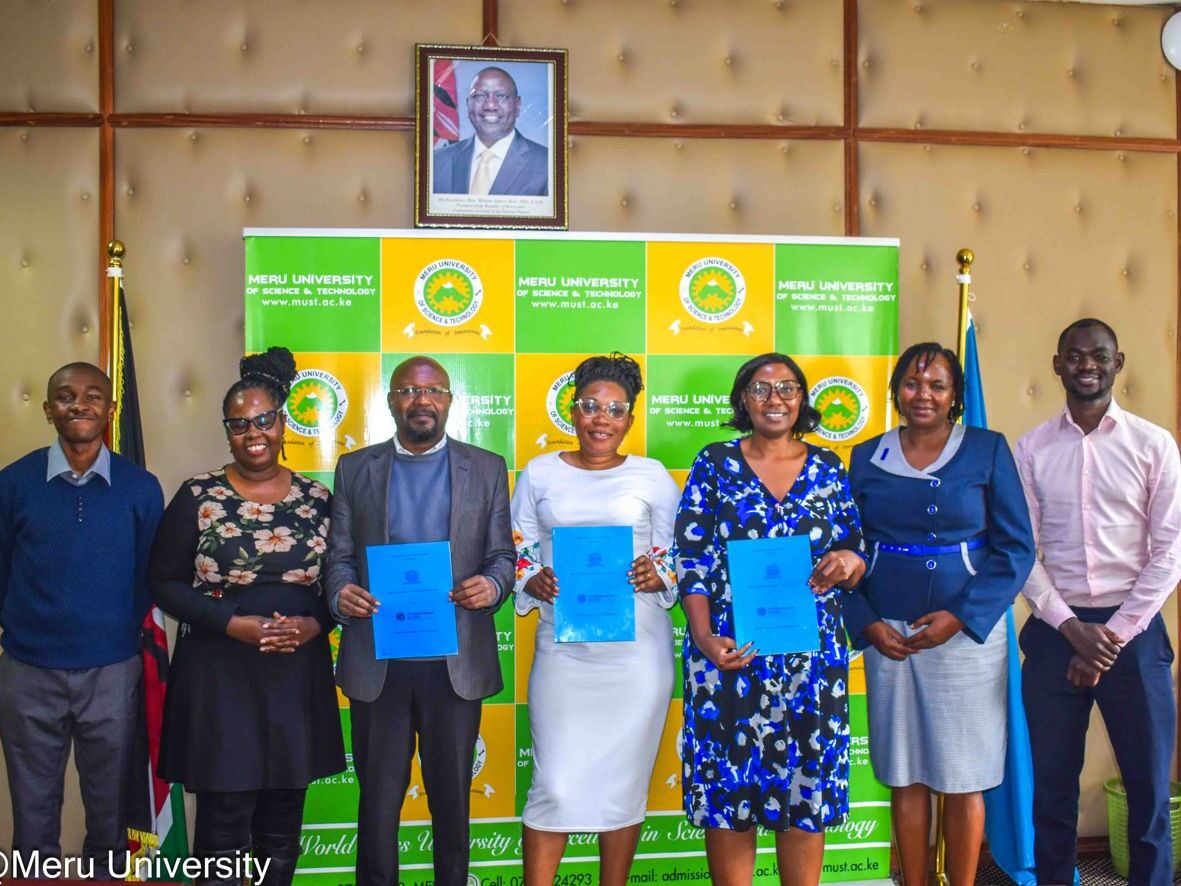
Meru University of Science and Technology (MUST) has partnered with Hydromarine Global to strengthen climate change advocacy and promote practical interventions aimed at addressing the effects of climate change on water resources.
The two institutions have signed a Memorandum of Understanding (MoU) to establish a framework for cooperation in climate awareness, advocacy and action, with discussions focusing on closing gaps in public understanding and identifying practical approaches to advancing climate resilience.
The partnership highlights the importance of connecting climate advocacy with the protection and sustainable management of water resources, which are increasingly under pressure from changing weather patterns, prolonged droughts, floods and environmental degradation.
The engagement was led by Prof. Hilda Omae, with discussions exploring areas of collaboration, including climate awareness programmes, addressing shortcomings in climate advocacy and developing approaches that can translate shared commitments into meaningful environmental outcomes.
Water resources are among the sectors most vulnerable to climate change. Rising temperatures, unpredictable rainfall and prolonged dry periods affect the availability and reliability of water supplies, while intense rainfall and flooding can damage water infrastructure, contaminate drinking water sources and increase pressure on sanitation systems.
In Kenya, these challenges have direct implications for households, agriculture, industries and water service providers. Prolonged droughts reduce river flows, lower dam levels and affect groundwater recharge, increasing competition for available water. On the other hand, heavy rainfall can cause soil erosion, sedimentation in reservoirs and pollution of rivers through surface runoff.
These impacts make climate advocacy an important part of water resource management. Beyond raising awareness about global warming, climate advocacy can help communities understand how changing climatic conditions affect local water sources and encourage responsible practices that protect rivers, catchments, wetlands and groundwater reserves.
It can also strengthen public participation in water conservation, watershed restoration, rainwater harvesting and pollution prevention. When communities understand the connection between environmental degradation and water insecurity, they are better positioned to participate in protecting the ecosystems that sustain water supplies.
Through their partnership, MUST and Hydromarine Global intend to strengthen climate awareness and identify practical ways of addressing existing gaps in advocacy. The collaboration provides an opportunity to bring institutional knowledge and stakeholder engagement together in promoting environmental responsibility and sustainable development.
A key commitment emerging from the discussions was to fast-track the implementation of agreed initiatives, ensuring that the partnership moves beyond awareness campaigns and the signing of the agreement towards practical outcomes.
For water resources, this approach is particularly relevant because climate resilience requires interventions that go beyond responding to droughts and floods after they occur. Protecting water catchments, improving water-use efficiency, restoring degraded ecosystems and promoting sustainable land management are among the measures that can reduce the vulnerability of water systems to climate-related shocks.
Universities also have an important role in advancing this agenda through research, knowledge dissemination and engagement with communities. By working with external organisations, higher learning institutions can help translate scientific information into messages and initiatives that communities, businesses and policymakers can apply in managing environmental challenges.
The MUST-Hydromarine Global partnership therefore reinforces the role of collaboration in linking climate knowledge, public advocacy and sustainable water resource management.
As Kenya continues to experience climate-related pressures on its water systems, stronger public awareness and coordinated action will be essential in protecting water sources, safeguarding infrastructure and improving the resilience of communities that depend on them.
The success of such partnerships will ultimately be reflected in their ability to turn climate conversations into practical measures that protect natural resources and secure water availability for future generations.