







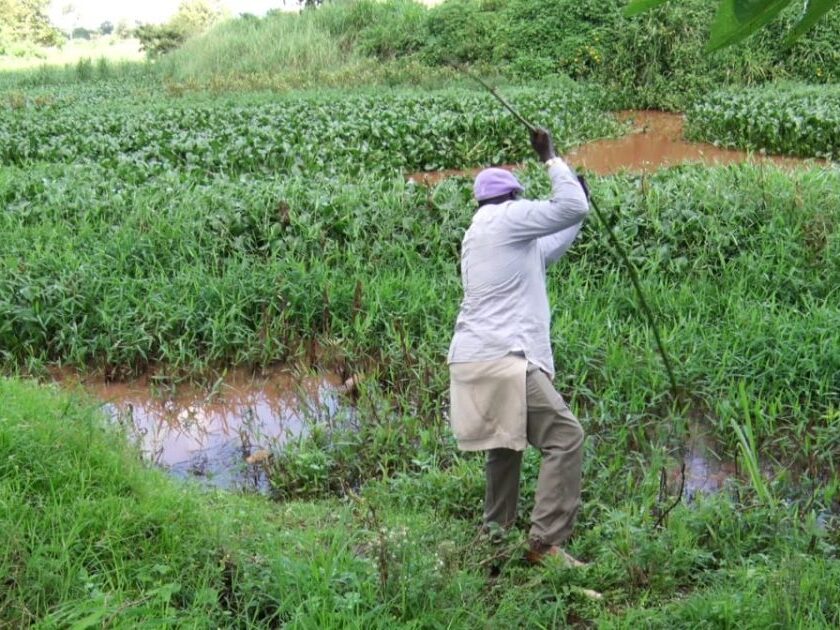
Machakos County has called on the Kiambu County Government and the National Environment Management Authority (NEMA) to strengthen enforcement against pollution of Thika River, raising fresh concerns over the safety of water resources shared by communities across county boundaries.
Machakos Governor Wavinya Ndeti has urged the two institutions to take urgent action to stop the discharge of untreated waste into the river, warning that continued pollution threatens communities and economic activities that depend on the waterway.
In a statement issued on November 21, 2026, the governor expressed concern over the condition of the river as it passes through Yatta Sub-County, where residents rely on water resources for domestic use, agriculture and other livelihood activities. She called for stronger environmental protection measures to prevent further contamination and safeguard the river for present and future generations.
The appeal highlights a wider challenge facing Kenya’s water resources, where rivers crossing administrative boundaries are increasingly exposed to pollution from settlements, industries, agricultural activities and inadequate wastewater management systems.
Thika River is an important water resource serving communities in parts of Murang’a, Kiambu and Machakos counties. It also supports industrial and agricultural activities, making its protection important for both public health and economic development.
However, pollution concerns surrounding the river are not new. In April 2023, the government and environmental stakeholders initiated the Future Design Basecamp programme to restore the Thika River Basin ecosystem following concerns over industrial effluent, raw sewage from residential estates, water hyacinth and encroachment along the riverbanks.
The initiative brought together the Water Resources Authority (WRA), World Waternet and the Dutch-based Embassy of Earth under the Blue Deal programme. Its objectives included improving water quality, conserving the catchment, addressing encroachment and encouraging industries and communities to adopt better environmental management practices.
The restoration programme also recognised that protecting a river requires interventions beyond cleaning its waters. Conservation of upstream catchment areas, protection of riparian land and improved management of wastewater are necessary to reduce the pollutants entering the river.
Research has also highlighted water-quality concerns within the Thika River sub-catchment. A 2023 study published in the Journal of Applied Research in Water and Wastewater examined physical, chemical and biological water-quality variations during dry and wet seasons using samples collected in 2021.
The research found significant variations in sulphate, nitrate, total coliform and faecal coliform concentrations. Importantly, total and faecal coliform levels exceeded the drinking-water limits used in the study, indicating potential contamination associated with human and animal waste.
The findings demonstrate why regular water-quality monitoring is necessary, particularly in areas where rivers serve multiple users. However, the study’s results relate to the sampled locations and period and should not be interpreted as a current assessment of every section of the river.
The wider pollution challenge is also reflected in a National Assembly investigation into contamination of the Athi River system. A parliamentary report identified domestic wastewater, industrial discharges, inadequate sewerage infrastructure, poorly managed dumpsites and encroachment on riparian reserves among the factors contributing to water pollution across the basin.
The investigation further highlighted weaknesses in enforcement, including inadequate monitoring capacity and poor coordination among institutions responsible for controlling pollution. These findings underline the importance of coordinated action between county governments, environmental regulators and water-resource management agencies.
Under the Environmental Management and Coordination (Water Quality) Regulations, 2024, NEMA regulates the discharge of effluent into the environment and requires relevant operators to obtain valid effluent discharge licences. Industries and wastewater treatment facilities are therefore expected to meet established discharge standards before releasing treated wastewater into rivers and other water bodies.
The Water Resources Authority also has a responsibility to monitor water quality, conduct field and laboratory assessments, enforce pollution-control measures and protect water resources through catchment management.
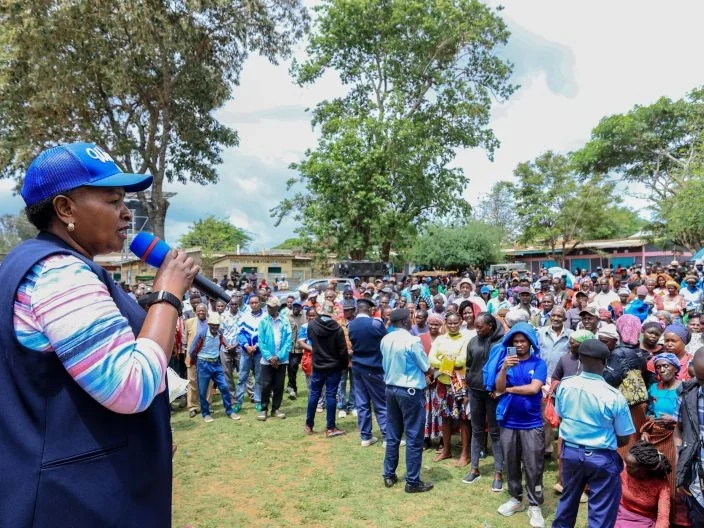
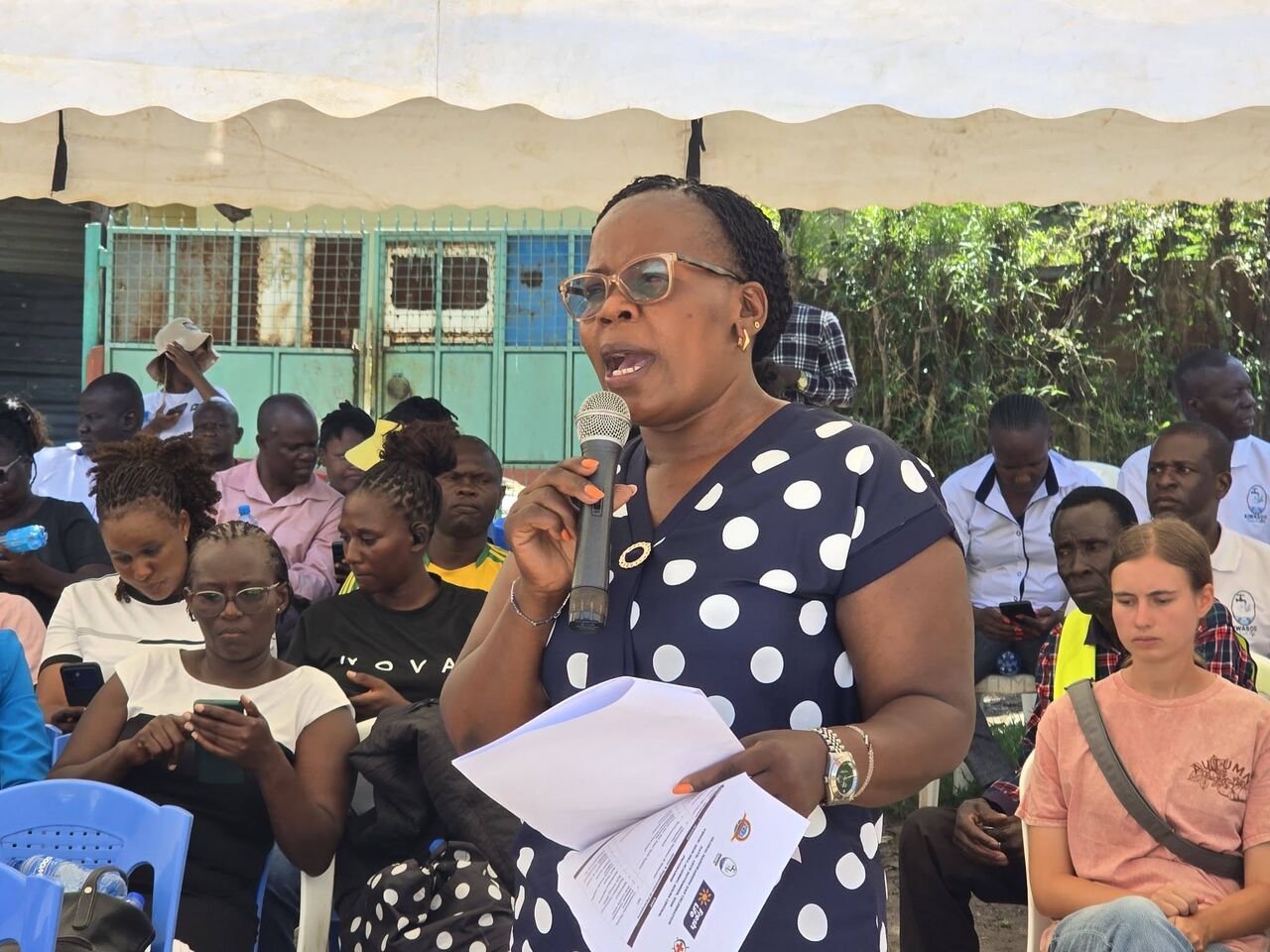
Machakos governor Wavinya Ndeti addressing during an engagement meeting with residents of Mavoloni Sub-location in Ndalani Ward on Saturday, November 21, 2026.PHOTO/@Wavinya_Ndeti
Addressing the pollution concerns raised by Machakos will consequently require more than occasional inspections. Authorities need to identify pollution sources, undertake regular water sampling, inspect industrial and municipal wastewater treatment facilities and take enforcement action against operators found discharging untreated or non-compliant effluent.
Investment in sewerage infrastructure and wastewater treatment capacity will also be essential, particularly in rapidly urbanising areas where population growth and industrial expansion are increasing wastewater volumes.
At the community level, protecting riverbanks, controlling solid-waste disposal and involving Water Resource Users Associations in monitoring activities can complement government enforcement efforts.
For downstream communities in Yatta, the consequences of continued pollution extend beyond environmental degradation. Contaminated water can affect agricultural production, livestock, public health and other economic activities dependent on reliable freshwater resources.
The latest appeal therefore renews attention on the need for a coordinated river restoration strategy that addresses pollution at its source rather than concentrating interventions only on affected downstream sections.
Ultimately, protecting Thika River will require sustained cooperation between Kiambu and Machakos counties, NEMA, WRA, industries and local communities to ensure that wastewater is properly treated, pollution is controlled and the river remains a dependable resource for future generations.