The government is preparing to roll out a major rural water supply investment in Turkana County, with nine groundwater-based schemes expected to improve access to water for more than 65,000 people across six sub-counties. The nearly KSh1 billion investment seeks to expand water infrastructure in the arid region, where communities face persistent challenges accessing reliable supplies for household consumption and livestock.
The Turkana County Rural Water Supply Scheme is being implemented under the Horn of Africa Groundwater for Resilience Project (HoAGW4RP), which focuses on developing groundwater resources to strengthen water security in arid and semi-arid areas. The project combines solar-powered pumping systems, storage facilities and distribution networks to improve the availability of water in underserved communities.
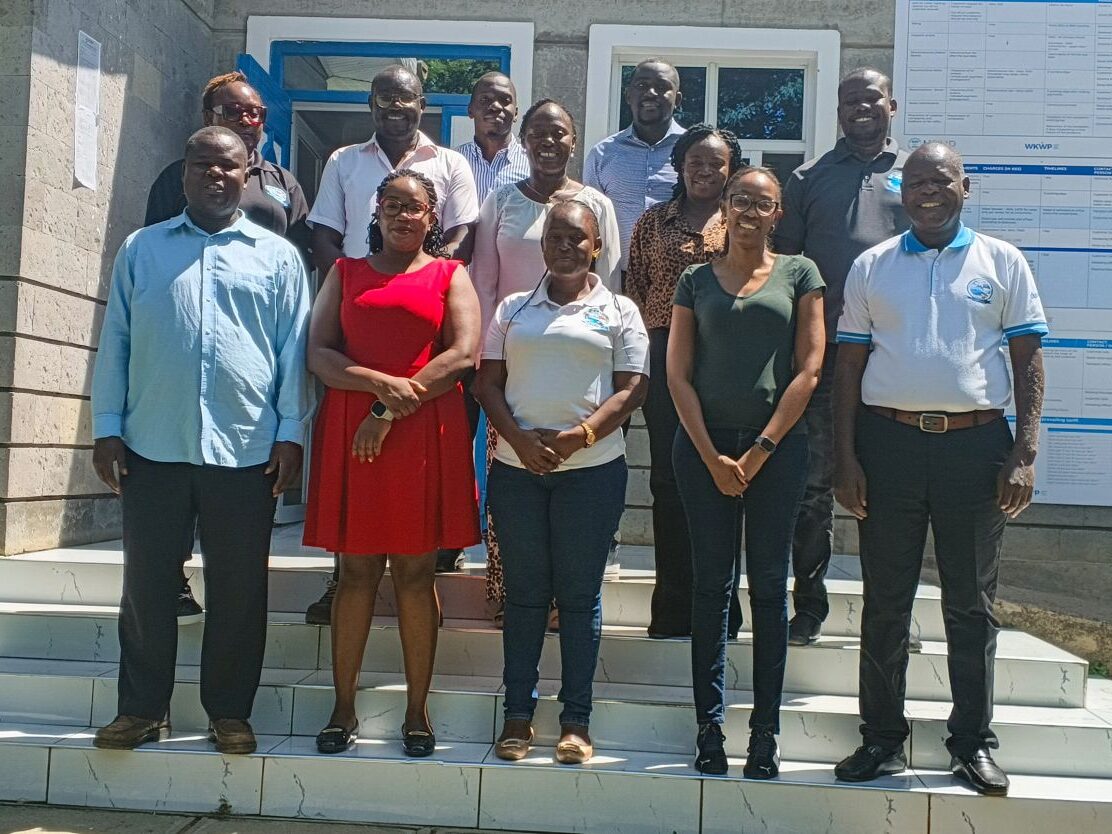
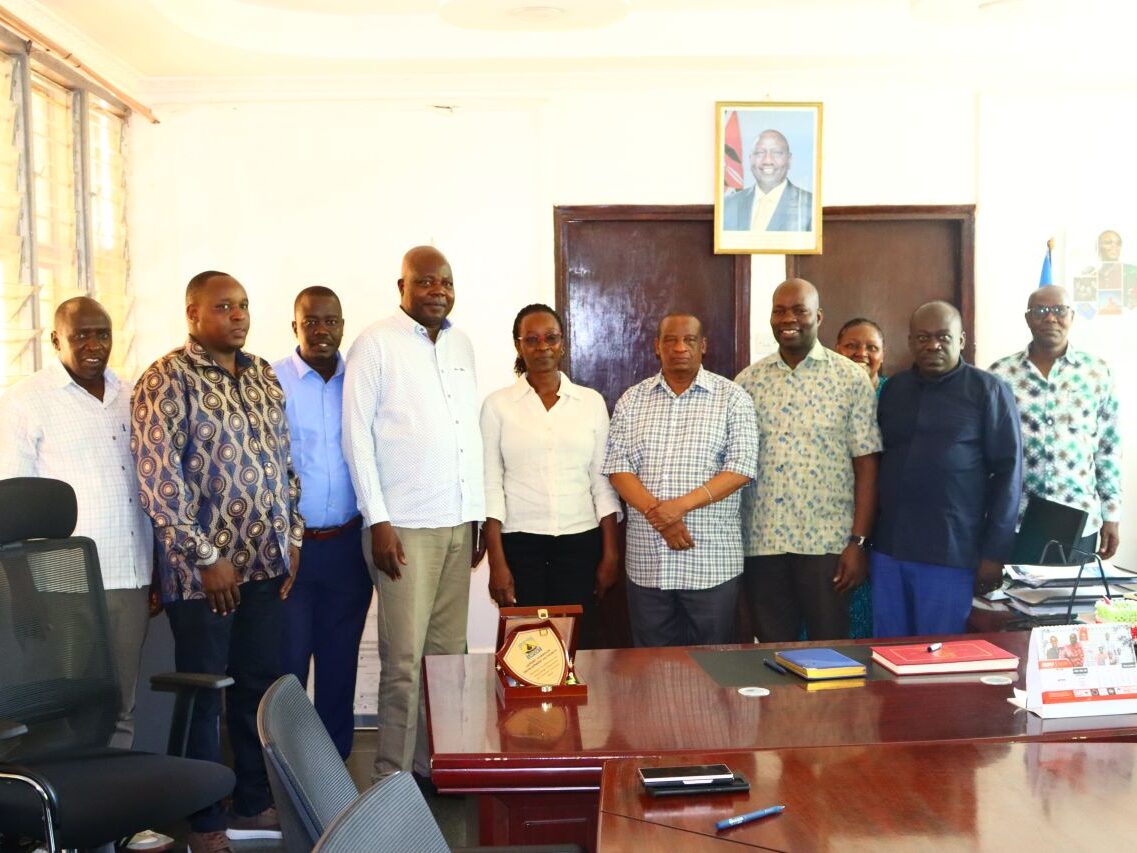
Ahead of the commissioning of the scheme at Loturtur, a delegation led by Water Secretary Eng. S.A.O. Alima held discussions with Turkana County Commissioner Julius Kavita on the project’s implementation and the measures required to sustain the infrastructure after it becomes operational.
The delegation included Water Sector Trust Fund Chief Executive Officer Willis Ombai, Water Resources Authority Acting Chief Executive Officer Samuel M. Mburu, HoAGW4RP Project Coordinator Dr. Okoth Owuor and Turkana Sub-Project Implementation Unit Coordinator Charles Ekeno.
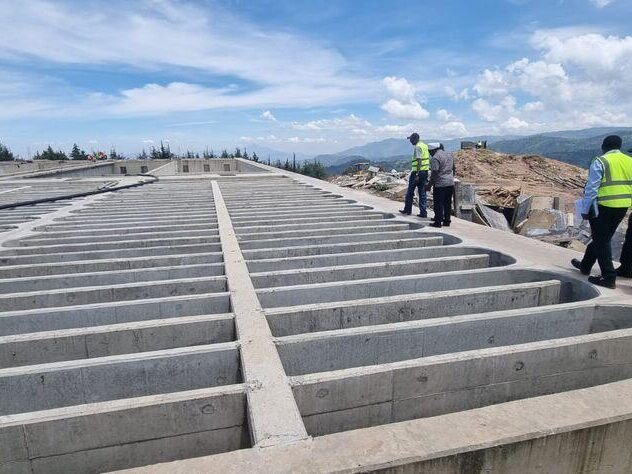
The nine schemes comprise approximately 153 kilometres of water pipelines, 19 storage tanks, 56 water kiosks fitted with automated water dispensing systems and 36 livestock watering troughs. Solar-powered pumping technology will support water extraction and distribution, providing an alternative energy source for operating the facilities in remote areas.
Once completed and operational, the infrastructure is expected to serve approximately 65,385 people, expanding access to groundwater for households and livestock keepers across the targeted sub-counties.
However, the government has warned that the long-term success of the investment will depend on the county’s ability to maintain and professionally manage the infrastructure after construction.
Alima said inadequate operation and maintenance could undermine the benefits of major water investments, particularly where counties lack qualified technical personnel to manage pumping systems, boreholes and distribution networks.
He cautioned that boreholes could break down within a short period if routine maintenance was neglected, while weaknesses in operational management could contribute to high levels of non-revenue water. He urged Turkana County to establish competent professional teams to operate the facilities and ensure that the nearly KSh1 billion investment continues delivering services for years.
The Water Secretary emphasised that completing construction alone would not guarantee reliable water services, arguing that counties must put in place the technical and institutional capacity required to keep the systems functional.
He also highlighted the Kenya Water, Sanitation and Hygiene (K-WASH) Programme, another World Bank-supported initiative that extends water and sanitation interventions to refugee settlements.
County Commissioner Kavita welcomed the project, describing it as a significant development for Turkana, which faces considerable water management challenges because of its vast geographical area and difficult climatic conditions.
He pointed out that the county shares water resources and borders with communities in Ethiopia, South Sudan and Uganda, making sustainable management and maintenance of water infrastructure particularly important.
Kavita stressed that every borehole and water pan should have a clear maintenance arrangement to prevent facilities from falling into disrepair after construction. He also called for the deployment of qualified professionals with a proper understanding of Turkana’s geographical conditions and groundwater chemistry to manage the infrastructure effectively.
The commissioner further underscored the county government’s responsibility in delivering water services under Kenya’s devolved governance system, noting that technical competence would be essential in maintaining the new facilities and ensuring communities continue benefiting from them.
The HoAGW4RP is part of wider efforts to strengthen groundwater development and improve resilience in the Horn of Africa, where prolonged dry spells, unreliable rainfall and increasing pressure on available water sources continue to affect rural livelihoods.
For Turkana, the nine schemes represent a substantial expansion of rural water infrastructure, particularly for communities that depend heavily on groundwater to meet domestic and livestock needs. The combination of solar-powered pumping, storage tanks, distribution pipelines and water kiosks is expected to improve the delivery of water closer to households and livestock users.
The planned commissioning at Loturtur will mark an important milestone in the implementation of the investment. However, the emphasis by national officials on maintenance and professional management highlights a critical challenge facing rural water projects: ensuring that infrastructure remains operational long after construction teams leave.
The national and county governments have reaffirmed their commitment to working together to deliver reliable and sustainable water services, with the success of the investment ultimately depending on the ability to maintain the systems and translate the infrastructure into lasting benefits for Turkana communities.