Water sector partners explore new financing for sanitation expansion
The Water and Sanitation Providers Association (WASPA) is exploring partnerships to accelerate sanitation development in Kenya, amid concerns over the country’s low sewerage coverage and the need for innovative financing to meet national targets.
The initiative comes as the latest Water Services Regulatory Board (WASREB) Impact Report places Kenya’s sewerage coverage at 15.8%, significantly below the national target of 80% by 2030. The gap highlights the need for increased investment, stronger partnerships and improved approaches to sanitation service delivery.
To address these challenges, WASPA has established a Sanitation Thematic Group to provide a platform for water service providers and other sector stakeholders to exchange ideas, coordinate interventions and develop practical solutions to sanitation challenges across the country.
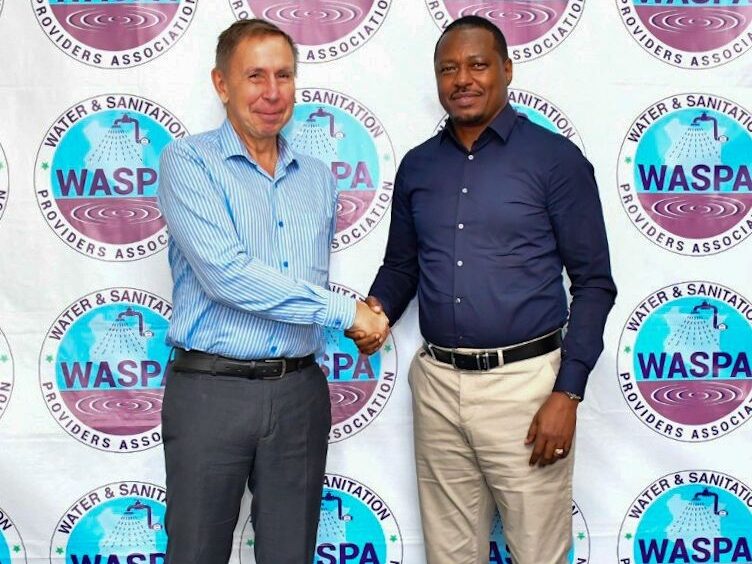
As part of these efforts, WASPA Chief Executive Officer Anthony Njaramba held discussions with Valentin Post, Director of Growth and Innovation at FINISH Mondial Foundation, to explore potential areas of collaboration in supporting the thematic group and advancing sustainable sanitation initiatives.
The meeting focused on developing innovative financing mechanisms, strengthening climate resilience and fostering partnerships that could help expand access to sanitation services. These areas are considered important in addressing the financial and institutional barriers that often slow the development of sanitation infrastructure, particularly in underserved communities.
Innovative financing could help water service providers access additional resources for sanitation investments, complementing traditional public funding and development assistance. Improved financing arrangements may also enable utilities to develop viable projects, expand infrastructure and strengthen the long-term sustainability of sanitation services.
The discussions also highlighted the importance of integrating climate resilience into sanitation planning and investment. As climate-related pressures affect infrastructure and service delivery, resilient sanitation systems are essential to protecting public health, safeguarding the environment and ensuring continuity of services.
Through the Sanitation Thematic Group, WASPA seeks to encourage closer cooperation among water service providers, development partners, financiers and other stakeholders. Such collaboration can help identify investment opportunities, share technical knowledge and support the development of approaches that respond to the country’s diverse sanitation needs.
The engagement with FINISH Mondial Foundation marks a step towards exploring partnerships that could strengthen the thematic group’s work and contribute to broader sanitation sector reforms.
With sewerage coverage remaining below one-fifth of the population, achieving the 2030 national target will require sustained investment, coordinated action and innovative service delivery models.
WASPA’s ongoing engagement with potential partners reflects efforts to mobilise expertise and resources towards closing the sanitation gap and supporting more inclusive, climate-resilient and sustainable sanitation services across Kenya.