Water utilities boost financial sustainability
Water service providers serving several parts of Kenya are strengthening financial management, operational efficiency and access to commercial financing under the Kenya Water, Sanitation and Hygiene (K-WASH) Programme, as efforts intensify to improve the sustainability of water and sanitation services.
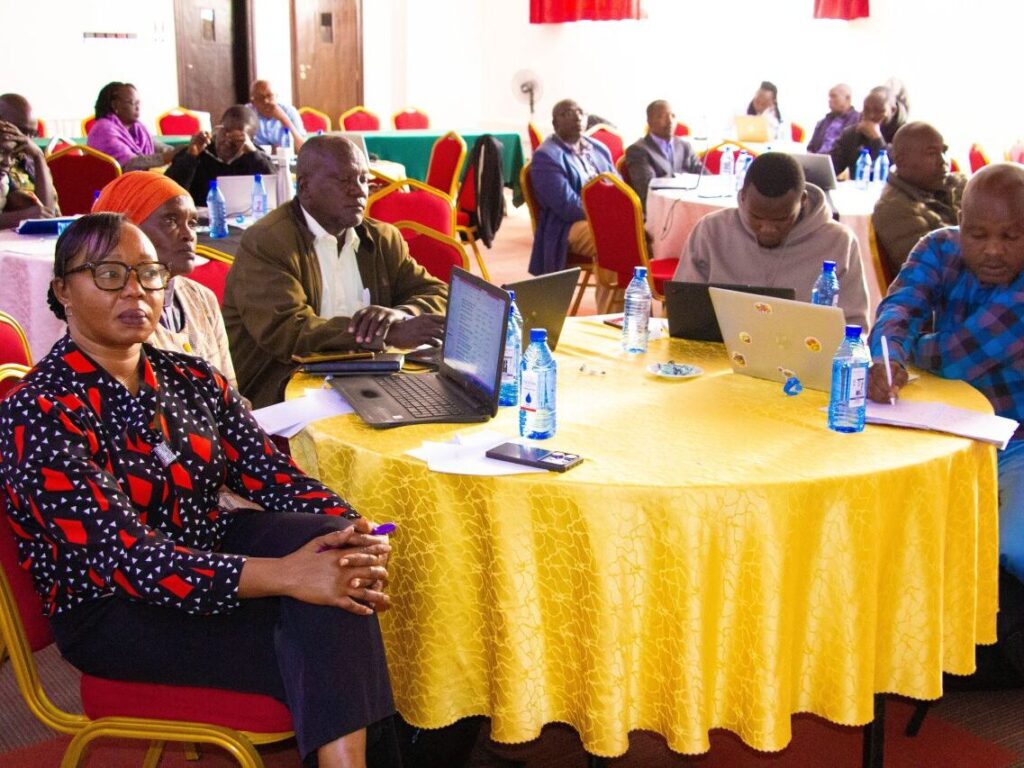
The programme’s Management Unit held a workshop in Eldoret on October 9, 2026, bringing together water service providers from Cluster 4 to review implementation progress, address operational challenges and prepare for the next phase of programme reporting.
The participating utilities included Kapsabet-Nandi, Tachasis, Kapenguria, Chemususu, Kirandich and Samburu. Their teams used the engagement to assess performance, exchange experiences and develop practical measures to address gaps that could affect the achievement of programme targets.
Discussions centred on two key Disbursement Linked Indicators (DLIs), which guide progress towards improved financial sustainability and greater access to commercial financing for water utilities.
The first indicator, DLI 7, focuses on improving the financial sustainability of water service providers. Participants reviewed progress towards Operating Cost Coverage Ratio (OCCR) targets, which measure a utility’s ability to meet its operating expenses using its revenue.
The discussions also highlighted the importance of strengthening governance, complying with regulatory requirements and prioritising investments that improve the financial position of utilities. Achieving stronger cost coverage is essential for enabling providers to maintain infrastructure, meet operational expenses and deliver services more reliably without excessive dependence on external financial support.
The second indicator, DLI 8, focuses on unlocking commercial financing for water and sanitation investments. Under this area, the workshop explored ways to develop bankable projects that can attract funding from commercial lenders and other financiers.
Participants also examined the potential of performance-based contracts to reduce non-revenue water (NRW) and improve energy efficiency. Non-revenue water refers to treated water that is produced but does not generate revenue for a utility, often because of physical losses, commercial losses or weaknesses in billing and metering systems.
Reducing these losses can improve revenue collection, lower operational costs and enable utilities to direct more resources towards infrastructure development and service expansion. Similarly, improved energy efficiency can reduce electricity expenses, which are a significant operational consideration for water providers involved in pumping, treatment and distribution.
The engagement further provided a platform for participating utilities to present their progress, identify implementation bottlenecks and agree on practical action plans. Particular attention was given to areas requiring technical assistance ahead of Cycle 3 reporting, helping providers prepare the necessary information and demonstrate progress against programme requirements.
The workshop forms part of broader efforts under K-WASH to strengthen the institutional and financial capacity of water service providers while promoting accountability, efficiency and sustainable investment in the sector.