Kenya accelerates shift to new urban water programme
Principal Secretary for Water and Sanitation Julius Korir has called for faster implementation of ongoing water and sanitation projects as the government prepares to transition to a new national programme targeting growing urban centres.
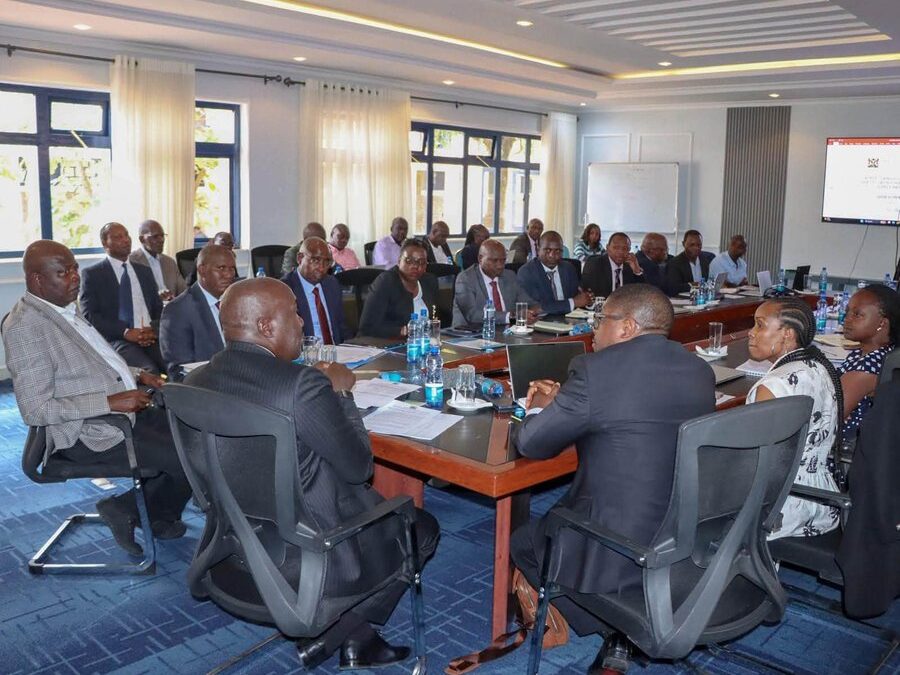
Korir chaired a meeting reviewing the progress of the Kenya Towns Sustainable Water Supply and Sanitation Programme (KTSWSSP), which is nearing completion, alongside the implementation kick-off meeting for the National Urban Water Supply and Sanitation Programme.
The meeting focused on completing outstanding works under the existing programme while laying the groundwork for the new initiative to expand access to reliable water supplies and improved sanitation services.
Korir urged implementing agencies to accelerate activities under the Kenya Towns programme to ensure that pending infrastructure works are completed on time and the intended benefits reach communities.
He also emphasised the need to fast-track the engagement of consultants and project preparation activities under the National Urban programme to facilitate procurement and speed up the implementation of planned projects.
The transition is expected to sustain progress in expanding water and sanitation infrastructure, particularly in emerging urban and peri-urban areas experiencing increasing demand for essential services.
The Kenya Towns programme has supported the development and rehabilitation of water supply systems, sewer networks, wastewater treatment facilities and last-mile connections in towns across the country.
According to the Central Rift Valley water works development agency, projects implemented under the programme include sewerage improvements in Narok and Ol Kalou, as well as water supply infrastructure in Trans Nzoia and other counties.
In Narok, the sewerage project included the construction of secondary and trunk sewers, a wastewater treatment facility and new sewer connections. The project also supported additional water connections to improve access to services.
The African Development Bank has been a major financing partner for the Kenya Towns programme, which targets urban and rural towns across Kenya. Its investments have supported infrastructure intended to improve water delivery, sanitation and environmental management.
The government is now advancing the National Urban Water Supply and Sanitation Programme to build on these gains and respond to the needs of rapidly expanding towns. In February 2026, the Ministry of Water and Sanitation identified the first phase of the national programme as targeting accelerated access across 42 counties.
The expansion comes amid continuing pressure on urban water systems as population growth increases demand for household water, sewerage connections and wastewater treatment. Reliable water supplies and effective sanitation infrastructure are essential for public health, environmental protection and sustainable urban development.
The new programme is expected to focus on extending services to areas where existing infrastructure has not kept pace with urban expansion, including peri-urban settlements and emerging towns.
Korir’s call for faster project preparation and implementation highlights the importance of coordinating procurement, consultancy services and construction activities to avoid delays and ensure that investments translate into functioning infrastructure.
The transition from the Kenya Towns programme to the National Urban Water Supply and Sanitation Programme marks another phase in the government’s efforts to strengthen water and sanitation services. Timely delivery, effective coordination and sustainable management of the completed facilities will be critical to ensuring that more households and businesses benefit from improved access to essential services.