





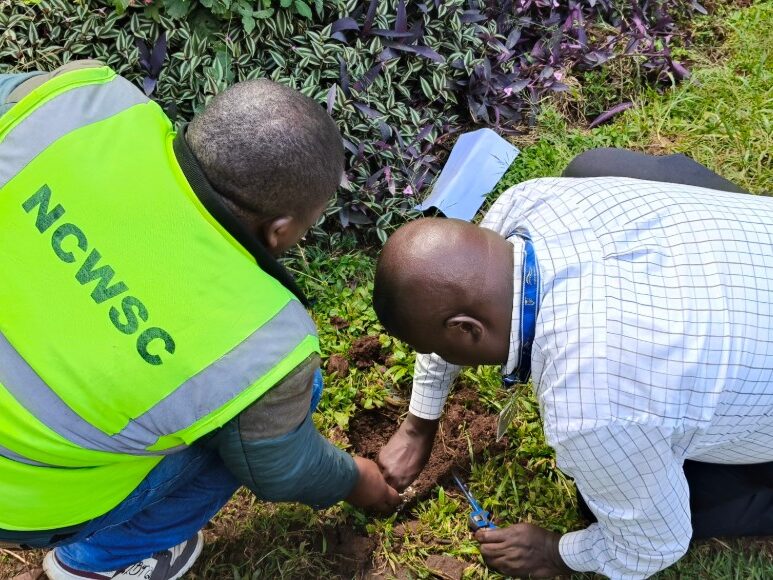
Nairobi City Water and Sewerage Company staff disconnect water supply due to unpaid bills. (Photo: NCWSC)
When a household experiences prolonged water shortages, receives a high or unexplained water bill, notices leaking pipes or receives water that appears contaminated, it has a right to seek assistance and lodge a formal complaint.
In Kenya, responsibility for addressing water-service problems is shared among water service providers, county governments and the national water regulator. However, many consumers are unfamiliar with the institutions responsible for handling complaints and the procedures for escalating unresolved cases.
Understanding where to report a problem is important because water-service complaints do not all fall under the same institution. A burst pipe, an unexplained bill, poor water quality and an unresolved connection request may require intervention from different authorities.
The first point of contact for most household complaints should be the local water service provider responsible for supplying water in the area.
Under Kenya’s devolved water governance system, county governments are responsible for water and sanitation services, while licensed water service providers operate the systems that deliver water to households and manage sewerage services.
This means a consumer experiencing a problem with supply, billing or sewerage should generally contact the utility serving their area rather than begin by approaching the national Ministry of Water.
Water companies are required to maintain customer service centres with qualified staff to handle applications, service requests and complaints. The Water (Services) Regulations, 2025, also require providers to establish accessible complaint-handling mechanisms and maintain records of complaints received from customers.
Households can report problems through several channels, including telephone hotlines, SMS, USSD codes, email, social media, utility websites and customer care offices. Some providers also offer online reporting systems that allow consumers to submit complaints about service delivery.
For example, Nairobi City Water and Sewerage Company provides several ways for residents to report problems. Customers can use the USSD code *260#, contact its customer care team on 0703 080598 or 0724 253582, or send an email to info@nairobiwater.co.ke. The utility also accepts complaints through its social media platforms and regional offices.
Residents reporting burst pipes, blocked sewer lines or leaking infrastructure are encouraged to provide precise location details, including nearby landmarks, to help technical teams identify the problem. Customers should also request a complaint reference number, which makes it easier to follow up on unresolved cases.
Where a complaint concerns an issue beyond the utility’s immediate responsibility, households can approach their respective county water departments. County governments oversee the delivery of water and sanitation services as part of their devolved functions and are responsible for ensuring that these services are provided within their jurisdictions.
County departments can therefore be approached over broader concerns involving local water infrastructure, sanitation projects, service delivery gaps and accountability by county-owned water companies. Residents can obtain the relevant contacts through their county government’s official website, customer service offices or county headquarters.
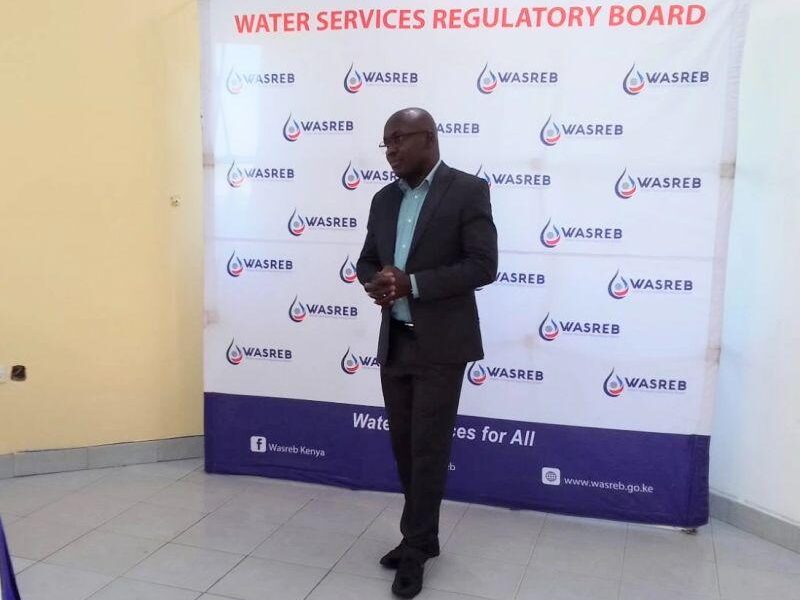
However, where a water service provider fails to resolve a complaint, consumers have another important avenue through the Water Services Regulatory Board (WASREB), the national regulator responsible for overseeing water service delivery and protecting consumer interests.
Section 72 of the Water Act, 2016, gives WASREB responsibility for establishing mechanisms to handle consumer complaints relating to the quality and nature of water services. Its mandate also includes regulating water service providers, monitoring compliance with service standards and overseeing water tariffs.
Consumers can approach WASREB when dissatisfied with how a utility has handled a complaint, when the provider fails to respond or when the problem raises wider concerns about compliance with regulatory requirements.
The regulator accepts complaints through its online feedback and complaint mechanisms, email, telephone, social media and physical offices. Its published contact details include telephone numbers +254 20 2733561 and +254 709 482000, and email address info@wasreb.go.ke. Its offices are located on the fifth floor of SHA Building along Ngong Road in Nairobi.
The complaint-handling process provides an established escalation procedure. Under WASREB’s 2025 Citizen Engagement Standards, a water service provider is expected to acknowledge a complaint, issue a tracking reference and resolve it within 21 days. If a consumer remains dissatisfied with the provider’s decision, the matter can be appealed to WASREB within 14 days.
The regulator can examine the complaint and make a decision, including directing the water company to take corrective action. The Water (Services) Regulations, 2025, further provide that WASREB should respond to complaints submitted to it within 21 days, communicating the action being taken, its decision or recommendations for resolving the matter. A consumer dissatisfied with the regulator’s decision can seek a review and subsequently appeal to the Water Tribunal.
For complaints involving wider administrative failures, households can also seek intervention from the Commission on Administrative Justice, commonly known as the Office of the Ombudsman. The commission handles complaints concerning poor public service delivery, unreasonable delays, abuse of power and failure by public institutions to fulfil their responsibilities.
The Ministry of Water, Sanitation and Irrigation also provides a public complaints channel through the State Department for Water and Sanitation. Consumers can submit complaints by emailing public.complaints@water.go.ke or ps@water.go.ke, or contact the ministry through 020 2716103 or 020 4900000.
The Office of the Ombudsman can be reached through its toll-free number 0800 221 349 or email complain@ombudsman.go.ke.
Beyond individual complaints, consumers can also participate in community-level accountability through Water Action Groups and consumer associations. These groups provide platforms for residents to raise shared concerns, engage water utilities and participate in discussions about service delivery, tariffs and infrastructure development.
This is particularly important in areas where problems affect entire neighbourhoods, such as prolonged water rationing, unreliable supply, inadequate sewerage infrastructure or recurring pollution incidents.
When lodging a complaint, consumers should provide their names, location, account number where applicable, contact details, a clear description of the problem and the date it occurred. They should retain copies of bills, payment receipts, photographs, previous correspondence and complaint reference numbers as evidence to support follow-ups and possible appeals.
Ultimately, knowing where to report water-service problems enables households to seek remedies through established institutions rather than allowing unresolved issues to persist. It also strengthens accountability by giving regulators and county governments information about recurring failures, helping them identify service gaps and push utilities towards better performance.