









Water that looks clean is not necessarily safe for drinking. Across Kenya, thousands of households, institutions, businesses and farmers depend on boreholes and wells for their daily water needs, but the appearance of groundwater can conceal contaminants that pose health risks when consumed over long periods.
Unlike rivers and dams, groundwater passes through layers of soil, rocks and underground geological formations before reaching aquifers. During this process, it can dissolve naturally occurring minerals and salts. It can also become contaminated by human activities, including leaking septic tanks, poorly managed waste disposal, agricultural chemicals and industrial pollution.
This means water drawn from a borehole may appear clear, have no unusual smell and taste normal while containing substances that make it unsuitable for drinking without treatment.
One of the most important concerns is the presence of dissolved minerals. Iron and manganese are common groundwater constituents that can affect water quality. High iron concentrations can give water a metallic taste, cause reddish-brown staining on clothes and plumbing fixtures, and encourage the accumulation of deposits in pipes. Manganese can cause dark staining and deposits, particularly where concentrations are elevated.
Hardness is another common groundwater challenge. It occurs mainly when water dissolves calcium and magnesium from underground rocks. Although hard water is not generally considered a major health risk, it can cause scaling in pipes, boilers, kettles and water-heating equipment. It also reduces the effectiveness of soap and increases maintenance costs for households and businesses.
Dissolved salts can present a more serious challenge. High levels of total dissolved solids (TDS), including sodium, chloride and sulphates, can affect the taste and suitability of water for domestic and industrial applications. In areas with naturally mineralised groundwater, excessive salinity may require specialised treatment before the water can be used for drinking.
Fluoride is particularly important in Kenya because of the country’s geological conditions. Some groundwater sources contain naturally elevated fluoride concentrations, especially in parts of the Rift Valley. Long-term consumption of water containing excessive fluoride can cause dental fluorosis and, in severe cases, skeletal fluorosis, which affects bones and joints.
Other potentially harmful substances include nitrates, arsenic and lead. Nitrates may enter groundwater through fertiliser use, sewage and leaking sanitation systems. Arsenic can occur naturally in certain geological formations, while lead may enter water through contaminated plumbing materials and other sources.
Microbiological contamination is another risk that households should not overlook. Although groundwater is naturally filtered as it moves through soil and rock, this process does not guarantee protection against bacteria, viruses and other disease-causing organisms. Poorly constructed boreholes, damaged well linings, nearby pit latrines, septic tanks and contaminated surface runoff can introduce faecal pollution into groundwater.
Such contamination can expose consumers to diseases including cholera, typhoid and diarrhoeal infections. Unlike iron or sediment, disease-causing microorganisms may have no visible effect on the appearance of water.
For this reason, water testing should be the first step before selecting a groundwater treatment system. A laboratory analysis helps establish the actual composition of the water and identifies the contaminants that need to be removed.
Testing should cover physical, chemical and microbiological parameters. These include pH, turbidity, electrical conductivity, total dissolved solids, hardness, iron, manganese, fluoride, nitrates, chloride, arsenic and bacteria such as E. coli and total coliforms. The results should be compared against applicable Kenyan drinking-water standards and relevant public health guidelines.
Once the contaminants are identified, the appropriate treatment technology can be selected. Different contaminants require different treatment processes, meaning that a filtration system suitable for one borehole may be ineffective for another.
For example, sediment filters can remove suspended particles such as sand, silt and rust, but they cannot remove dissolved salts or reliably eliminate microorganisms. Activated carbon filters are useful for reducing certain organic compounds, chlorine and unpleasant tastes and odours, but they are not a universal solution for dissolved minerals.
Iron and manganese can be treated through oxidation followed by filtration, while water hardness can be reduced using ion-exchange water softeners. Where microbial contamination is detected, appropriate disinfection methods such as chlorination or ultraviolet treatment can help make water safer, provided the system is correctly designed and maintained.
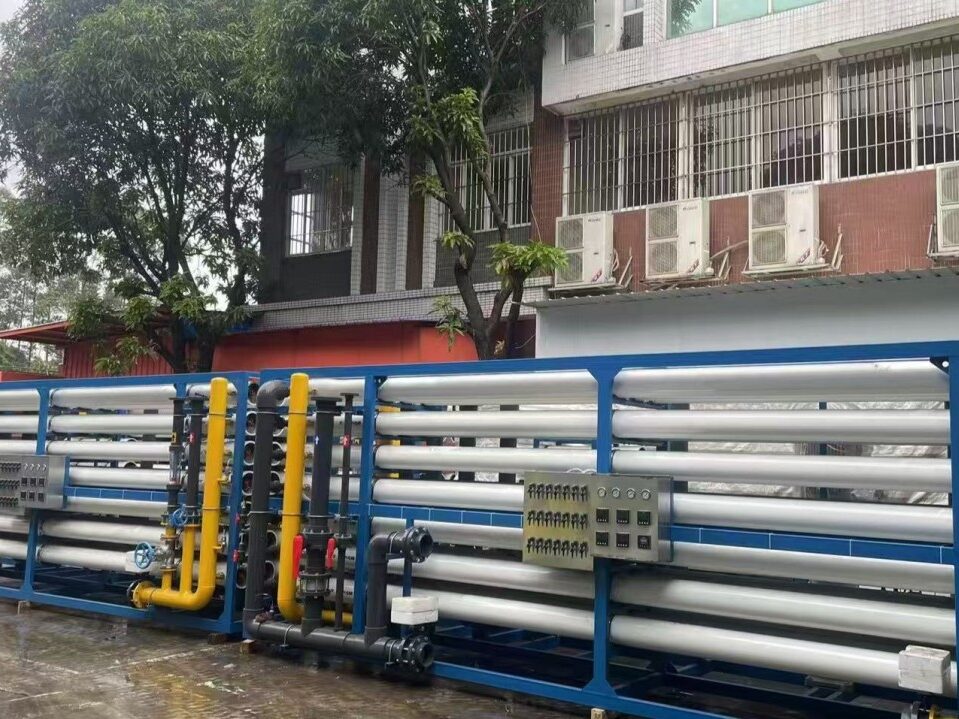
Two other technologies increasingly used in groundwater treatment are ultrafiltration (UF) and reverse osmosis (RO). Although both use membranes to separate unwanted substances from water, they serve different purposes.
Ultrafiltration uses membranes with very small pores to remove suspended particles, bacteria and other microorganisms. It can improve water clarity and reduce microbial contamination, but it does not effectively remove most dissolved salts, fluoride or other small dissolved substances.
Reverse osmosis uses a semi-permeable membrane to separate water from many dissolved substances, including salts, fluoride and certain metals. It is therefore useful where groundwater has high salinity or specific dissolved chemical contaminants. However, RO systems produce a wastewater stream, require regular maintenance and may need pre-treatment to prevent membrane damage and clogging.
Choosing between these technologies depends on the laboratory results, the quantity of water required, operating costs, electricity availability, maintenance capacity and the intended use of the water.
A household using a small borehole for drinking and cooking may require a different treatment arrangement from a school, hospital, hotel or commercial facility serving hundreds of people. The cost of replacing filters, purchasing chemicals, maintaining pumps and membranes, and disposing of treatment waste should also be considered before installation.
Water quality should also be monitored after treatment. Filters become less effective as they accumulate contaminants, disinfection equipment requires proper operation, and changes in groundwater conditions can affect the performance of an existing treatment system.
In Kenya, groundwater protection and water quality management involve several institutions. The Water Resources Authority oversees groundwater resource management and protection, while the Water Services Regulatory Board provides drinking-water quality guidelines for water service providers. The National Environment Management Authority also plays a role in regulating pollution and protecting water resources.
Ultimately, safe drinking water cannot be determined by appearance alone. A clear borehole may contain harmful chemicals, excessive minerals or invisible microorganisms. Testing the water before investing in treatment equipment is therefore essential to selecting an effective, affordable and reliable system.
For households and institutions relying on groundwater, the most important lesson is simple: understand what is in the water before deciding how to treat it.