




Kenya continues to lose billions of shillings annually to poor sanitation, as millions of people remain exposed to preventable diseases due to inadequate access to safe toilets, poor waste disposal and limited sewer infrastructure. The growing sanitation burden is not only undermining public health but also threatening water resources, environmental quality and household livelihoods, particularly in densely populated informal settlements.
World Bank data estimates that poor sanitation costs Kenya approximately Sh7 billion annually, while the Ministry of Health estimates that between five million and six million people still practise open defecation. The practice exposes communities to faecal contamination, allowing disease-causing organisms to enter food supplies, water sources and the surrounding environment. Consequently, preventable illnesses such as diarrhoea, cholera, typhoid and intestinal worm infections continue to place pressure on households and the country’s healthcare system.
Approximately Sh4.3 billion is spent annually treating illnesses associated with poor sanitation and contaminated water, illustrating the financial consequences of inadequate sanitation services. Poorly managed human waste and sludge also degrade aquatic ecosystems and compromise water quality, making safe collection, transportation and treatment of waste an important part of protecting the country’s water resources.
The challenge is particularly severe in informal settlements, where overcrowding, limited household space, inadequate drainage and the absence of conventional sewer networks make the provision of safe sanitation infrastructure difficult. In Kisumu’s Nyalenda settlement, however, some households are embracing an alternative to traditional pit latrines through blue-painted, stand-alone Fresh Life toilets that collect human waste in removable containers.
The facilities, which are installed outside individual homes, provide residents with access to private toilets without requiring deep excavation or connection to underground sewer networks. Through a scheduled collection system, waste is removed by designated workers and transported to treatment facilities, offering an alternative for neighbourhoods where conventional sanitation infrastructure remains inadequate.
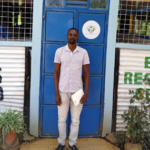
For residents who have relied on shared pit latrines for years, the arrangement has brought sanitation services closer to their homes while addressing concerns over cleanliness, accessibility and the disposal of human waste. One of the beneficiaries is Jessica Otieno, who has lived in Nyalenda for approximately a decade and adopted the Fresh Life system in 2022.
Otieno said she initially accessed the service free of charge in January 2022 before beginning to pay Sh850 monthly from February. Her household comprises 10 people, all of whom rely on the facility, which is serviced three times a week on Mondays, Wednesdays and Fridays.
The collection teams arrive between 6am and 7am to remove the containers holding solid and liquid waste, clean the toilet and install fresh containers. According to Otieno, the entire servicing exercise takes approximately 30 minutes, allowing the household to continue using the facility without having to manage or dispose of the accumulated waste themselves.
“They take the solid waste and liquid waste. They go with it and then they bring another clean container,” she said.
Otieno said the introduction of the toilet had improved sanitation conditions around her home and contributed to a cleaner neighbourhood. She recalled experiencing recurrent urinary discomfort while using the pit latrines previously available to her household, although the relationship between the discomfort and the sanitation conditions was not medically established.
“Since Fresh Life, as you can see, the community is clean,” she said.
Despite the improvements, the monthly service charge remains a financial consideration for her household. Otieno said the Sh850 payment can become difficult to sustain when family finances are strained, highlighting the affordability challenges facing low-income households seeking reliable sanitation services. Nevertheless, she expressed satisfaction with the arrangement, saying the service had made a positive difference to her family’s living conditions.
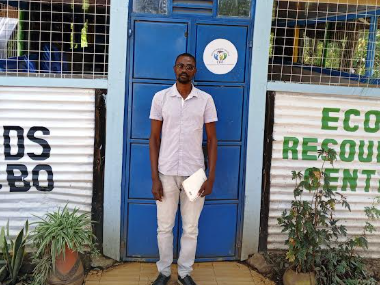
The expansion of container-based sanitation in Nyalenda has been supported through partnerships between Fresh Life and local community organisations, including United Destiny Shapers (UDS), a Kisumu-based community organisation involved in youth empowerment, agribusiness, waste management and sanitation initiatives.
Vincent Okoto, a partner at UDS and former Fresh Life sales associate, said the partnership was established to respond to sanitation deficiencies in informal settlements, where poorly managed toilets and unsafe human waste disposal had exposed residents to environmental and public health risks.
Okoto said Fresh Life entered Kisumu in 2021 and sought to work with a community-based organisation that could provide an entry point into the settlement, facilitate engagement with local leadership and help introduce its sanitation model to households. UDS subsequently supported the community engagement process, bringing residents and local leaders into discussions on improving access to safe toilet facilities.
The Fresh Life model is designed for densely populated neighbourhoods where conventional sewer infrastructure is either unavailable or difficult to extend. Unlike traditional pit latrines, the facilities are raised structures assembled from separate concrete components and do not require deep excavation. This makes them suitable for settlements with limited space, rocky ground or high water tables, where constructing conventional pits can be challenging.
The technology relies on container-based sanitation, in which human waste is collected in removable cartridges rather than deposited in underground pits or discharged into sewer networks. Fresh Life toilets use urine-diverting technology to separate liquid waste from faecal matter, with each collected in a different container beneath the facility.
Once filled, the containers are removed by designated collection teams and replaced with clean ones before the waste is transported to designated treatment facilities. The system also does not require flushing water, making it particularly relevant in informal settlements where households face limited water supply and inadequate sewer connections.
Fresh Life’s 2025 annual report indicates that its Kisumu operations had 1,440 active sanitation facilities serving 22,959 people daily. The organisation also reported collecting 1,791 metric tonnes of sanitation waste in the county during the year, demonstrating the scale of waste management services required to sustain alternative sanitation systems.
In Nyalenda alone, Fresh Life reports operating more than 900 active facilities that safely contain approximately 500 tonnes of sanitation waste annually. These figures point to the growing role of organised waste collection in addressing sanitation gaps in communities where conventional infrastructure has not kept pace with population growth.
The organisation is also exploring opportunities to turn collected sanitation waste into agricultural products, shifting attention from waste disposal towards resource recovery and potential economic value. In 2025, Fresh Life partnered with Kisumu Water and Sanitation Company (KIWASCO) and Kisumu Young Agripreneurs in a pilot project in Nyalenda to investigate the conversion of sanitation waste into biochar and foliar fertiliser. The initiative seeks to explore how properly managed sanitation waste can contribute to agricultural production, although its implementation progress and results remain to be established.
The developments come against the backdrop of the global sanitation crisis, with approximately 3.4 billion people lacking safely managed sanitation services. World Toilet Day, observed annually on November 19, seeks to draw attention to the need for safe toilets, proper waste management and universal access to sanitation. Established by the World Toilet Organization in 2001 and recognised as an official United Nations observance in 2013, the day highlights sanitation as a fundamental requirement for public health, human dignity and environmental protection.
This year’s theme, ‘Sanitation and gender equality’, under the campaign slogan ‘Safe toilets. Equal futures’, highlights the disproportionate health, privacy and safety risks women and girls face when sanitation facilities are inadequate, inaccessible or unsafe. Access to secure and properly maintained toilets is particularly important in informal settlements, where overcrowding and poorly managed shared facilities can expose women and girls to additional vulnerabilities.
Nyalenda’s experience demonstrates how alternative sanitation technologies and community partnerships can help bridge infrastructure gaps in rapidly growing urban settlements. However, the expansion of such solutions must go hand in hand with affordable service charges, reliable waste collection and adequate treatment capacity to ensure that households can sustain access to safe sanitation.
For Kenya, the challenge extends beyond constructing more toilets. It requires investment in the entire sanitation chain, from household facilities and waste collection to transportation, treatment and safe reuse. Without reliable systems to manage human waste, the country will continue to bear the health, environmental and economic costs of poor sanitation, despite the availability of alternative technologies.