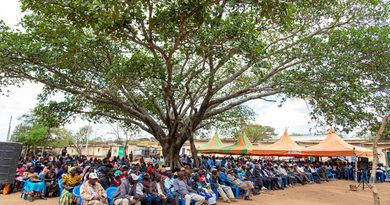
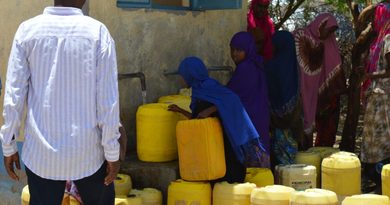
Community take charge of Marsabit water project
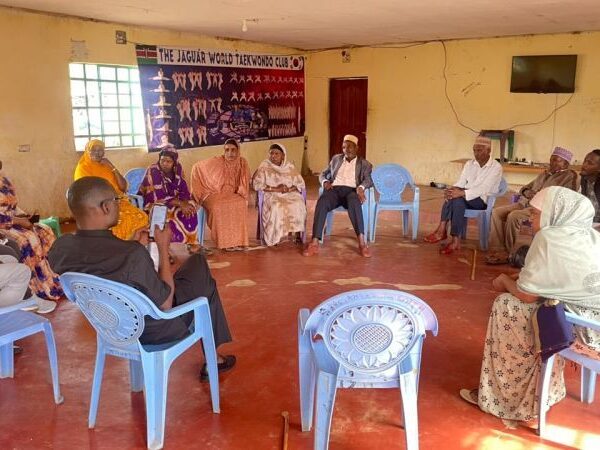
Community representatives involved in the development of a major groundwater project in Marsabit County are being equipped with skills to strengthen accountability, participation and grievance management as efforts to improve water security in the arid region continue.
The Water Sector Trust Fund (WSTF), working with KAS Consultant and the Marsabit Sub-Project Implementation Unit (SPIU), conducted a community sensitisation exercise at the Golole Water Scheme under the Horn of Africa Groundwater for Resilience Project (HoAGW4RP).
The engagement brought together members of the Project Management Committee, Land Committee and Grievance Redress Committee (GRC), with the aim of strengthening their understanding of their responsibilities and ensuring they can effectively participate in the implementation and oversight of the water project.
The sensitisation forms part of efforts to ensure communities remain actively involved in projects designed to improve access to reliable water, particularly in areas where limited water availability continues to affect households, livestock and livelihoods.
Participants were taken through mechanisms for community participation and management of project-related grievances. The discussions also addressed safeguards for preventing and safely reporting Gender-Based Violence (GBV), Sexual Exploitation and Abuse, and Sexual Harassment (SEA/SH).
Particular emphasis was placed on maintaining confidentiality when handling sensitive complaints and ensuring that affected individuals are treated with dignity and respect. Participants were also sensitised on survivor-centred approaches, appropriate referral pathways and the need to escalate sensitive cases promptly through established project mechanisms.
The strengthened grievance-management structures are expected to provide communities with accessible channels through which concerns arising during project implementation can be raised and addressed. This is intended to promote transparency and trust between communities, project implementers and other stakeholders.
Community participation is particularly important in groundwater development because water infrastructure must respond to local needs while protecting the resources on which communities depend. Effective engagement can also help address issues relating to land, access, infrastructure management and the long-term sustainability of water facilities.
The Golole engagement is part of the wider implementation of HoAGW4RP, a Government of Kenya initiative being implemented through the State Department for Water and Sanitation under the Ministry of Water, Sanitation and Irrigation with financing from the World Bank.
The project is designed to strengthen water security and climate resilience in Kenya’s arid and semi-arid border counties, where communities face recurrent water shortages and increasing pressure on available water resources.
HoAGW4RP targets more than 700,000 people across Turkana, Marsabit, Wajir, Mandera and Garissa counties. Its interventions include groundwater infrastructure development, aquifer conservation and improved water-resource management systems.
Groundwater plays a particularly important role in these areas because of the limited availability and unreliable nature of surface water sources. However, developing groundwater infrastructure also requires proper management of aquifers to ensure that water resources remain available and productive over the long term.
The project therefore combines infrastructure development with measures aimed at strengthening water-resource management and building the resilience of communities to climate-related water stresses.
The sensitisation exercise at Golole reinforces this approach by placing communities at the centre of project implementation. Strong local oversight, effective grievance mechanisms and awareness of social and environmental safeguards can contribute to more inclusive and sustainable water investments.
As HoAGW4RP progresses across the targeted counties, continued engagement with local communities will remain important in ensuring that investments in groundwater infrastructure translate into reliable water services while protecting both communities and the water resources upon which they depend.