Stronger action needed to protect lake Victoria water resources
Efforts to protect Lake Victoria and secure the future of water resources in the basin are increasingly focusing on improved sewerage systems, wastewater treatment and responsible management of pollution from communities and industries.
Untreated sewage, industrial effluent and poorly managed solid waste continue to find their way into the lake through rivers, drainage channels and other waterways, posing a threat to water quality, aquatic ecosystems and communities that depend on the lake for their livelihoods and domestic needs.
Kisumu County Executive Committee Member for Water, Environment, Climate Change and Natural Resources Judith Oluoch has called for stronger collaboration among national and county governments, private sector players and communities to address the challenges affecting the lake.
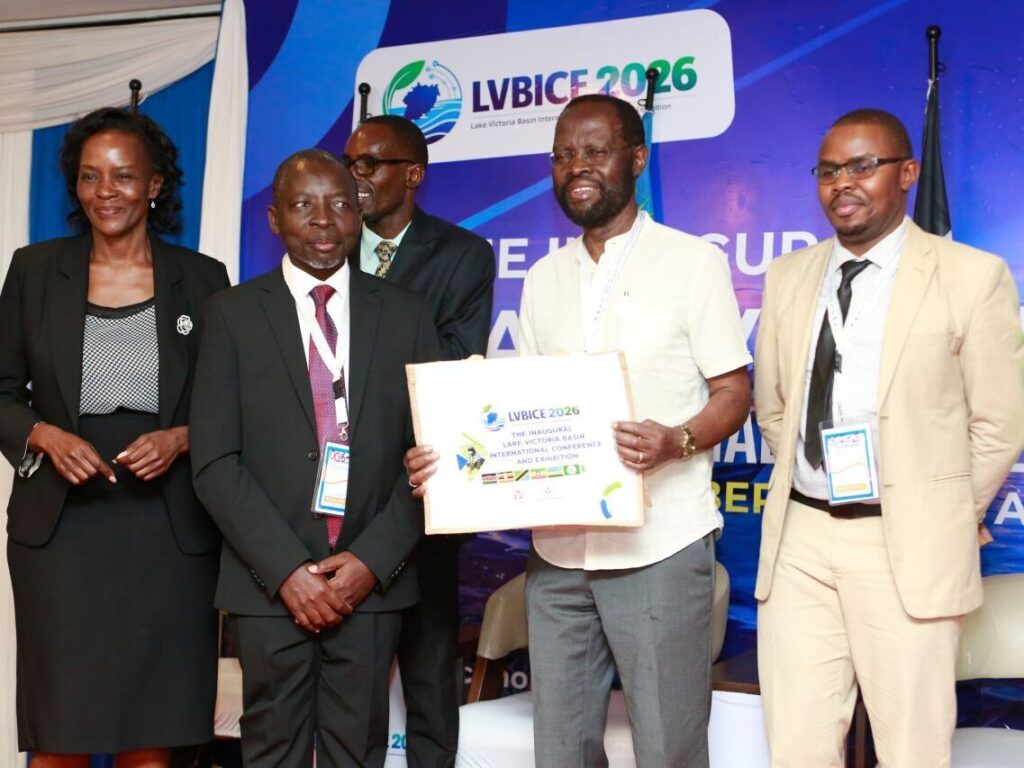
Speaking in Kisumu during the Lake Victoria Basin International Conference and Exhibition on October 5, 2026, Oluoch said effective protection of the lake requires action across the entire water and sanitation chain, from proper waste disposal and sewerage management to treatment of wastewater before it is released into the environment.
She noted that some private operators continue to release untreated waste into rivers and other water bodies that eventually drain into Lake Victoria, contributing to the deterioration of water quality.
Kisumu has invested in wastewater management through its two major sewage treatment facilities at Dunga and Kisat, operated by the Kisumu Water and Sanitation Company. The county is also working with the Lake Victoria South Water Works Development Agency on an additional sewage treatment facility in Kobony, Kisumu West.
The investments are intended to strengthen the capacity to collect, treat and safely manage wastewater while reducing the amount of pollution entering rivers and Lake Victoria.
However, Oluoch said enforcement of environmental regulations remains a challenge because key aspects of environmental enforcement fall under the National Environment Management Authority. She said the county government had continued playing its role while calling for closer cooperation among institutions responsible for water, sanitation and environmental protection.
Beyond infrastructure, she urged residents to take greater responsibility for protecting water resources by avoiding indiscriminate disposal of waste. Waste dumped in residential areas, streets and drainage channels can be carried by rainwater into rivers and eventually into Lake Victoria.
The conference has brought together researchers, government agencies, universities, private sector representatives and communities from Kenya, Uganda, Tanzania, Rwanda and the Democratic Republic of Congo to discuss challenges affecting the Lake Victoria Basin.
Conference National Coordinator Clifford Omondi said organisers had received about 137 research abstracts addressing issues including pollution, waste management and climate change. He said the forum should go beyond generating research and focus on turning available knowledge into practical interventions.
Regional coordinator Ibrahim Oluoch said the region already has significant research on water and environmental challenges, but implementation remains a major gap. He also pointed to inadequate data and weak coordination among sectors such as water, agriculture, energy and the environment.
The discussions are expected to draw attention to the need for integrated management of the basin’s water resources, where protecting rivers, improving sewerage and wastewater treatment, controlling pollution and ensuring sustainable water use are treated as interconnected priorities.
Communities living around Lake Victoria are also expected to share their experiences on fishing, livelihoods and conflicts linked to natural resources, providing a practical perspective on the challenges facing the basin.
The conference is expected to conclude with recommendations aimed at improving waste management, strengthening water-resource protection, addressing pollution and building resilience to climate change across the Lake Victoria Basin.