








Kenya is seeking stronger partnerships with private investors, development institutions and financial organisations to finance an ambitious plan to expand irrigation by 1.5 million acres, as the government steps up efforts to strengthen food security and reduce dependence on rain-fed agriculture.
Principal Secretary for Irrigation CPA Ephantus Kimotho said the expansion ambition is a key climate adaptation measure under the National Irrigation Sector Investment Plan (NISIP) 2025–2035, which is designed to increase agricultural productivity, improve resilience to changing weather patterns and create economic opportunities for farmers.
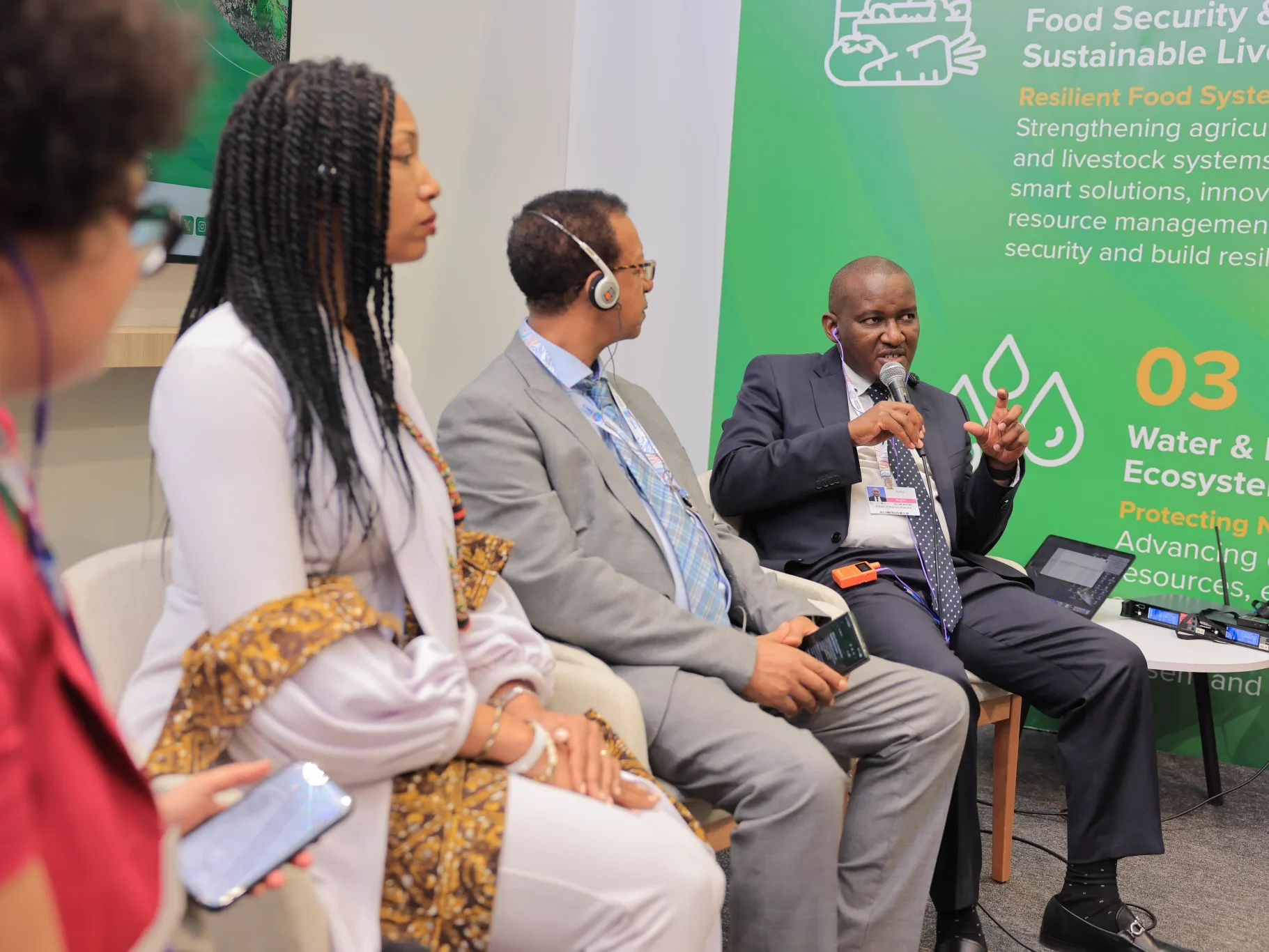
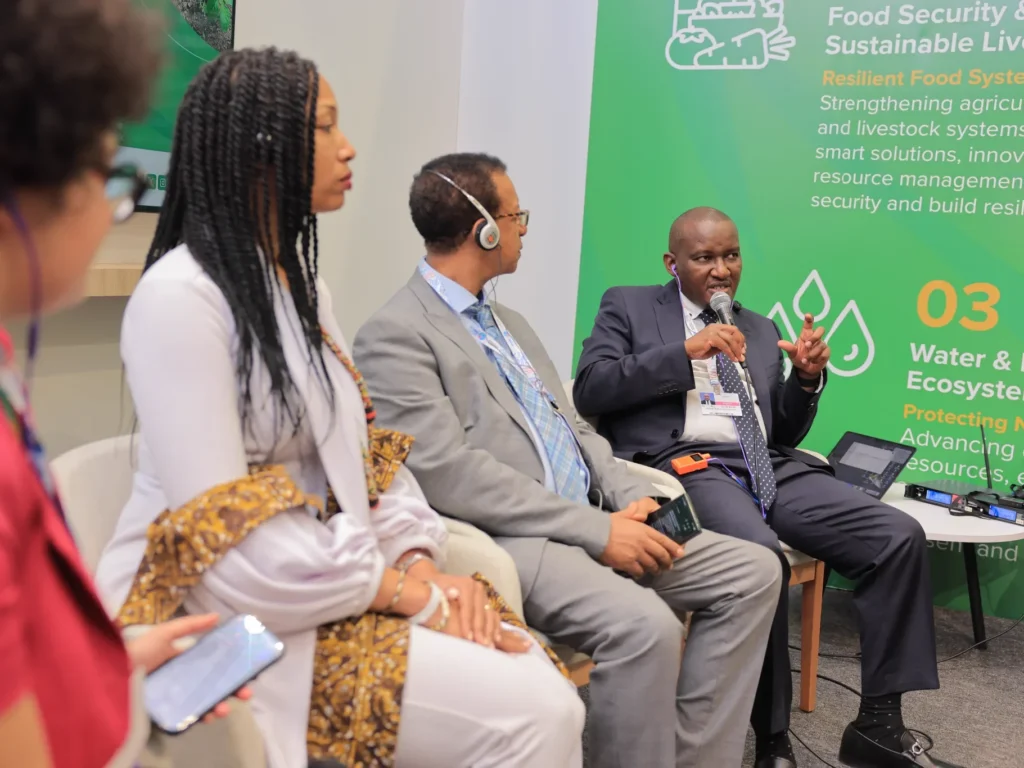
Speaking during a high-level side event at the Intergovernmental Authority on Development (IGAD) Pavilion at the 31st United Nations Climate Change Conference (COP31) in Antalya, Türkiye, Kimotho called for a shift from investment planning to implementation through stronger financing arrangements and bankable irrigation projects.
The November 16 discussion, held under the theme From Investment Plan to Impact: Mobilising Partnerships and Finance for Irrigation, Livestock Development and Climate Resilience under Kenya’s NISIP 2025–2035, brought together regional and international stakeholders to examine ways of mobilising capital for agricultural transformation.
Kimotho said expanding irrigation would help Kenya reduce its vulnerability to unreliable rainfall while creating more dependable conditions for agricultural production. The strategy is particularly important for smallholder farmers who depend heavily on seasonal rains and face increasing uncertainty from climate change.
He argued that achieving the target requires concessional financing for public infrastructure, patient capital for long-term investments, appropriate irrigation tariffs and greater participation by private companies. He also called on local financial institutions and businesses to develop financing products suited to the agricultural sector.
The financing challenge is significant. Kenya’s NISIP outlines an investment requirement of approximately KSh598 billion over 10 years, with government and development partners expected to contribute about 39 per cent, while farmers and private-sector investors provide the remaining 61 per cent.
The investment plan is built around five complementary pathways: farmer-led irrigation development, high-performing public irrigation schemes, corporate agribusiness, revitalisation of irrigation in arid and semi-arid lands (ASALs), and improved community-based irrigation projects.
These approaches are intended to attract different categories of investors while addressing the needs of farmers, commercial agricultural producers and communities in water-scarce regions.
Kimotho also highlighted the importance of strengthening water management in ASAL areas, where irrigation development must be supported by watershed protection and sustainable use of available resources.
Among the interventions identified are mapping seasonal waterways, locally known as laghas, water harvesting, construction of check dams and sand dams, landscape restoration and regulation of water abstraction.
He said reliable information on water availability, soil conditions, agricultural production and markets should guide investment decisions and help reduce risks associated with irrigation projects.
The PS further emphasised the role of young people in transforming agriculture, identifying opportunities in agribusiness, manufacturing, agricultural technology, agro-processing and investment mobilisation. Access to affordable credit, markets and agricultural insurance will be important in enabling their participation.
Contributions from Tilahun Amede of AGRA, Jacinda Njike of Africa Finance Climate Champions and Manal Bidar of the Water Youth Network reinforced the need for innovative climate financing, stronger institutional coordination and investment pipelines capable of attracting private capital.
The discussions identified four priorities for accelerating implementation: developing blended and concessional financing arrangements, strengthening community ownership and governance, using reliable data to guide investment decisions, and improving coordination between governments, development partners and private investors.
Kenya’s irrigation expansion programme comes as African countries seek to strengthen food production against increasingly unpredictable rainfall and rising climate risks.
For Kenya, the success of NISIP will depend not only on the amount of financing mobilised but also on the ability to deliver functional irrigation infrastructure, ensure sustainable water supplies and connect farmers to reliable markets.
Kimotho said climate adaptation should be treated as a long-term economic investment rather than an expenditure, arguing that properly financed irrigation can generate revenue, create employment and improve livelihoods.
He said Kenya must now move from investment plans to implementation, positioning irrigation and climate adaptation as important drivers of economic growth.