








Kenya is looking to unlock financing from domestic capital markets, pension funds and institutional investors to accelerate investment in water and sanitation infrastructure, as the government seeks alternatives to traditional funding sources amid a widening infrastructure financing challenge.
The proposed approach seeks to attract long-term domestic investment into water projects through instruments such as corporate bonds, infrastructure bonds, green bonds and structured financing facilities, reducing the sector’s dependence on government allocations, foreign loans and development assistance.
The financing discussions gained attention during a stakeholder forum convened on November 5, 2026, by NIFC Africa in partnership with Mennonite Economic Development Associates (MEDA), the Collaborative for Fund Domiciliation in Africa and the Mastercard Foundation Africa Growth Fund.
The meeting brought together representatives from government, development finance institutions, fund managers and impact investment organisations to explore ways of improving Kenya’s investment environment and mobilising private capital for development projects.
Participants identified domestic savings held by pension schemes, insurance companies and other institutional investors as potential sources of long-term financing for infrastructure, including dams, water treatment plants, bulk water pipelines, storage facilities and sewerage systems.
The discussions come as Kenya faces substantial financing requirements to expand water and sanitation services and improve access to reliable supplies. According to the Water Services Regulatory Board (WASREB), the National Water and Sanitation Investment Plan (NAWASIP) requires approximately KSh995 billion between 2022 and 2030 to support the country’s universal water and sanitation access targets.
The regulatory body’s 2024/2025 sector performance report estimates that the sector requires approximately KSh100 billion annually but currently mobilises about KSh40 billion, leaving an annual financing shortfall of approximately KSh60 billion.
WASREB identifies private and market-based financing, including public-private partnerships and commercial borrowing, as important components of the investment plan. The regulator estimates that these sources could contribute approximately KSh395 billion towards the overall investment requirement.
Kenya’s pension industry presents another potential financing avenue. Pension assets reached approximately KSh3.17 trillion by June 2026, providing a substantial domestic savings pool that could potentially support long-term infrastructure investments if appropriate investment structures are developed.
Insurance companies and other institutional investors could also participate through infrastructure and green bonds, provided water projects offer credible financial returns, manageable risks and clear repayment arrangements.
One proposed mechanism is pooled bond financing, where several water utilities combine their investment requirements into a single financing structure. This allows investors to finance a portfolio of projects rather than lending to individual utilities, potentially reducing transaction costs and spreading investment risks.
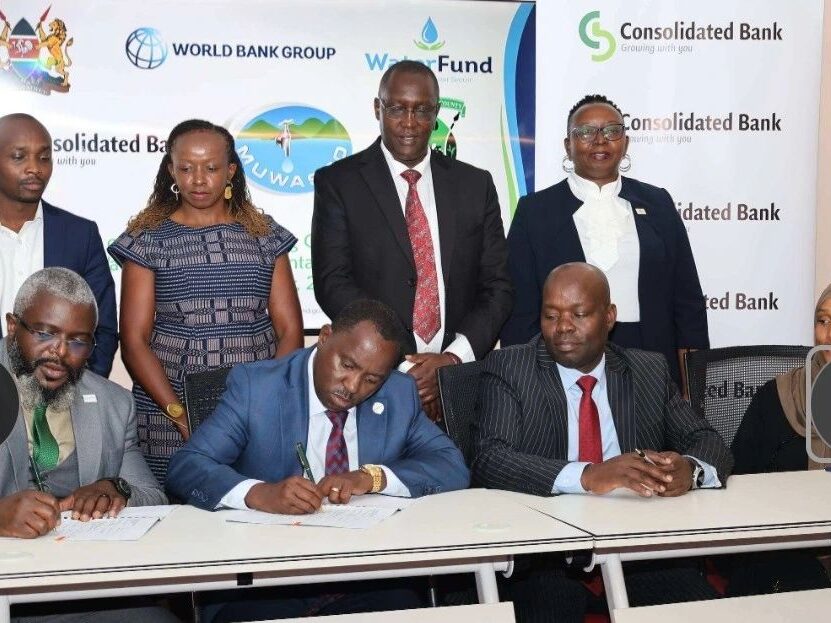
The Kenya Pooled Water Fund is an example of this approach. It was established to facilitate access to long-term, local-currency financing for water and sanitation utilities through the domestic capital market. The model is intended to channel investment from institutional investors into projects that might otherwise struggle to secure affordable commercial loans.
WASREB has also identified commercial bank lending as an opportunity for improving sector financing. Its report highlights the role of creditworthiness assessments, results-based financing and blended finance in helping utilities develop bankable projects and attract private investment.
However, mobilising private capital will require water utilities to demonstrate financial sustainability, transparent management and the capacity to repay borrowed funds. Weak revenue collection, high operational costs, non-revenue water and inadequate project preparation remain significant obstacles to attracting investors.
The government is therefore expected to strengthen the policy and regulatory environment, improve project preparation and establish financing structures that balance investor returns with the need to provide affordable water services.
For Kenya’s water sector, expanding domestic capital market participation could create an additional source of funding for infrastructure development while reducing pressure on public finances. The challenge will be turning the investment proposals discussed by stakeholders into actual financing agreements capable of delivering new water and sanitation infrastructure.