Mwache Dam project is 85% complete as government steps up El Niño preparations
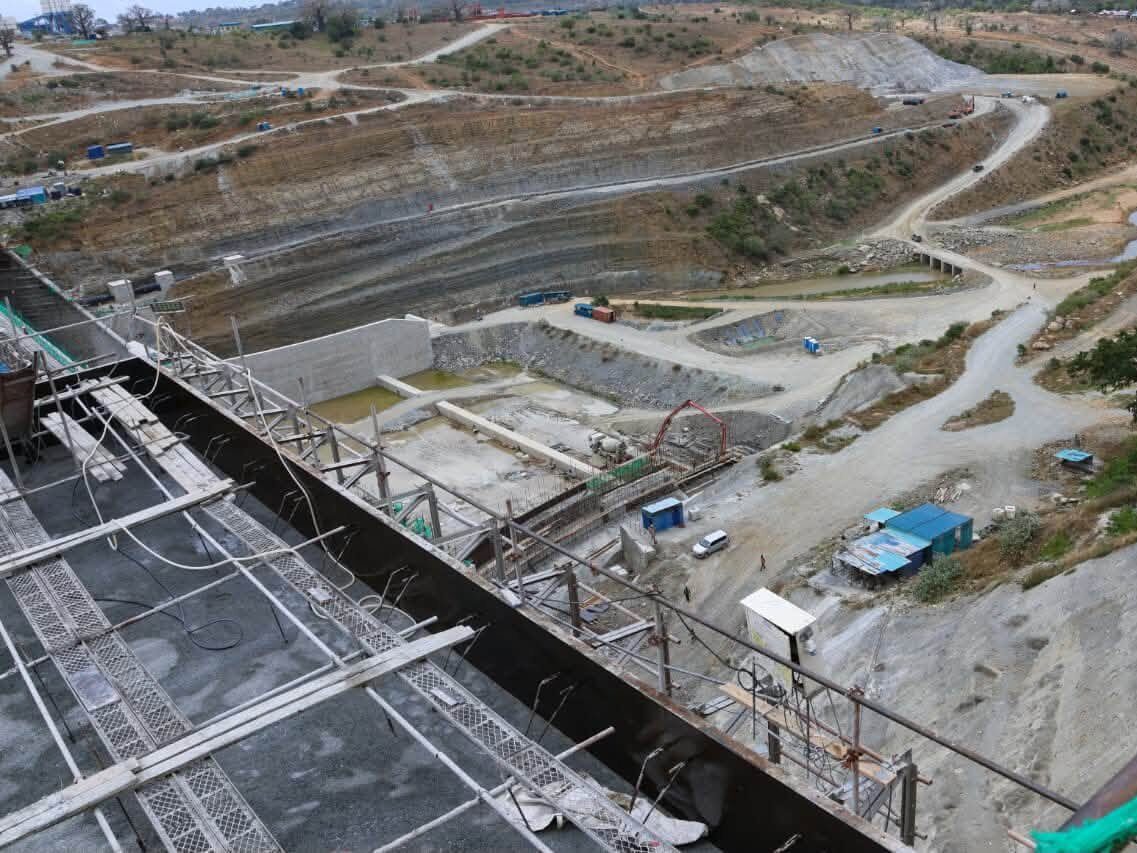
The Mwache Multipurpose Dam project in Kwale County has crossed the 85% overall completion mark, putting the multi-billion-shilling investment into its final phase as the Government intensifies preparations for filling the reservoir.
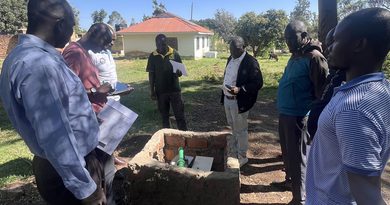
Cabinet Secretary for Water, Sanitation and Irrigation Eng. Eric Mugaa, accompanied by World Bank Division Director for Kenya, Rwanda, Somalia and Uganda Qimiao Fan and his team, inspected the project site at Mwache and held a briefing with the ground implementation teams to assess construction progress, outstanding works and preparedness for the next phase of the Coastal Region Water Security and Climate Resilience Project.
The main dam is now 92% complete, while cumulative implementation of the wider project has risen to above 85%. The 84-metre-high roller-compacted concrete dam is designed to store about 136 million cubic metres of water and provide approximately 186,000 cubic metres of treated water daily to Mombasa and Kwale counties. The investment is intended to address chronic water shortages in the Coast region while strengthening resilience against drought and climate-related shocks.
During the inspection, the government and World Bank teams reviewed the remaining works, including the check dams and associated infrastructure, as well as emerging technical, environmental and social challenges.
Particular attention was given to reservoir impoundment, with officials stressing that water filling will only begin after construction readiness has been independently verified. This includes confirmation of dam instrumentation, emergency preparedness systems, upstream and downstream safeguards and measures to protect communities living around the project.
The project is being implemented under the Coastal Region Water Security and Climate Resilience Project (KWSCRP), with financing anchored by the World Bank’s International Development Association (IDA) and counterpart funding from the Government of Kenya. The World Bank approved an original US$200 million IDA credit for the coastal project in 2014. An additional US$150 million was subsequently approved to help close the financing gap and enable completion of the Mwache Multipurpose Dam.
The Mwache investment forms part of a broader Coastal Region Bulk Water Programme estimated at about US$460 million, which includes complementary infrastructure supported by the Agence Française de Développement (AFD). The World Bank has noted that the dam is critical to the wider system because downstream transmission and water-treatment infrastructure must be completed and brought into operation to fully realise the benefits of the reservoir.
Construction of the main dam was contracted to Sinohydro Corporation Limited, with physical works commencing in 2022 following the signing of the construction contract in 2019. The project has experienced delays linked to resettlement, compensation and financing challenges, but implementation has accelerated significantly in recent months.
The broader project timeline has been extended to allow completion of the remaining works, with the World Bank’s current project documentation pointing to 2027 as the completion and operationalisation period. Earlier project planning envisaged the dam being filled around mid-2027, with the associated water treatment plant commissioned later in 2027.
Once operational, Mwache Dam is expected to become one of the Coast region’s most important water-security assets. Beyond domestic and industrial water supply, the project is also linked to irrigation and broader economic development in Kwale County.
With overall progress now above 85%, the focus has shifted from major structural construction to completing the remaining works, testing critical systems and ensuring that the dam and associated infrastructure are safe and ready for impoundment.
The Government, working with the World Bank and other development partners, has reaffirmed its commitment to completing the project to the required technical, environmental and social standards.