The five pieces behind better water access
At first glance, they may appear to be ordinary pieces of infrastructure. But together, they represent the different elements required to improve water and sanitation services and bring essential facilities closer to communities.
The five objects tell five different stories, but they are connected by one broader goal: improving access to reliable water and sanitation services.
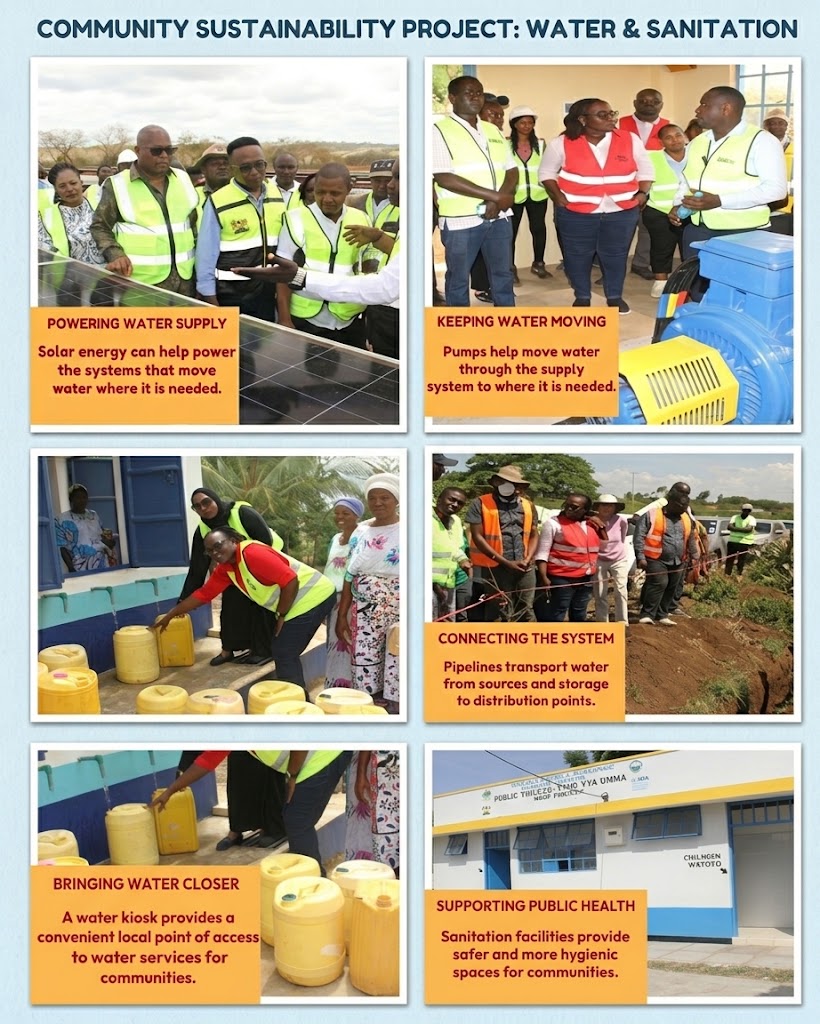
A water kiosk represents the point where improved water services reach communities. By bringing water closer to households and other users, kiosks can make access more convenient while supporting the delivery of essential services.
A solar panel highlights the importance of sustainable energy solutions in supporting water infrastructure. Solar power can help provide the energy needed to operate water systems, particularly in areas where reliable electricity supply remains a challenge.
The pipeline represents the network that connects water sources to the communities and facilities that depend on them. Effective water distribution infrastructure is essential for ensuring that water can move efficiently from production points to consumers.
A pump is another important part of the system. It supports the movement of water through the network, helping maintain supply and ensuring that water reaches areas where it is needed.
The sanitation facility, meanwhile, highlights the other side of the water equation. Access to clean water must go hand in hand with improved sanitation to protect public health, promote dignity and create healthier living environments.
Together, these five objects demonstrate that improving water and sanitation services requires more than a single piece of infrastructure. It involves interconnected investments that support water production, distribution, access, energy supply and sanitation.
Behind every structure is therefore a purpose — bringing services closer to communities, strengthening the reliability of water supply and improving access to safe sanitation.
The five objects may tell different stories, but they are ultimately part of one project and one shared mission: building stronger water and sanitation services that respond to the needs of communities.