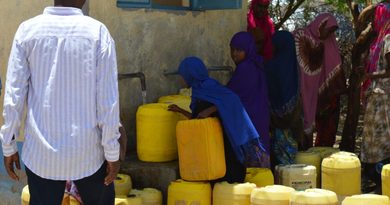
Communities take lead in safeguarding Kenya’s freshwater resources
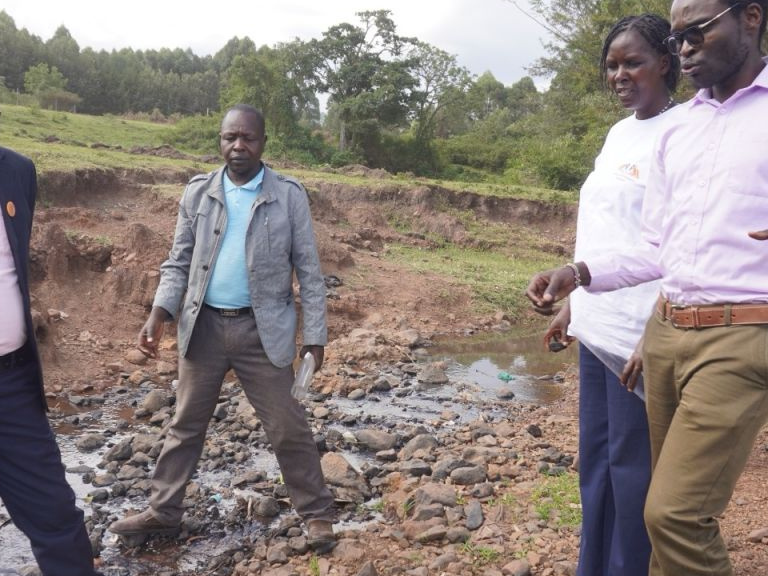
Communities across Kenya are playing an increasingly important role in protecting freshwater resources, with local groups taking part in water quality monitoring and generating evidence to support the sustainable management of rivers and other water sources.
Through Water Resources Users Associations (WRUAs), communities are collecting water samples, observing changes in freshwater ecosystems and documenting information that can help identify emerging threats to the water resources on which households, farmers and other users depend.
The community-led approach is being coordinated through the Kenya National Water Resources Users Associations (KeNAWRUA), providing a platform through which WRUAs can contribute to water resources management while strengthening local participation in conservation efforts.
The monitoring activities are enabling communities to develop a better understanding of the condition of their freshwater sources. By regularly observing changes and collecting water samples, members are able to generate information that can complement formal water resources monitoring and provide early indications of possible pollution or degradation.
The approach is particularly significant because communities are often among the first to notice changes in the rivers, streams and other freshwater sources within their areas. Their close connection with local water resources gives them an opportunity to identify unusual changes and raise concerns before problems become more widespread.
Community participation can therefore provide an important additional layer of protection for freshwater resources. With appropriate training, equipment and technical support, local monitoring initiatives can contribute to an early-warning system capable of identifying emerging water quality challenges and supporting timely interventions.
The growing role of communities also presents an opportunity for Government agencies, development partners, donors and the private sector to strengthen investments in water resources protection at the grassroots level.
Rather than relying solely on interventions undertaken at national or institutional level, stakeholders can support communities with the tools and knowledge required to participate effectively in monitoring their own water resources. Such investments can include training, sampling equipment, technical guidance, data management and platforms for sharing information with relevant authorities.
Strengthening community-based monitoring could also help improve the availability of local evidence for decision-making. Information collected by WRUAs can contribute to a clearer understanding of changes occurring in freshwater systems and help guide conservation and management measures.
The initiative further reinforces the importance of citizen participation in achieving sustainable water management and supporting progress towards Sustainable Development Goal 6, which calls for universal access to water and sanitation and improved management of water resources.
The collaboration brings together stakeholders from the water and environmental sectors, including the Water Resources Authority, the Ministry of Water, Sanitation and Irrigation, Earthwatch Europe, the CS4Water conference, IHE Delft Institute for Water Education and UNESCO.
Their involvement highlights the growing recognition of community knowledge and participation as valuable components of freshwater management.
For WRUAs, however, the role goes beyond collecting samples or recording information. Community monitoring gives local residents an opportunity to become active custodians of the resources that support their livelihoods and daily lives.
As pressure on freshwater resources grows from pollution, changing land-use patterns, climate variability and increasing demand for water, locally generated information could become increasingly important in supporting timely responses.
Empowering communities to monitor their water resources can consequently strengthen both environmental protection and local ownership of conservation efforts.
The approach demonstrates that effective freshwater management does not depend only on institutions and technical experts. Communities themselves can play a central role in understanding, protecting and sustaining the water resources that underpin their future.